What Does a Private Investigator Do? Tasks, Pay, Training
A private investigator interviews people, searches records, runs surveillance, writes reports and briefs clients. Most states require a license, and the median wage was $51,220 in May 2025.
By Sharon DeCet, Founder · Updated 23 Oct 2026
Key takeaways
- A private investigator interviews people, searches online, public and court records, conducts surveillance, writes reports and shares findings with clients. The BLS median wage was $51,220 in May 2025.
- The written report is the product. Surveillance is one duty of five, and surveillance postings such as Command Investigations' ask for a written report with video evidence.
- Three firms' price pages show standard hourly rates of $75 to $150 as of October 2026. That is about 3 to 6 times the $24.62 median hourly wage in our calculation from three regional pages, not a national average, so a billing rate is not an investigator's pay.
- Most states require a license. Check your state board and the employer's wording before you pay for any course.
In this article
- 1What does a private investigator do each day?
- 2Is private investigator work mostly surveillance, or mostly paperwork?
- 3How much does a private investigator earn, and what does a client pay?
- 4Do you need a license to work as a private investigator?
- 5Which skills should a new private investigator learn first?
- 6How do you check a job or course against your state's rules before you pay?
- 7Which Learningshopusa private investigator course should you take first?
- 8Frequently asked questions
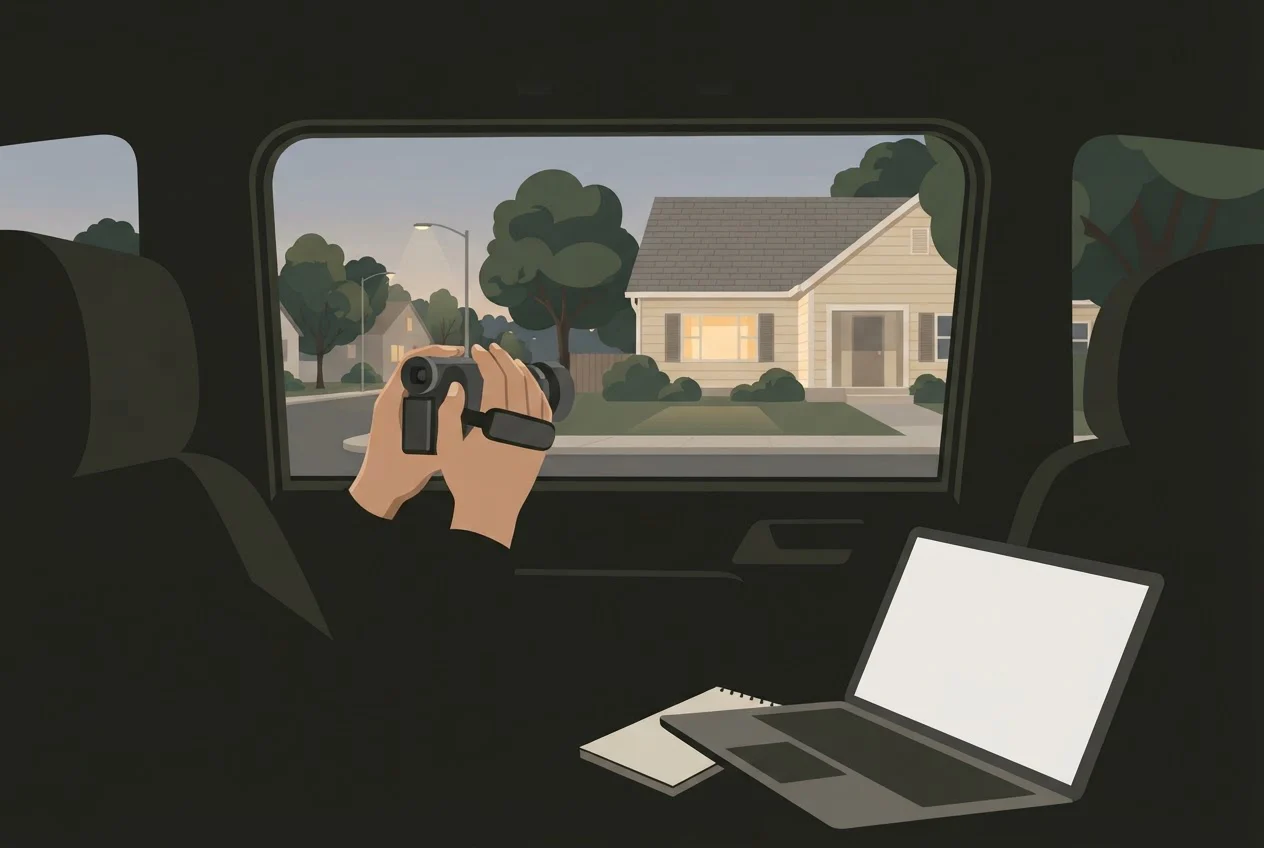
A surveillance investigator job posting asks applicants to bring a vehicle with dark tinted windows, a covert camera and a laptop with Microsoft Word. That list describes the work accurately: watch, record, then write it up.
About 39,500 people held private detective and investigator jobs in the United States in 2025, according to the U.S. Bureau of Labor Statistics (BLS). Most of them work full time.
This page explains what each duty involves day to day. It compares what an investigator earns with what a client is charged, and shows where a license is the first hurdle. It then maps each duty to the skill you would need to learn, with checks to run before you enroll or apply.
It is written for people considering the work or just starting. If you are hiring an investigator, or want to know what one may legally do, read our private investigator laws guide instead.
What does a private investigator do each day?
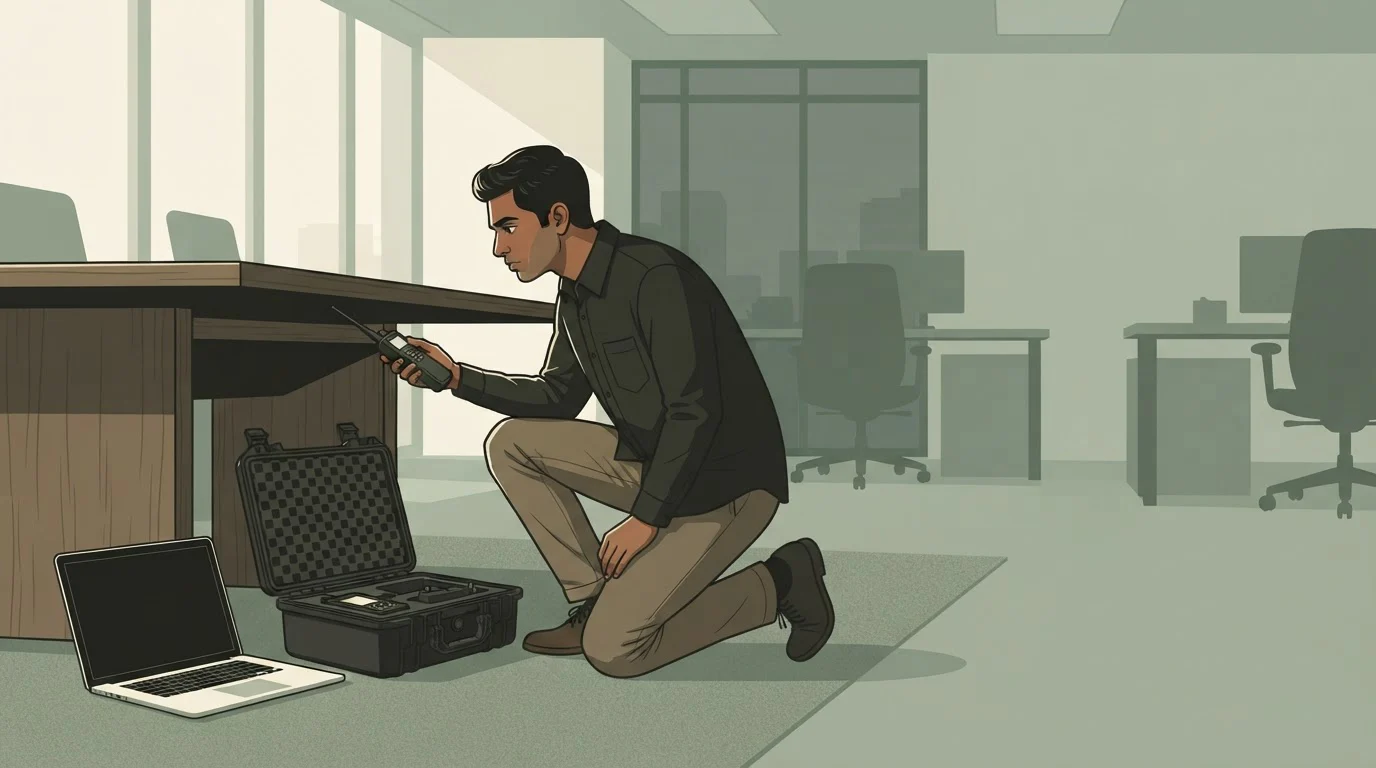
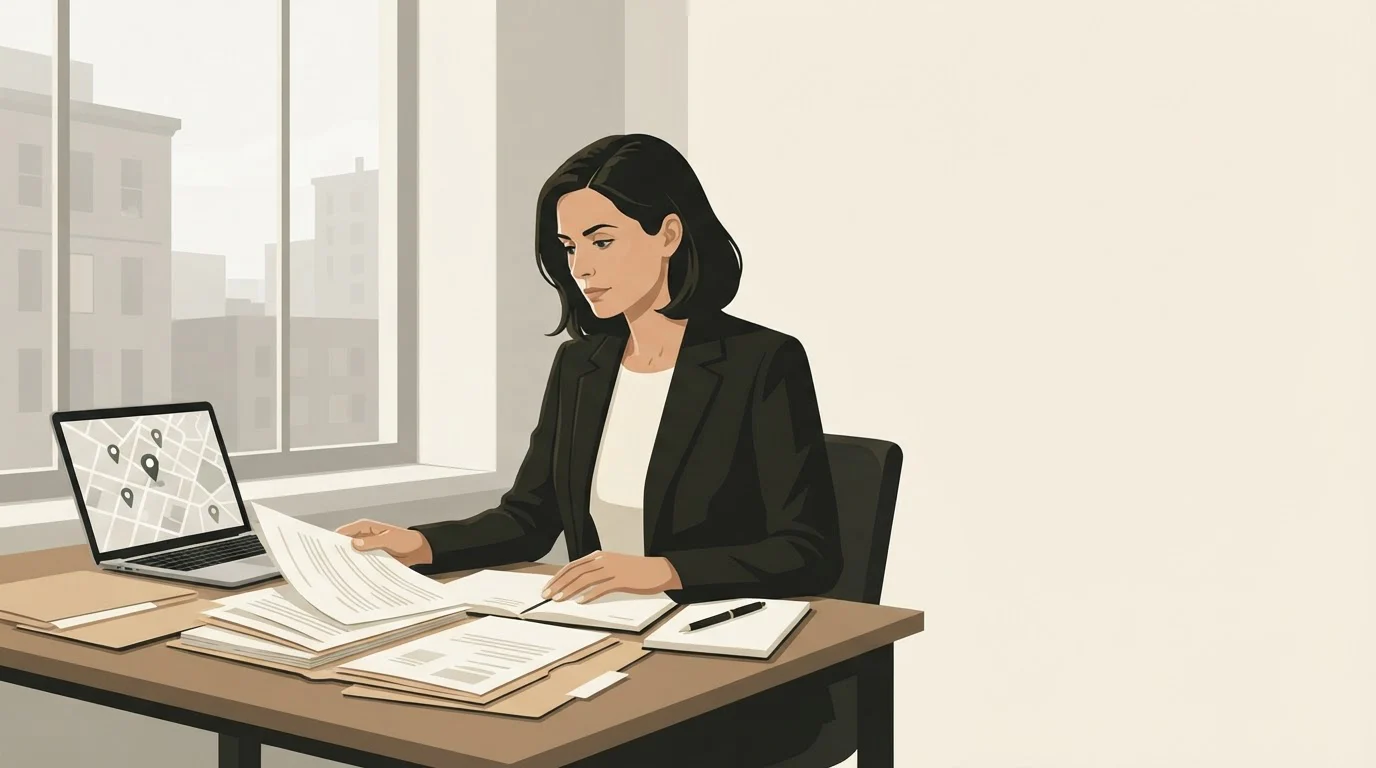
A private investigator interviews people to gather information, searches online, public and court records for civil judgments, criminal history and other evidence, conducts surveillance, writes reports on activities and findings, and shares results with clients. These five duties come from the BLS profile of private detectives and investigators, last modified August 27, 2026.
The work splits between an office, where records searches and reports happen, and the field. In the field, investigators work outdoors or from a vehicle in all kinds of weather. Most work full time, and schedules include early mornings, nights and weekends, especially during surveillance. Retail trade employs 34% of workers in the occupation (BLS, May 2025).

Is private investigator work mostly surveillance, or mostly paperwork?
It is both: BLS lists surveillance as one of five duties, and the postings we cite each require a written report with video evidence. Two surveillance-investigator postings from one employer, Command Investigations LLC, show this. One was in Portland, Maine (removed July 24, 2025) and one in Spokane, Washington (removed November 12, 2025).
Both postings list surveillance duties: tracking subjects on foot and by vehicle, and recording them during their daily routines. Both also list report generation with video evidence and communication with the team about positioning and tactics. The requirements read like a field kit plus an office kit:
- age 21 or older and a high school diploma or equivalent
- a valid driver's license that passes a motor vehicle department and background check
- your own vehicle with dark tint
- a smartphone, a laptop with Microsoft Word, a digital video camera and a covert camera, meaning one made to record without being noticed
Shifts run 8 hours or more, with weekends, holidays and overtime, and starts as early as 5:00 a.m.
Two postings from one employer show what that employer asked for, not the whole market. BLS names patience during surveillance as an important quality, which fits the postings. Our recommendation: build report writing early. A client pays for findings they can rely on, and a long stakeout that is poorly documented produces nothing usable.
How much does a private investigator earn, and what does a client pay?
The BLS median wage for private detectives and investigators was $51,220 a year, or $24.62 an hour, in May 2025. The lowest 10% earned under $36,740 and the highest 10% earned over $97,630 (BLS). BLS projects 5% growth from 2025 to 2035, faster than average for all occupations, with about 3,200 openings a year.
Clients pay far more per hour than that wage. As of October 2026, three firms publish these rates on their own pricing pages:
- ACS Investigation Services (Michigan): $75 to $150 an hour, a retainer (an up-front deposit) of $500 to $2,000, and $600 to $1,000+ for a full day of surveillance.
- R&D Investigations Agency (Midwest): $100 to $150 an hour for standard work such as surveillance and interviews, $150 to $400+ for specialized work such as digital forensics and fraud, and a basic retainer of $1,000 to $3,000.
- Blue Systems International (California): $85 to $150 an hour for standard surveillance, $150 to $250+ for complex investigations, and a basic retainer of $1,000 to $3,000.
Our calculation: the standard hourly rates on these three pages run from $75 (lowest) to $150 (highest). Divided by the BLS median hourly wage, $75 ÷ $24.62 is about 3.05 and $150 ÷ $24.62 is about 6.09. Across these three firms' published rates, standard hourly pricing was about 3 to 6 times the BLS median hourly wage. This is our calculation from three regional pages, not a national average.
Do not read that ratio as an income forecast. The BLS figures leave out self-employed workers and business owners. Our reading is that a billing rate has to cover unbilled hours, a vehicle, insurance and license costs, so it is not an hourly wage.
Do you need a license to work as a private investigator?
In most states, yes. BLS states that most states require private detectives and investigators to be licensed, and tells candidates to check state and local requirements for age and experience. Confirm the rule for the place where you will work.
An agency job does not remove the question. Ask the employer whether the agency holds the license or you must hold your own.
Our state-by-state license requirements guide covers the rules by state. Minnesota is one example of a state with its own training step. Minnesota Rule 7506.2600 requires 12 hours of pre-assignment training within 21 days of starting work, from a board-certified program. Our Minnesota Pre-Assignment Course for Private Detectives/Investigators (course 102, 12 hours, $185 as of October 2026) is designed for this requirement. Confirm it on the Board of Private Detective and Protective Agent Services' list of certified programs, found through the board's rules and statutes page, before enrolling.
Which skills should a new private investigator learn first?
Learn the five duties as separate skills: interviewing and note-taking, records and background work, surveillance, report writing and testimony, all on a base of evidence law. We teach each as its own self-paced course with rolling access, so you can buy only what you need. Prices below are what a buyer in the United States pays as of October 2026.
| BLS duty | What you need to be able to do | Our course | Price |
|---|---|---|---|
| Interview people | Question people and record answers accurately | 124 Interviewing-Private Investigators; 126 Note Taking | $80 each |
| Search online, public and court records | Run background checks and screen applicants | 120 Background Investigation; 121 Pre-Employment Screening | $80 each |
| Conduct surveillance | Observe and document a subject | 123 Surveillance | $80 |
| Write reports | Turn field notes and video into a finished report | 127 Report Writing | $80 |
| Share findings with clients | Explain findings to a client and, if the case goes to court, testify | 127 Report Writing (the client deliverable); 128 Testifying | $80 each |
| The legal frame under all of it | Criminal law, evidence categories, rules of evidence, court procedures | 115 Legal Aspects of Private Investigation | $120 |
Taking every course in the table costs $680 at these prices: seven $80 courses ($560) plus the $120 course. That is our arithmetic from the prices in our catalogue.
Our recommendation: start with 115 Legal Aspects, because the law limits what evidence you can collect. Build report writing second, because a client pays for the report. Legal Aspects of Private Investigation has seven chapters and a final exam. A certificate of completion is awarded once you finish the lessons and pass the assessments. As of October 2026 the course page names these states: Missouri, Georgia, South Carolina, Kentucky, New Mexico, Kansas, Iowa, Minnesota, Tennessee, North Carolina (6 continuing-education credits only), Oregon and Texas. Confirm acceptance with your board before enrolling, using our guide on whether a PI course counts in your state.
A certificate shows you completed training. The license comes from your state. For a full plan by situation, see our guide to what training a new private investigator needs.
How do you check a job or course against your state's rules before you pay?
Run these five checks before you enroll in a course or accept a job. Each has a pass and a fail.
- Find your state licensing board's page.Pass: it says whether a license is required for the work you plan to do, such as surveillance or background checks. Fail: you cannot find a clear answer. Call the board before spending money.
- Check the minimum age.Pass: you are at least as old as your state board's minimum (listed on the board's license page) and at least 21 if the employer sets that age. Fail: you are under either limit.
- Check the driving requirement.Pass: your driver's license is valid and would pass a motor vehicle department and background check. Fail: it is suspended, revoked or likely to show a disqualifying record.
- Check equipment and insurance.The Portland posting required auto liability limits of "100k/300k/100k" and your own vehicle with dark tint. Pass: your insurance meets the employer's stated limits and you own the listed equipment. Fail: you do not.
- Check that your board accepts the course.
Pass: the board's list, or its written confirmation, names the course. Fail: neither does. Our guide on whether a PI course counts in your state walks through this check.
Which Learningshopusa private investigator course should you take first?
Start with course 115, Legal Aspects of Private Investigation, then add report writing and the other skills as your state and employer require. Browse the full list in our course catalogue. For help choosing a course, call (706) 268-2221 or (832) 922-1215.
Start with Legal Aspects of Private Investigation
Frequently asked questions
Sources
- 1.U.S. Bureau of Labor Statistics, Private Detectives and Investigators (Occupational Outlook Handbook), modified August 27, 2026
- 2.Command Investigations LLC, Surveillance Investigator, Portland, ME (posting removed July 24, 2025)
- 3.Command Investigations LLC, Surveillance Investigator, Spokane, WA (posting removed November 12, 2025)
- 4.ACS Investigation Services, cost to hire a private detective
- 5.R&D Investigations Agency, cost to hire a private investigator in 2026
- 6.Blue Systems International, private investigator cost
- 7.Minnesota Rule 7506.2600, pre-assignment training
- 8.Minnesota Department of Public Safety, Private Detective and Protective Agent Services Board rules and statutes
- 9.Learningshopusa course catalogue
- 10.Learningshopusa, 115 Legal Aspects of Private Investigation