Private Investigator Laws: What a License Does and Doesn't Cover
Private investigator laws separate the license from the powers people assume it brings: a license covers working for pay, while guns, recorded calls and vehicle trackers each fall under their own rules.
By Sharon DeCet, Founder · Updated 14 Oct 2026

Key takeaways
- A private investigator license is permission to work, not permission to carry a gun, record a call or install a tracker. Each has its own rule, and the rule changes by state.
- Gun rules differ sharply. Florida requires a separate Class G firearm license, California requires a firearms permit that lists the investigator license, Texas applies its ordinary handgun law, and Vermont's investigator statute adds its own certification.
- Federal law lets you record a conversation you are part of, unless the recording is made to commit a crime or a tort, but Florida requires every party's consent. When a call crosses states, follow the stricter rule.
Most states require a license (BLS), so confirm with your state's licensing board before you take paid work.
In this article
- 1What do private investigator laws allow an investigator to do, task by task?
- 2Can a private investigator carry a gun, or does the state decide?
- 3When can a private investigator legally record a call or track a vehicle?
- 4Do you need a license to work as a private investigator?
- 5What five checks should an investigator run before taking a job?
- 6How can you learn the legal side of investigation before your first case?
- 7Frequently asked questions
The U.S. Bureau of Labor Statistics reports that most states require private detectives and investigators to be licensed, so the first rule an investigator meets is a state's, not Washington's (BLS Occupational Outlook Handbook). Federal law sets a floor on recording and on posing as someone else to get financial records, and a separate set of statutes decides what an investigator may carry, record or attach to a vehicle.
That split is where new investigators go wrong. A license feels like permission, so people assume it lets them carry a firearm, record a call or place a tracker. In some states it permits none of those things, and in others it permits them only on conditions that are easy to miss.
The tasks come first as a table you can use on a job. Then come the three decisions that cause the most trouble: guns, recordings and trackers. After that come the license question and a five-question test to run before every job.
What do private investigator laws allow an investigator to do, task by task?
Private investigator laws allow observation, interviews and public-record research without special permission. They restrict the methods: recording, tracking, deceiving a bank and using force. BLS lists surveillance, interviews, record searches and report writing as the core work, and notes that investigators lack police authority (BLS).
Use this table as a first screen. Rules are stated as of October 2026.
| Task | Rule that applies | What makes it lawful |
|---|---|---|
| Record a conversation you are part of | Federal law allows it if you are a party or one party consents, unless the recording is made to commit a crime or a tort (18 U.S.C. § 2511(2)(d)). Florida requires all parties' consent (Fla. Stat. § 934.03). | Check each party's state. Where in doubt, get everyone's consent. |
| Record a conversation you are not part of | Violating § 2511(1) carries up to five years in prison (18 U.S.C. § 2511(4)(a)). | A party's consent, or a court order. |
| Put a tracker on someone else's vehicle | Texas makes it a Class A misdemeanor (Penal Code § 16.06). Ohio bars tracking devices and applications without consent (Ohio Rev. Code § 2903.216). | Texas: written consent from the vehicle's owner or lessee, or a court order. Ohio: the property owner's consent plus a listed purpose, and no protection order. |
| Get a person's bank information by posing as someone else | Prohibited (15 U.S.C. § 6821). | Narrow exemptions only, such as a state-licensed investigator collecting court-ordered child support. |
| Carry a firearm while working | Set by your state's investigator law and gun law. | See the next section. |
| Arrest someone | Investigators lack police authority (BLS). | Do not rely on it. |
The pattern is the point of this table. In the tracker row the license helps but never suffices: Texas and Ohio both add consent conditions on top of it. In the bank-records row the license barely helps at all.
Can a private investigator carry a gun, or does the state decide?
The state decides, and the investigator license is only one input. Florida, Texas, Vermont and California show four different designs. Reading only the general gun law of your state will give you the wrong answer where the investigator statute adds its own gate.
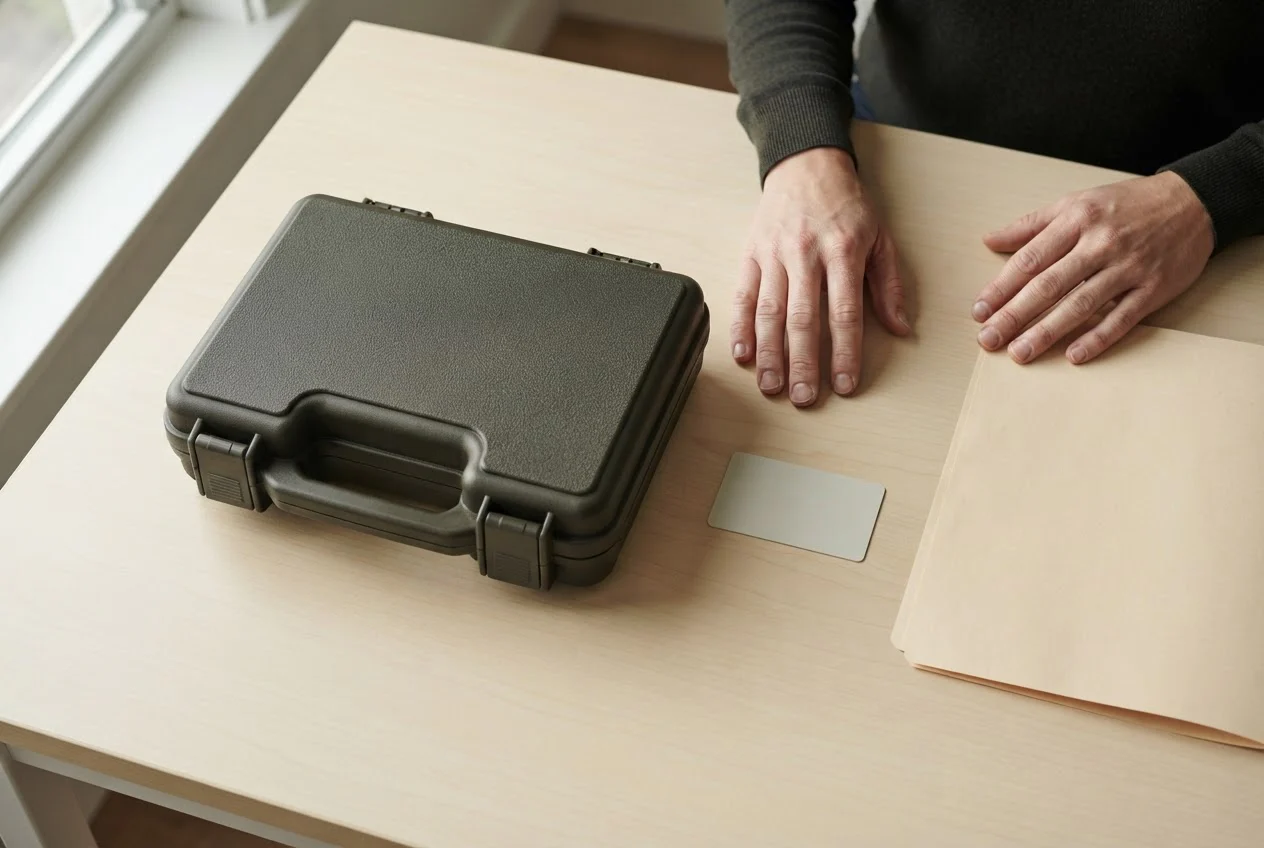
Florida. Only holders of certain licenses, including Class C (private investigator), may bear a firearm, and each must also hold a Class G statewide firearm license. Applicants must be at least 18 and complete 28 hours of classroom and range training, with four hours of requalification each year (Florida Department of Agriculture and Consumer Services).
Texas. Individual licensees who do not provide security services, including private investigators, may carry handguns while performing their licensed work, subject to Penal Code Chapter 46. Since January 10, 2022, an investigator may not openly carry a handgun while executing a capias (a court order to bring in a person) or an arrest warrant (Texas Department of Public Safety).
Vermont. The investigator statute itself says licensees may not possess a firearm while performing professional services unless they hold a firearms certification in good standing. Certification requires Director-approved training, a federal background check and a demonstration of safe handling (Vermont Title 26, Chapter 59, § 3175c). The same chapter bars brandishing a firearm in a careless, angry or threatening manner.
California. A licensed investigator who wants to work armed needs a firearms permit from the Bureau of Security and Investigative Services, and the permit card must list the private investigator license. A permit that lists only a security guard registration does not cover investigator work (California BSIS Firearms Permit fact sheet).
Our recommendation: before you buy a firearm for work, find the sentence in your state's investigator statute that mentions firearms, then the board's firearm form. If neither exists, general carry law governs, and you should still check the policy of the agency that employs you. A gun gives you no extra authority; investigators have the legal standing of private citizens.
When can a private investigator legally record a call or track a vehicle?
An investigator may record a call only when the law of every state involved permits it, and may place a tracker only with the legal consent the state requires. The license alone rarely settles either question.
Recording. Federal law is a one-party floor: it is lawful if you are a party to the conversation or one party consents, unless the recording is made to commit a crime or a tort (18 U.S.C. § 2511(2)(d)). Florida sits above that floor and requires prior consent from all parties; unlawful interception there is a third-degree felony (Fla. Stat. § 934.03). Our recommendation: when a call crosses state lines, follow the stricter state, and record only conversations you are in.
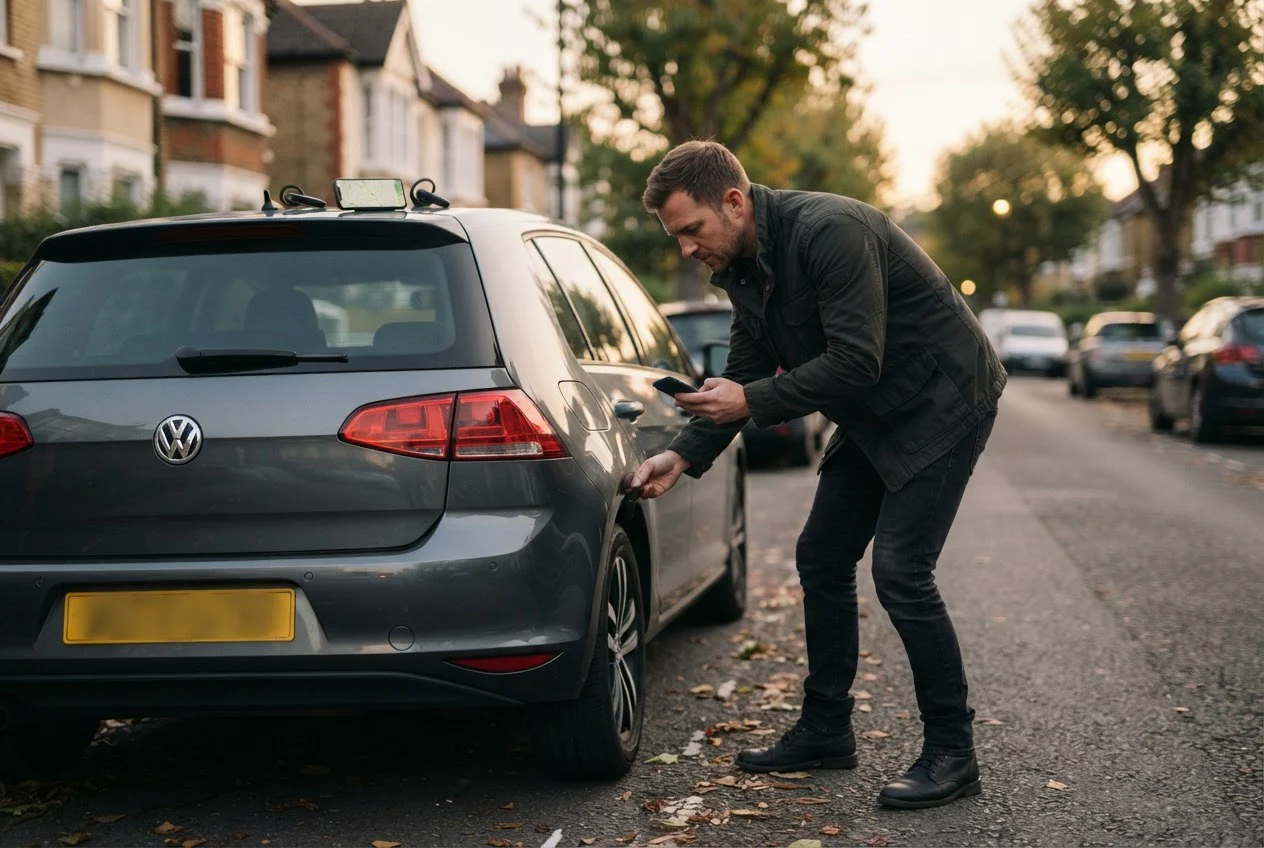
Tracking. Texas covers vehicle trackers and lets anyone raise the owner's or lessee's effective consent as an affirmative defense (a legal excuse raised after charges). A licensed investigator can also rely on written consent from the owner or lessee, plus written consent to enter private residential property if needed, or a court order (Penal Code § 16.06). Ohio's exception requires the property owner's consent and a listed purpose: criminal offenses, locating fugitives, locating lost or stolen property or court-awarded assets, or workers' compensation claims. It disappears if the client is under a protection order or the investigator knows or should know the client is seeking help to commit a crime (Ohio Rev. Code § 2903.216).
The practical lesson is that the consent you hold and the client's reason matter as much as the investigator's license.
Do you need a license to work as a private investigator?
In most states, yes. BLS states that most states require private detectives and investigators to be licensed, and tells candidates to check state and local rules on age, experience and other requirements (BLS).
Whether you personally need one depends on the statute's definition and its exemptions. Vermont defines a private investigator as someone who, for consideration, investigates or holds themselves out as available to investigate. It requires adulthood, an exam, a fee and two years of investigative experience. It also exempts law enforcement officers, insurance adjusters, in-house corporate investigators, attorneys and their staff, and government employees (Vermont Title 26, Chapter 59, §§ 3151, 3151a and 3173). The same job can need a license when done as a freelancer and none when done in-house, so read the exemptions before assuming either way.
Training requirements sit beside the license. In Minnesota, the board requires pre-assignment training, the coursework a Minnesota applicant must finish before starting investigator work under the board's rules. Our 12-hour Minnesota Pre-Assignment Course for Private Detectives/Investigators ($185 as of October 2026) meets it. For other states, start with our guide to private investigator license requirements by state, then confirm any course with this credit-verification check before you pay.
What five checks should an investigator run before taking a job?
Run these five checks before every assignment. Each has a pass and a fail, and failing any one means stopping until you resolve it. They are our recommended procedure, built from the rules above.
- AuthorityCan you name the statute section and the licensing board that cover this task in the state where the work happens? Pass: you can point to both. Fail: "I think it's fine."
- ConsentPass: you are a party to the call and either every state involved allows one-party consent or every participant has agreed. Fail: you are not a party, or any state involved requires all-party consent and you do not have it.
- PlaceCan you do the work from somewhere the public may lawfully stand, seeing only what anyone there could see? Pass: yes. Fail: you must enter the property or look into a private interior.
- DeviceIf a tracker or tracking app is involved, do you hold the consent your state requires before installing it (in Texas, written consent from the vehicle's owner or lessee, or a court order)? Pass: yes. Fail: it is missing or comes after installation.
- PurposePass: the client's purpose is lawful and, where your state lists purposes (Ohio does), it is one of them, and you have no knowledge that the client is under a protection order or wants help committing a crime. Fail: your state lists purposes and this one is not among them, the client is under a protection order, or you know or should know the client intends a crime.
How can you learn the legal side of investigation before your first case?
Start with the framework that every state's investigator rules sit inside: criminal law, evidence and court procedure. Our Legal Aspects of Private Investigation course teaches that framework for $120 as of October 2026.
It is self-paced with rolling access and 49 lessons. It covers crime definitions and classifications, criminal defenses such as self-defense and entrapment, categories of evidence, the exclusionary rule, confessions and admissions, and the burden of proof. To earn the certificate of completion you finish every lesson, pass 8 assessments totalling 172 questions, and pass the final exam.
The course covers criminal law, evidence and procedure. It does not replace reading your state's recording, tracker and firearm statutes, which you should read directly. Our course page lists recognition in Missouri, Georgia, South Carolina, Kentucky, New Mexico, Kansas, Iowa, Minnesota, Tennessee, North Carolina (up to 6 continuing education units), Oregon and Texas. Confirm with your own board before you count it toward a requirement.
For questions about the course, call (832) 922-1215 or (706) 268-2221, Monday to Friday, 9:00 AM to 6:00 PM Eastern.
Information on this page is general and is not legal advice. Rules and fees are stated as of October 2026.
Learn the legal side of investigation before your first case
Frequently asked questions
Often yes, but the court's rules decide, not the investigator license. Some states allow any adult outside the case to serve papers, while others, such as Arizona and Georgia, run court certification programs for process servers. Check the issuing court. Our process server guide explains the paths.
Not without the phone owner's consent, and in some states not even then unless a statutory purpose applies. Ohio Rev. Code § 2903.216 covers tracking applications as well as devices. Its investigator exception requires the owner's consent and a listed purpose, and it does not apply if the client is under a protection order. Texas Penal Code § 16.06 covers vehicle trackers only. See Ohio Rev. Code § 2903.216 and Texas Penal Code § 16.06.
Yes, every state writes its own rules. In California, a licensed investigator must hold a Bureau of Security and Investigative Services firearms permit that lists the private investigator license before working armed. That permit is separate from the investigator license itself (California BSIS).
They observe from places the public may lawfully be, document what is visible, and stay within recording, trespass and tracker laws. BLS lists surveillance alongside interviews, record searches and report writing as core duties (BLS). Dated, factual notes make the work usable later.
Sources
- 1.U.S. Bureau of Labor Statistics, Private Detectives and Investigators, Occupational Outlook Handbook
- 2.18 U.S.C. § 2511, interception of communications
- 3.15 U.S.C. § 6821, privacy protection for customer information of financial institutions
- 4.Florida Statutes § 934.03, interception of communications
- 5.Florida Department of Agriculture and Consumer Services, Class G Statewide Firearm License Requirements
- 6.Texas Department of Public Safety, Private Security Licensees and Carrying a Handgun
- 7.Texas Penal Code § 16.06, unlawful installation of tracking device
- 8.Ohio Revised Code § 2903.216, tracking devices
- 9.Vermont Statutes, Title 26, Chapter 59, private investigative and security services
- 10.California Bureau of Security and Investigative Services, Firearms Permit fact sheet
- 11.Learningshopusa, Legal Aspects of Private Investigation
- 12.Learningshopusa, Minnesota Pre-Assignment Course for Private Detectives/Investigators