How to Take a Witness Statement: Script, Template and Rules
How to take a witness statement: let the witness tell the account uninterrupted, write it in their own words, have them read and initial it, and add a signed declaration.
By Sharon DeCet, Founder · Updated 1 Nov 2026
Key takeaways
- Let the witness give a complete account without interruption. Ask open questions first and specific ones second. Write the statement in the witness's own words, have them read and initial it, and end with a signed declaration.
- A statement the witness signed or otherwise adopted is a "previous statement" under Federal Rule of Civil Procedure 26. In federal civil cases the witness can ask for a copy, and Federal Rule of Evidence 613 governs how a conflicting earlier statement is used.
- Quote the witness's exact words where they remember them, and keep your own opinions in your report, not in the statement.
- Get every participant's consent before recording. Federal law allows recording with one party's consent, but states such as Florida require all parties to consent.
In this article
- 1How do you take a witness statement from start to finish?
- 2What should a signed witness statement look like?
- 3Which controls make a witness statement hold up later?
- 4What should you do when a witness refuses to sign or disputes a line?
- 5Can you record a witness statement, and when do you need consent?
- 6Who can see a witness statement later, and can the witness get a copy?
- 7Which of our courses prepare you to take witness statements?
- 8Frequently asked questions
A witness statement is only as good as the witness's willingness to stand behind it months later, when a lawyer, an insurer or a judge reads it. The person taking the statement controls whether that willingness exists.
A witness statement, as used on this page, is the account a witness gives to an investigator, written or recorded, that the witness has signed or otherwise adopted as accurate. Everything before the signature exists to make that adoption honest. The witness spoke freely, the words are theirs, and they read the result before signing.
What follows is a script, a template and rules for the moments that go wrong: the witness who will not sign, the one who objects to recording, and the one who asks for a copy. The rules come from federal investigator manuals and U.S. law, not general advice.
How do you take a witness statement from start to finish?
Take the statement in seven steps: open the conversation, get the whole account, ask open then specific questions, test what the witness knows, write it in their words, read it back, and close with a signature. The steps below put them in order.
- Open the conversation.
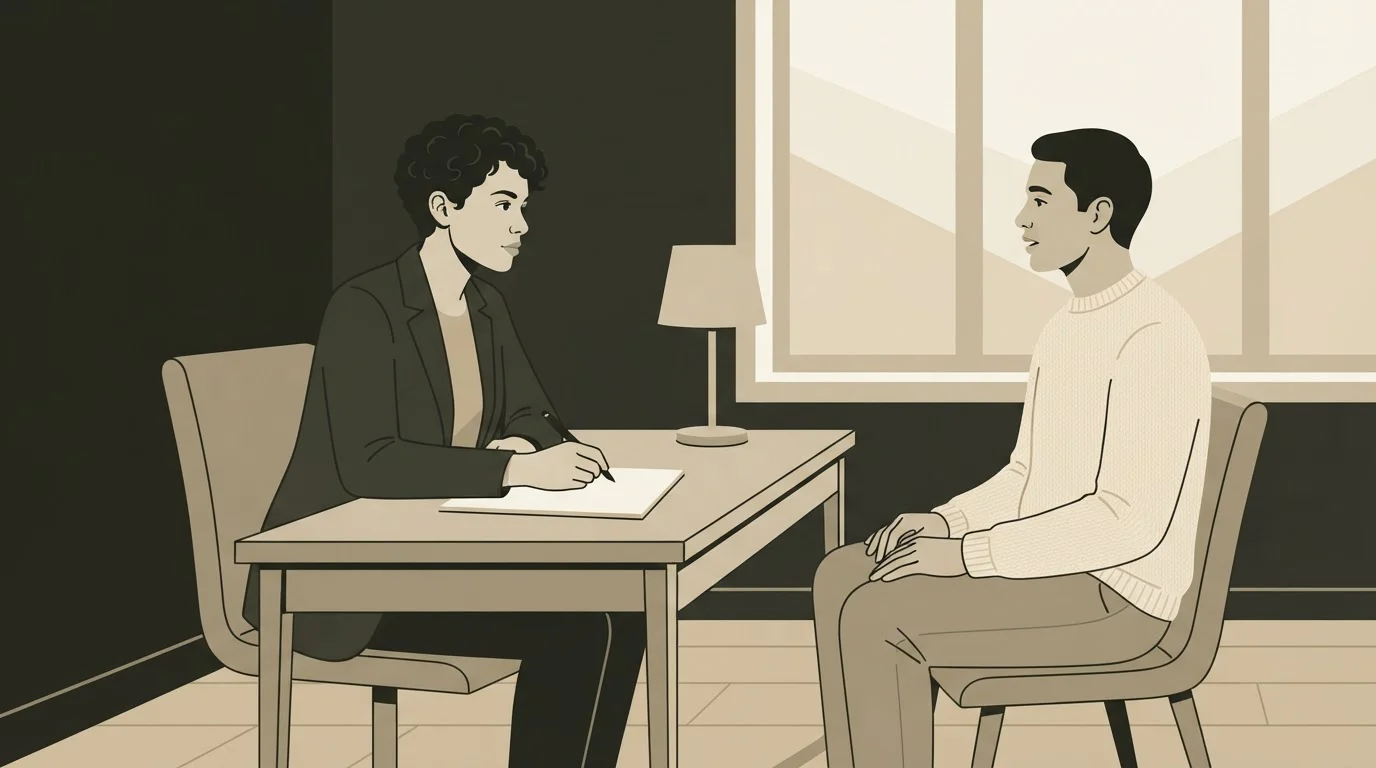
Say who you are, who engaged you, and that talking to you is voluntary. Our recommendation is to never let a witness guess whom you work for. Interview witnesses one at a time. The National Institute of Justice (NIJ) guide for police says to "separate witnesses and instruct them to avoid discussing details of the incident with other witnesses." If you plan to record, get consent now.
"My name is ____. I was engaged by ____. Talking to me is voluntary. May I record this? Tell me what you saw and heard, starting wherever you like."
- Ask for the whole account first.Say, "Tell me what you saw and heard, starting wherever you like." The NIJ guide says to encourage the witness "to volunteer information without prompting" and to avoid interrupting. Jot down points to return to and hold them.
- Ask open questions, then specific ones.The NIJ guide gives the pattern: "What can you tell me about the car?" followed by "What color was the car?" It also gives the question to avoid: "Was the car red?" Suggesting the answer contaminates the account.
- Test what the witness actually knows.Our recommendation is to ask where they stood, how far away, what the lighting was, and what blocked their view. Separate what they saw or heard from what they were told. The NIJ guide says to caution the witness not to guess.
- Write it down in their words.Use the first person and put events in order. Quote exact words spoken wherever the witness remembers them. Keep your opinions out of the statement and put them in your report.
- Read it back.The witness reads the whole statement, or you read it aloud if reading is difficult. The NIJ guide says to "ask the witness if there is anything he/she wishes to change, add, or emphasize." Every correction gets the witness's initials.
- Close and leave the door open.
The witness signs and dates. Give them your contact details. The NIJ guide notes that witnesses commonly recall more after the interview, so invite them to call.
"Please read this through. Change anything that is not right and initial each change. If it is accurate, please sign and date it. If you remember more later, call me at ____."
For deeper interview craft, see our guide to interview techniques for investigators. For the legal line between questioning and pressure, see interview vs. interrogation.
What should a signed witness statement look like?
A signed witness statement has four parts: a preface naming the witness and stating that the statement is voluntary, a numbered body in the witness's own words, an attestation that the witness read it, and a signature block. This template follows the structure the U.S. Department of Labor uses for its own investigators.
WITNESS STATEMENT
Matter / reference: ____________
Date, time and place taken: ____________
Taken by: ____________ (name, role, who engaged you)
Others present: ____________

PREFACE
I, [full name], of [address, phone], make the following voluntary
statement to [investigator's name], who told me they are working
for [client or firm]. I understand I may decline to sign.

STATEMENT
1. [Who the witness is and how they came to see or hear the events.]
2. [Events in order. Quote exact words spoken where remembered.]
3. [Where the witness stood, the distance, lighting, obstructions.]
4. [Only what the witness saw or heard personally. Mark anything
   learned from others as "I was told."]

ATTESTATION
I have read this statement of ___ pages. I have initialed each page
and every correction. I declare under penalty of perjury that the
foregoing is true and correct. Executed on [date].

Witness signature: ____________  Printed name: ____________
Date / time / place signed: ____________
Statement taken by (signature and printed name): ____________
Three details matter.
- Structure and page rules. The Department of Labor's Employee Benefits Security Administration (EBSA) manual sets a preface, a body "as much as possible, in the words of the interviewee," and an attestation. Pages are numbered, and the interviewee initials the last line of each page. As of its February 2025 update, the manual also says to leave no blank space between paragraphs. Our reasoning is that nothing can be added later in a gap.
- Declaration wording. The federal form for a declaration executed inside the United States reads: "I declare (or certify, verify, or state) under penalty of perjury that the foregoing is true and correct. Executed on (date)." That is the text of 28 U.S.C. § 1746.
- Where the wording applies. Section 1746 is a federal statute. State courts and agencies set their own requirements, so ask the engaging attorney which wording the forum accepts.
Which controls make a witness statement hold up later?
Each step exists because a statement is judged later on how it was obtained: whether the witness spoke freely, the words are theirs, and they checked the result. The Department of Labor's EBSA manual and the Department of Justice's NIJ eyewitness guide together support the controls in the steps and template above.
The EBSA manual governs its own staff. The NIJ guide was published in October 1999 and was written for police. Private investigators are not bound by either; we recommend them as a defensible practice.
What should you do when a witness refuses to sign or disputes a line?
Do not pressure the witness. If they dispute a line, change it and have them initial the correction. If they decline to sign but agree the statement is accurate, ask them to read it aloud, confirm it, and record their comments in your report. If they decline to give a statement, record that and move on.
- A disputed line. Rewrite it in their words. The NIJ guide's review step exists for this. A statement you edited over their objection is not their statement.
- Declines to sign, but agrees it is true. This is the situation the EBSA manual addresses: ask the interviewee "to read it orally, acknowledge whether it is true or correct, and record their comments" in the report of interview. Your report then carries the witness's own confirmation.
- Declines to sign and disputes the content. Record their version of the disagreement. Our recommendation is to keep the unsigned draft with a note of what they objected to, and not to destroy it.
- Declines to give any statement. Note the date and the reason they gave. The EBSA preface calls a statement "voluntary," and the same applies to yours.
Never fill a gap with your own words to make the statement tidier. A tidy statement that the witness did not say is worth less than a rough one that they did.
Can you record a witness statement, and when do you need consent?
Yes, but get every participant's consent on the recording before the first question. Federal law lets a private person record a conversation they are part of, or one where a party consents, unless the purpose is to commit a crime or a civil wrong (a tort).
Federal law is 18 U.S.C. § 2511(2)(d). Florida's rule is stricter. It makes interception lawful "when all of the parties to the communication have given prior consent," under Fla. Stat. § 934.03(2)(d).
Our recommendation is to state the date, place and everyone present at the start of the recording and ask for consent on the recording. Restate the consent at the end. If the witness declines recording, take notes and use the written template with a read-back. The EBSA manual prohibits secret recordings by its own staff, and that is a sound rule to copy.
Who can see a witness statement later, and can the witness get a copy?
In federal civil cases, a person can obtain their own previous statement on request, with no special showing. A previous statement includes a written statement the person "has signed or otherwise adopted or approved." Outside that setting, whether to hand over a copy is a decision for your client or the engaging attorney.
That rule is Rule 26(b)(3)(C) in the Federal Rules of Civil Procedure, Rule 26(b)(3). Rule 26(b)(3)(A) separately protects materials prepared in anticipation of litigation "by or for another party or its representative (including the other party's attorney, consultant, surety, indemnitor, insurer, or agent)." The protection can be overcome on a showing of substantial need. Whether your file qualifies depends on who engaged you and why. In our judgment, ask the engaging attorney before you promise a witness anything about copies.
Precision matters because of Rule 613(b) in the Federal Rules of Evidence, Rule 613(b). If a witness later contradicts a signed statement, the other side can prove the earlier statement with outside evidence, such as the document itself. That can happen only after the witness gets a chance to explain or deny it and the adverse party gets a chance to examine the witness about it, unless the court orders otherwise. This is why the statement must contain only what the witness said.
Once taken, treat the statement like any evidence. Log who holds it, as in our chain of custody guide. If you are asked about it later, our testifying in court guide covers what to say.
Which of our courses prepare you to take witness statements?
Our Interviewing-Private Investigators course is the closest match. As of November 2026 it costs $80, runs 4 hours, is self-paced, and ends with a certificate of completion. Its lessons include Preparing for the Interview, Field Interviews, Conducting the Interview, Memory and Stress, Victims and Witnesses.
Security officers have a matching course, Interviewing - Security Officers, also $80 and 4 hours as of November 2026, with lessons titled "Victims" and "Witnesses." The course does not supply a statement form; use the template above. Whether a course counts toward a license or continuing education depends on your state's licensing board, so check with the board before you enroll.
Start with the Interviewing-Private Investigators course. For questions, call us at (832) 922-1215 or (706) 268-2221.
Train to take witness statements with confidence
Frequently asked questions
Sources
- 1.U.S. Department of Labor, Employee Benefits Security Administration, Enforcement Manual: Conducting and Documenting Interviews, last updated February 2025
- 2.U.S. Department of Justice, National Institute of Justice, Eyewitness Evidence: A Guide for Law Enforcement (NCJ 178240), October 1999
- 3.28 U.S.C. § 1746, Unsworn declarations under penalty of perjury
- 4.18 U.S.C. § 2511(2)(d), interception with party consent
- 5.Fla. Stat. § 934.03, Florida Legislature
- 6.Federal Rules of Civil Procedure, Rule 26(b)(3), U.S. Courts
- 7.Federal Rules of Evidence, Rule 613, U.S. Courts
- 8.Learningshopusa, Interviewing-Private Investigators course
- 9.Learningshopusa, Interviewing - Security Officers course