Testifying in Court: What to Say, What You're Paid, What to Do
Testifying in court means answering questions under oath about what you personally saw or did. A subpoena makes attendance mandatory, and short, honest answers in your own words serve you best.
By Sharon DeCet, Founder · Updated 9 Oct 2026
Key takeaways
- 01If you have a subpoena, you must attend unless the court or the party that issued it releases you. Call the issuing office early and get any release in writing.
- 02Answer only the question asked, in your own words. "I don't remember" is a complete answer when it is true.
- 03On a 60-mile round trip in our model, a one-day civil witness receives $10 in Texas, $36.80 in Minnesota, $47 in California, $52 in Georgia (out-of-county witnesses) and $85.60 in federal court.
- 04If you testify about your own work, your report is your testimony before you take the stand. Cross-examination, the other side's questioning of you, tests every line of it.
In this article
- 1Do you have to go if you are subpoenaed to testify in court?
- 2What happens in the courtroom on the day you are called as a witness?
- 3What should you say when a question goes wrong on the witness stand?
- 4How do you stay calm on the witness stand?
- 5How much is a witness paid for attending court?
- 6What should you check before the day you testify?
- 7How should an investigator, process server or guard prepare to testify about their own work?
- 8Frequently asked questions
Most people who search for this are not worried about telling the truth. They are worried about forgetting a detail, being pushed into a yes-or-no answer, or being punished for not showing up. Each of those has a plain answer, and most come down to preparation and a handful of habits.
The money side is the part nobody explains. Federal law pays a witness $40 for each day of attendance, plus travel costs, under 28 U.S.C. § 1821, and some states pay far less. A witness who does not know the fee exists cannot ask for it.
This page takes the questions in the order they arise: whether you can decline, what the day looks like, what to say when a question goes wrong, what you are paid, and a checklist you can run the night before. The last section is for investigators, process servers and security officers, who testify about their own work.
Do you have to go if you are subpoenaed to testify in court?
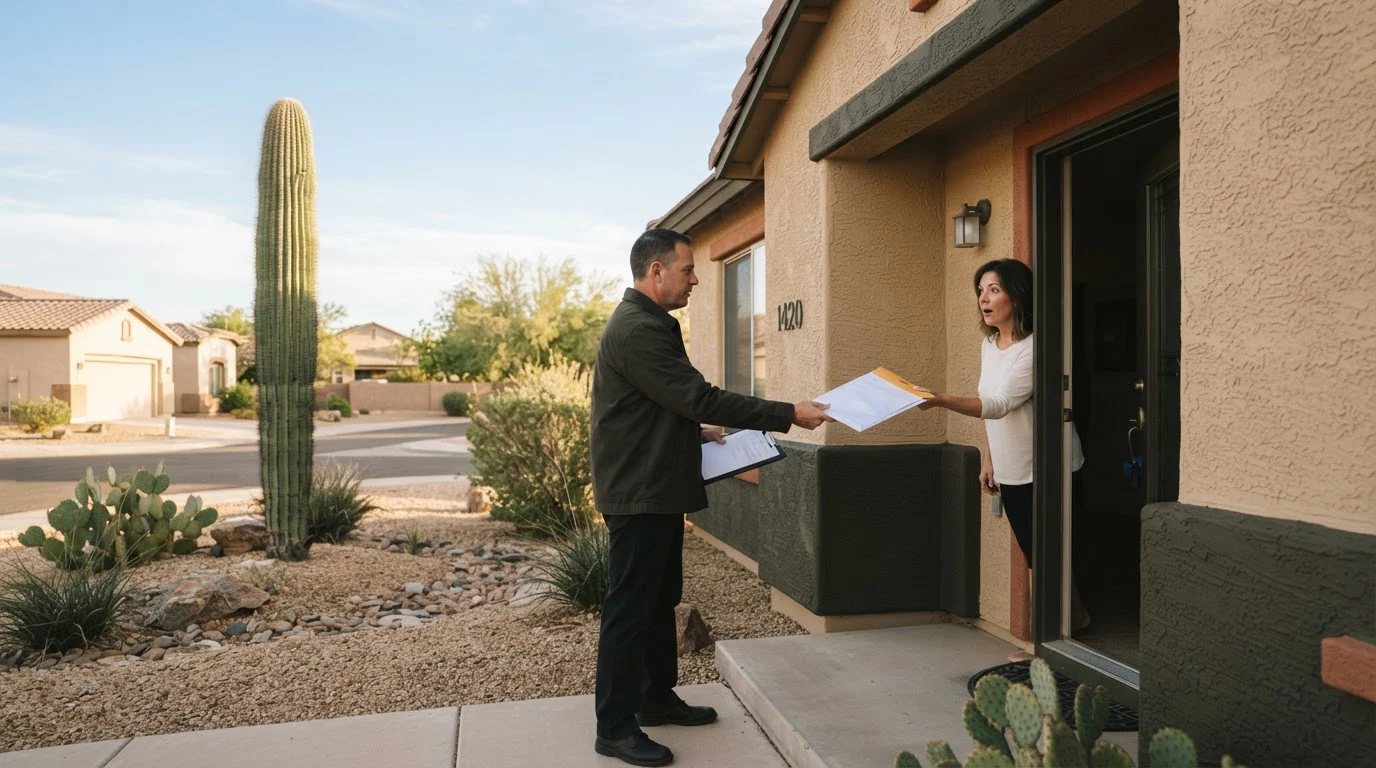
Yes. A subpoena is a court order to appear and testify, and you must obey it unless a judge excuses you or the party that issued it withdraws it. Ignoring one can lead to a contempt finding, a penalty for disobeying the court. Penalties vary by state and can include fines and, in some places, an arrest warrant.
Do not stay silent and hope the date passes. Call the office that issued the subpoena and ask four things:
- What date, time and courtroom should you report to?
- What fee and mileage you will be paid, and whether it was tendered with the subpoena?
- Which documents, if any, you must bring?
- Whether they will tell you if the date changes or your testimony is no longer needed?
If you have a real conflict, such as illness, a medical procedure or pre-paid travel, tell them as early as possible with the reason. They can ask the court to release you. A witness who asks early is treated very differently from one who simply does not appear.
Relatives and friends can testify. In federal court, Federal Rule of Evidence 601 says every person is competent to be a witness unless a rule provides otherwise. State rules differ in detail, but a family relationship alone does not generally disqualify anyone. The judge or jury decides how much weight to give the testimony.
This page covers United States courts.
What happens in the courtroom on the day you are called as a witness?
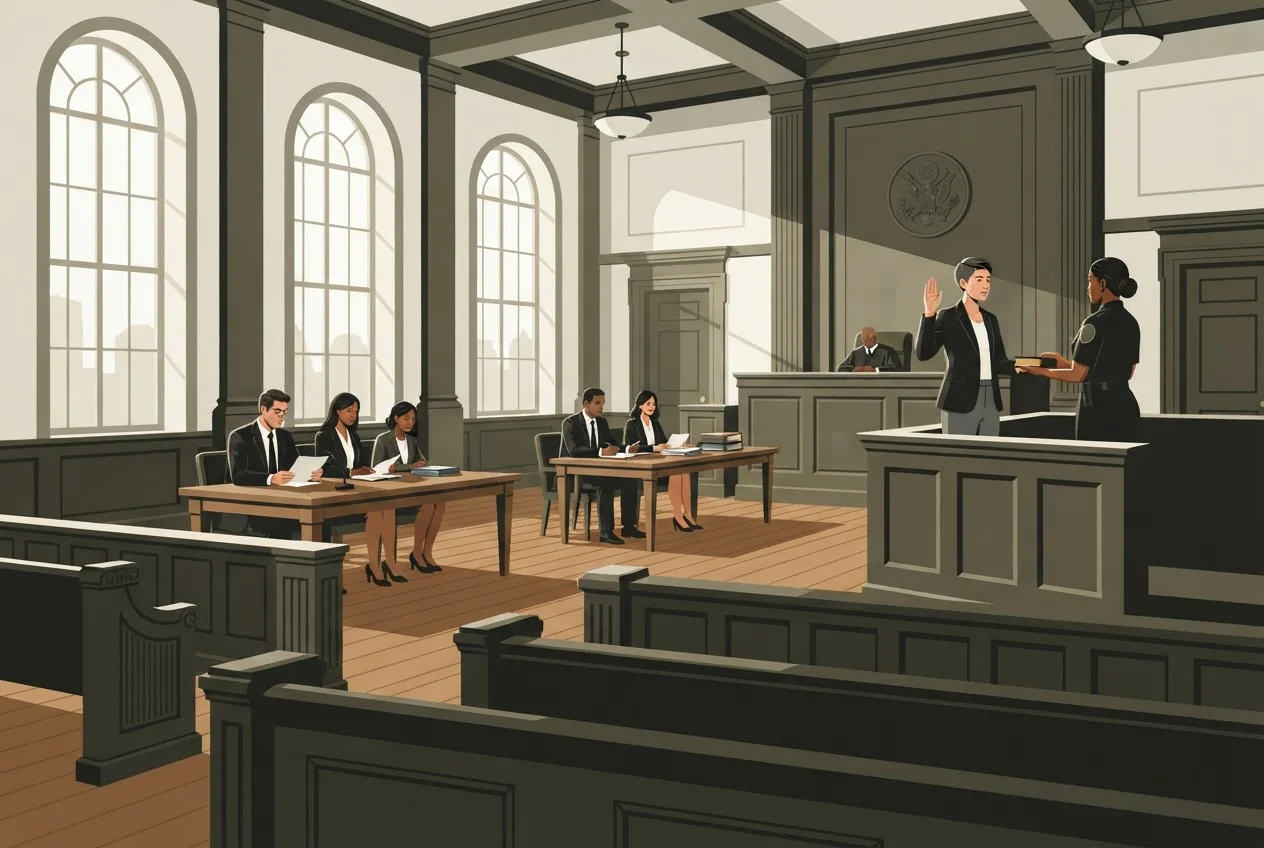
You wait, you are sworn in, the side that called you asks questions, the other side cross-examines you, and you step down. The order is the same in most courtrooms, and knowing it removes most of the surprise. The federal prosecutors' tips for testifying describe the same sequence.
Waiting
You may wait outside the courtroom for a long time. Bring something to read. Turn off your phone before you enter.The oath
The clerk asks you to swear or affirm that you will tell the truth. Listen and say "I do" clearly.Direct examination
The lawyer who called you asks open questions. Speak slowly and loudly enough for the person farthest away to hear. The court reporter must record every word, so say "yes" and "no," not "uh-huh."Cross-examination
The other side's lawyer tests your account. Questions may repeat, challenge your memory or suggest another version. This is the stage that frightens people, and the next section gives you words for it.Objections and sidebars
When a lawyer says "objection," stop talking and wait for the judge's ruling. A sidebar is when the judge and lawyers confer at the bench out of your hearing. Sit quietly.Stepping down, and afterward
Do not discuss your testimony with other witnesses until the case is over. In the hallway, do not speak to jurors, even to say hello.
What should you say when a question goes wrong on the witness stand?
Use short, fixed phrases, and never guess. These cover the situations that cause most stumbles. Rows 1, 2, 3, 6 and 7 follow federal prosecutors' guidance on testifying; rows 4, 5 and 8 are our recommendations.
| Situation | Say |
|---|---|
| 1. You don't understand the question | "Could you rephrase that?" |
| 2. You don't remember | "I don't remember that detail." Do not fill the gap with a guess. |
| 3. You remember only part | "All I recall is..." rather than "That's all," so you can add something you remember later. |
| 4. The lawyer demands yes or no on something that needs context | "I can't answer that yes or no without explaining. May I explain?" |
| 5. The lawyer states something untrue as if it were fact | "That's not quite what I said. What happened was..." |
| 6. You gave a wrong detail earlier | Correct it at once: "May I correct something I said earlier?" Do not wait for the other side to expose it. |
| 7. You are asked for a distance or time you did not measure | "My estimate is about that, but I did not measure it." |
| 8. You are overwhelmed | Pause, breathe, and ask: "May I have a moment?" |
Two rules sit under all of these. Answer only the question asked, because volunteering extra information is how witnesses wander into trouble. And testify to what you personally saw, heard or did, not to what you assume or were told.
How do you stay calm on the witness stand?
Prepare the memory, not the wording. Recall the scene: where you stood, what was around you, the order of events, roughly how far or how long. Do not memorize a speech. Memorized testimony sounds rehearsed and falls apart the moment a question comes out of order.
Ask the lawyer who called you which of your own earlier statements and records you should review, and bring only what you are told to bring. Then rely on three habits:
- Let the whole question finish. Nervous witnesses answer early. Wait for the last word, then pause.
- Slow down. Fast answers sound anxious and are easier to get wrong.
- Stay polite when doubted. Cross-examination is not a personal attack. The quickest way to lose a listener's trust is to lose your temper.
Two worries deserve a direct answer. If a question could incriminate you, you have a right against self-incrimination under the Fifth Amendment. Tell the judge you wish to speak to a lawyer before answering, and do not guess your way through it. If you fear for your safety after testifying, tell the prosecutor's office or its victim-witness unit before the day. Do not treat it as something to endure silently. This page is general information, not legal advice for your case.
How much is a witness paid for attending court?
Witness fees are set by statute and differ by court. Among the five compared here they run from $10 a day in Texas civil cases to $40 in federal court, and some states pay less, such as Florida at $5 a day plus 6 cents a mile. Four of the five add mileage. The fee is not wages and does not replace a day's pay. Figures are current as of October 2026.
| Court | Daily fee | Mileage | Advance payment (civil cases) | Source |
|---|---|---|---|---|
| Federal | $40 | Federal travel rate for a private vehicle | Civil cases: one day's fee and mileage must be tendered with the subpoena, unless it is issued on behalf of the United States (Fed. R. Civ. P. 45(b)(1)). Government-called witnesses are paid after attendance on a witness voucher. | |
| Minnesota | $20 | 28 cents a mile | You need not attend unless one day's fee and travel are paid or tendered in advance | |
| California (superior court) | $35 | 20 cents a mile, both ways | You may demand one day's fee and mileage in advance | |
| Georgia | $25 | 45 cents a mile for witnesses outside the county | Tendered with service for out-of-county witnesses, but not when the state or an accused issues the subpoena | |
| Texas | $10 | None; the fee covers travel | The party summoning you pays one day's fee when the subpoena is served |
Worked example (our model). Assume a civil witness who lives 30 miles from the courthouse, so 60 miles round trip, attends one day, and is outside the county in Georgia. The calculation is the daily fee plus 60 miles times the mileage rate:
- Texas: $10.00, with no mileage.
- Minnesota: $20 + (60 × $0.28) = $36.80.
- California: $35 + (60 × $0.20) = $47.00.
- Georgia: $25 + (60 × $0.45) = $52.00.
- Federal: $40 + (60 × $0.76) = $85.60, using the General Services Administration mileage rate in effect from 1 July 2026.
Rates for criminal cases, police officers and expert witnesses can differ, and the subpoena or issuing office should state yours. If the fee is not tendered with a civil subpoena where the law requires it, raise that when you call. Tell your employer the day you receive the subpoena, because the fee will not cover lost wages.
What should you check before the day you testify?
Run this list when the subpoena arrives and again the night before. Each item is a test with a pass and a fail.
When the subpoena arrives
- Logistics. Pass: you can write the date, time, courtroom and the name of the party that issued the subpoena on one line. Fail: any blank, so call the issuing office.
- Money. Pass: you know the daily fee, the mileage rate, and whether one day's fee came with the subpoena. Fail: you are guessing, or your court requires advance payment and none came, so raise it when you call.
- Documents. Pass: you have a written list of what to bring, or confirmation that none is required. Fail: no written list, so ask the issuing office.
- Work. Pass: your employer has the dates and has confirmed in writing that you are released. Fail: no written confirmation, so ask before the week of the hearing.
The night before
- Your account. Pass: you can tell what happened in order from memory, in your own words. Fail: you can only recite a script or need to read it.
- Estimates. Pass: for each distance, time and count you plan to mention, you know whether you measured it or are estimating. Fail: you cannot say which of your numbers are estimates.
- Route. Pass: you have chosen an arrival time that allows for security screening (our recommendation: 30 minutes early). Fail: you have not checked the entrance and parking.
- Phone. Pass: you have decided to switch it off before you reach the courtroom door. Fail: you plan to switch it off after entering.
Self-review after you testify
- Questions. Pass: you waited for the full question before every answer. Fail: you answered before a question ended on any occasion.
- Objections. Pass: you stopped speaking each time one was raised. Fail: you kept talking after an objection.
- Afterward. Pass: you have not discussed your testimony with any other witness. Fail: you did, so tell the lawyer who called you.
How should an investigator, process server or guard prepare to testify about their own work?
If you testify about your own work, your written report or affidavit is your testimony before you take the stand, and cross-examination will test every line of it against your memory. Preparation is a document review, not a performance.
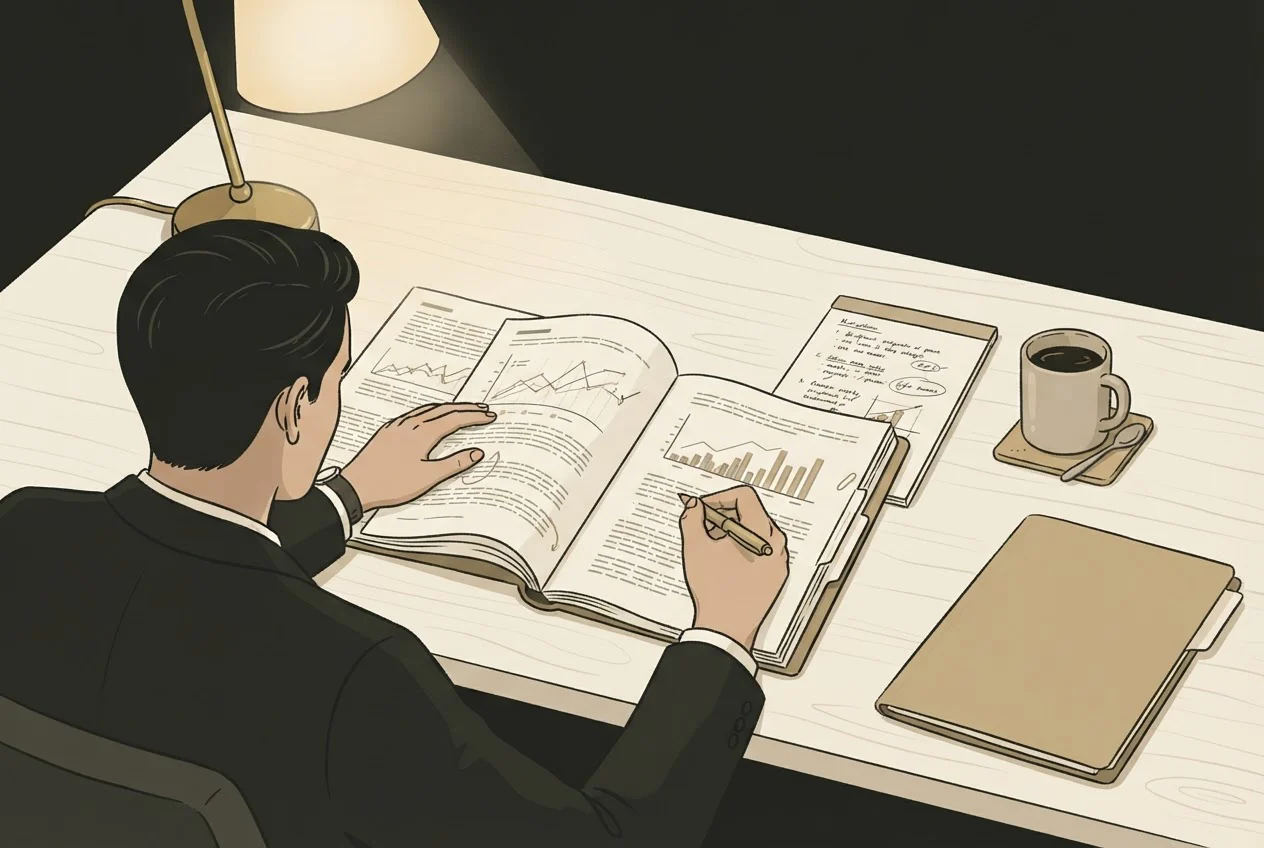
Read your report from start to finish before the day. Mark which statements you saw yourself and which you were told, because only the first kind is your testimony. Do not add detail that is not in your notes. If your memory now differs from what you wrote, say so plainly and explain why. Being consistent with earlier statements is expected, and being honest about a mistake is better than defending it. Our guide on how to write investigation reports that hold up covers the report itself, and our interview techniques for investigators guide covers how the statements in it are gathered.
Process servers are usually called when a defendant disputes service. Federal courts require proof of service by the server's affidavit under Federal Rule of Civil Procedure 4(l); check your state's rule of civil procedure on whether a sworn affidavit of service counts as proof. Notes made at the time, with the time, place and person served, are what make your account hold. For first-time servers, see our guide to process server training for first-time servers, and find our self-paced training in the Process Server course category.
For investigators, our Legal Aspects of Private Investigation course ($120 as of October 2026, self-paced, 49 lessons) covers the rules of evidence that cross-examination relies on. Our Minnesota Pre-Assignment Course for Private Detectives/Investigators ($185, 12 hours) includes deposition and courtroom testimony as well as report writing. Your licensing board decides which courses count toward your license, so verify whether a PI course counts in your state before you enroll. To start with the evidence rules, open Legal Aspects of Private Investigation.
Train for the Stand With Learningshopusa
Frequently asked questions
Sources
- 1.Tips for Testifying, U.S. Attorney's Office, Eastern District of Wisconsin (U.S. Department of Justice)
- 2.28 U.S.C. § 1821, Per diem and mileage generally; subsistence (Cornell Legal Information Institute)
- 3.Federal Rule of Civil Procedure 45, Subpoena (Cornell Legal Information Institute)
- 4.Federal Rule of Civil Procedure 4, Summons, including 4(l) on proof of service (Cornell Legal Information Institute)
- 5.Federal Rule of Evidence 601, Competency to Testify in General (Cornell Legal Information Institute)
- 6.Minnesota Statutes § 357.22, Witnesses (Office of the Revisor of Statutes)
- 7.California Government Code § 68093, witness fees (California Legislative Information)
- 8.Georgia Code § 24-13-25, witness fees and mileage (Justia)
- 9.Texas Civil Practice and Remedies Code § 22.001, Witness Fees (Texas Legislature)
- 10.Florida Statutes § 92.142, Witnesses; pay (Florida Legislature)
- 11.Privately Owned Vehicle Mileage Reimbursement Rates (U.S. General Services Administration)