Undercover Investigator: Four Jobs, Four Pay Levels
An undercover investigator gathers evidence under an assumed role, either as a sworn officer or in private retail, insurance, or advocacy work, where pay and license rules differ by employer.
By Sharon DeCet, Founder · Updated 9 Oct 2026

Key takeaways
- 01"Undercover investigator" covers four jobs: sworn officers, retail and corporate loss prevention, insurance and financial investigation, and advocacy groups. Only the last three can be entered without police service.
- 02Median pay for all private detectives and investigators ran from $41,480 in retail trade to $75,810 in government in May 2025. Police and detectives had a median of $77,310.
- 03Most states require private investigators to be licensed, so confirm with your state licensing board who holds the license for the work before you take an undercover assignment.
- 04Before accepting any private undercover job, run seven written checks: license holder, your own licensing, written scope, legal limits on your cover, note-keeping, testimony and an exit plan.
In this article
- 1What is an undercover investigator, and which of the four kinds do you mean?
- 2How much does an undercover investigator earn?
- 3Do you need a private investigator license to work undercover?
- 4Is undercover work mostly disguise or mostly documentation?
- 5What should you check before accepting a private undercover assignment?
- 6What training prepares you for undercover investigation work?
- 7Frequently asked questions
A search for undercover investigator returns police dramas, farm exposés and retail loss-prevention (stopping theft and fraud inside a business) ads. They describe jobs with almost nothing in common: different employers, different rules and different pay. Which one you mean decides the license, the salary and the way in.
The U.S. Bureau of Labor Statistics (BLS) reports a median of $51,220 a year for private detectives and investigators (May 2025), the closest official figure for private undercover work. That single number hides a wide spread by employer.
Police and federal undercover work is an assignment inside a sworn agency, so there is no application form for it and no way to apply from outside. The private routes are open to people without police backgrounds, but each carries rules about licenses, recordings and testimony.
Below, we sort the roles, compare pay by employer, and give you a seven-part checklist to test any private assignment before you accept it.
What is an undercover investigator, and which of the four kinds do you mean?
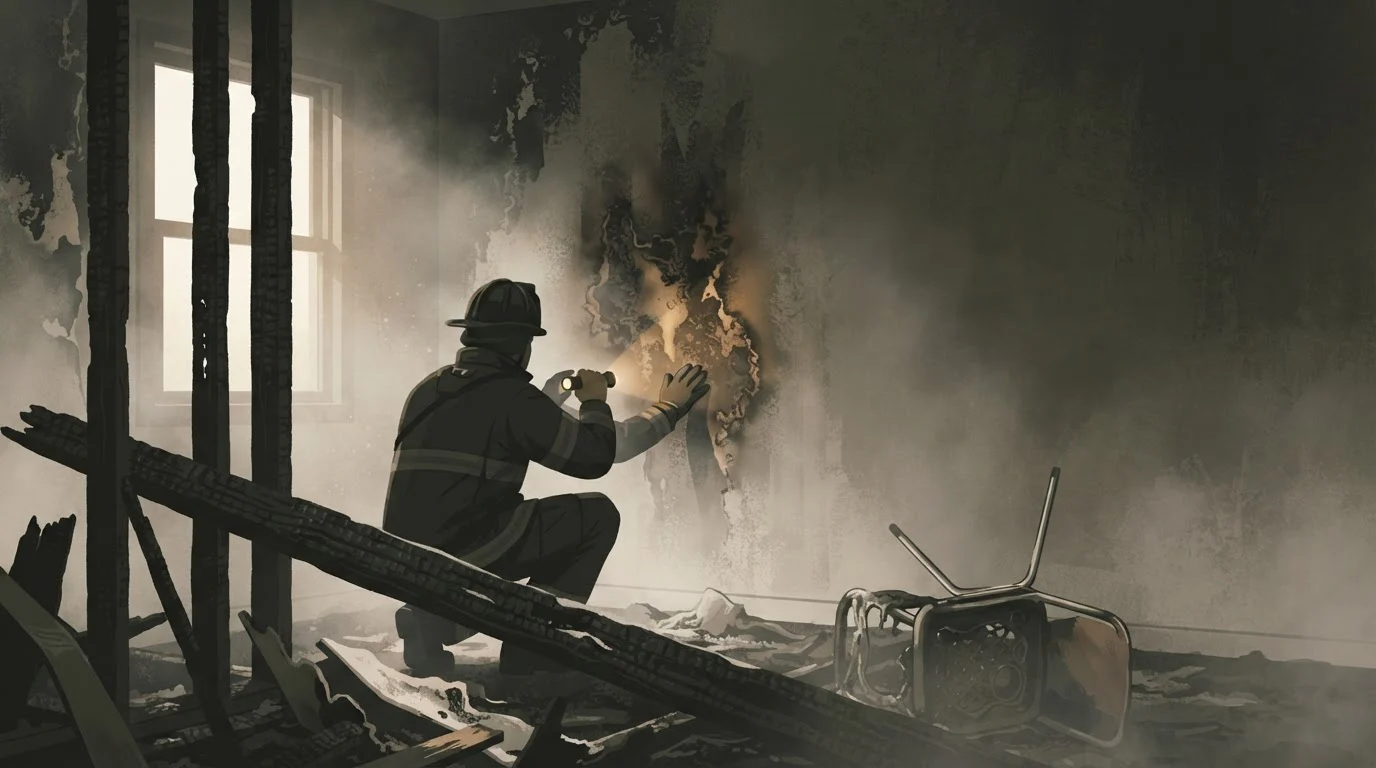
An undercover investigator is a person who gathers information or evidence while concealing the investigative purpose, by posing as an employee, customer, buyer or group member. Four employers hire for this, and they differ on nearly everything a candidate cares about.
| Role | Who hires | How you get in | Pay reference (BLS, May 2025, unless noted) | First step |
|---|---|---|---|---|
| Police or federal undercover officer | Sworn agencies | Become a sworn officer first; detectives are promoted from patrol | Apply to the agency as an officer or agent | |
| Retail and corporate loss prevention | Retailers, employers, investigation firms | Store-detective or investigator job; license rules vary by state | $41,480 median, all private detectives and investigators in retail trade | Entry role in loss prevention or store security |
| Insurance and financial investigation | Insurers, banks, investigation firms | Claims work or a special investigations unit (an insurer's fraud team), often with a state license | $72,740 median, all private detectives and investigators in finance and insurance | Claims or fraud-unit experience |
| Advocacy undercover investigator | Animal-advocacy and similar groups | Apply directly to the organization | $50,000 to $52,000 in one posting | Build report-writing skill and relevant field experience |
The O*NET database from the U.S. Department of Labor lists the private, corporate version of the task under private detectives and investigators: "Perform undercover operations, such as evaluating the performance or honesty of employees by posing as customers or employees." The BLS adds that store detectives may pretend to be customers.
How much does an undercover investigator earn?
Median pay for all private detectives and investigators ranges from $41,480 in retail trade to $75,810 in government, according to the BLS (May 2025). The BLS publishes no separate figure for undercover work. Its median pay by industry for private detectives and investigators:
- Government: $75,810
- Professional, scientific and technical services: $75,710
- Finance and insurance: $72,740
- Administrative and support services: $50,720
- Retail trade: $41,480
The gap between the highest and lowest of these is $34,330 (our subtraction: $75,810 minus $41,480). These figures cover every private detective and investigator in each industry, so they show the pay band for the field, not a promised salary for undercover work.
Sworn officers sit above most of that band. The BLS lists a median of $77,310 for police and detectives, $93,790 for detectives and criminal investigators, and $76,210 for police and sheriff's patrol officers (May 2025).
Advocacy work falls between the retail and insurance figures. One Animal Equality posting, reviewed in October 2026, lists $50,000 to $52,000 with benefits. It requires working alone and isolated for long periods, exposure to dead and dying animals, blood and feces, extensive travel, excellent report writing, and a vegan lifestyle.
Ask any employer which of these categories it falls into before you compare offers.
Do you need a private investigator license to work undercover?
In most states, yes: the BLS states that most states require private detectives and investigators to be licensed. Whether your particular assignment falls under the license depends on the state and on who employs you.
California requires 3 years (6,000 hours) of paid investigative work, 2 years (4,000 hours) with a law degree, or 2.5 years (5,000 hours) with a qualifying associate degree. Its two-hour exam covers "undercover investigations and surveillance." Qualifying experience includes work as an insurance adjuster, a sworn officer or an employee of a private investigator.
Other states set different hours, exams and fees. Our guide to private investigator (PI) license requirements by state is the place to start, and your state board has the final word.
Some states also have laws aimed at undercover work on farms, such as restrictions on obtaining farm employment under false pretenses. The Penn State Center for Agricultural and Shale Law tracks them. Read your state's law, and consult an attorney, before any such assignment.
Is undercover work mostly disguise or mostly documentation?
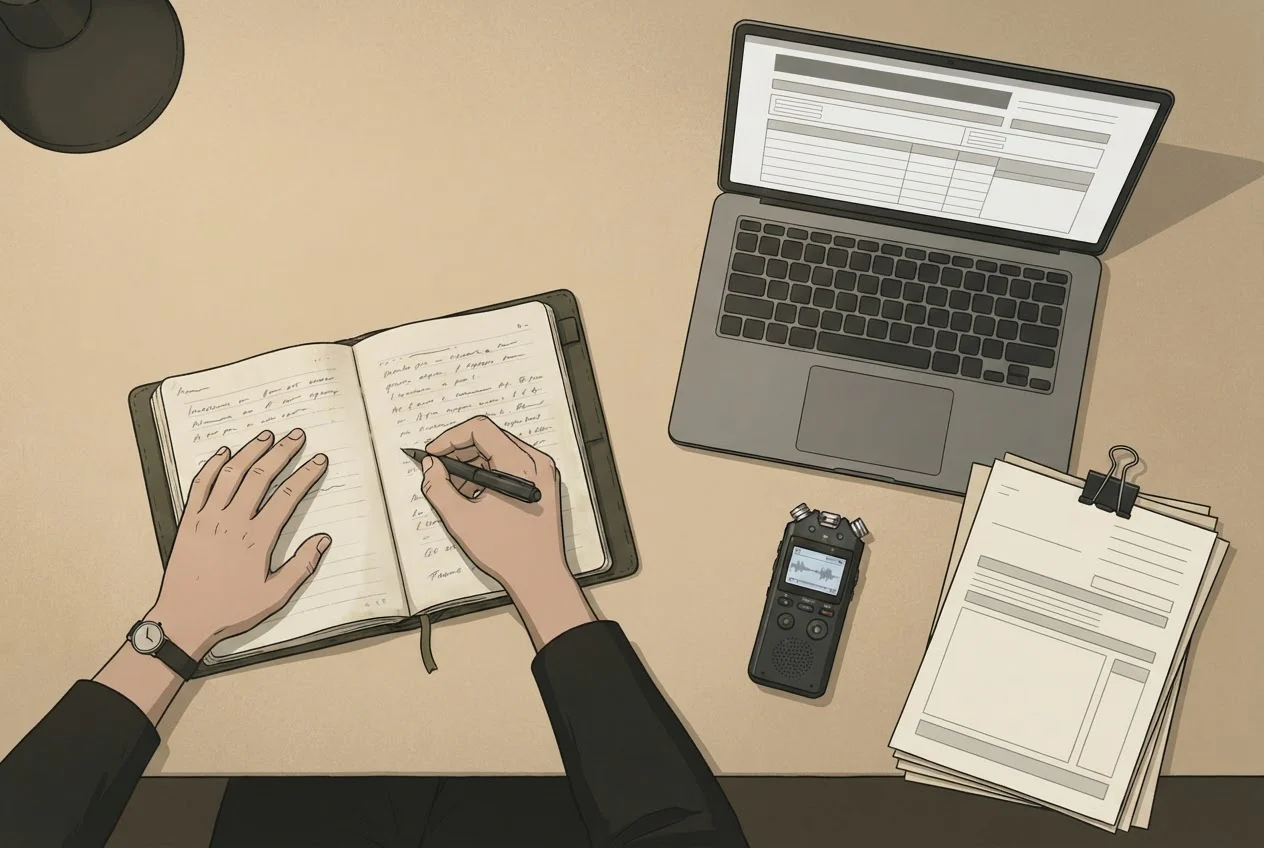
Undercover work is mostly documentation: dated notes, recordings and reports matter more than the cover identity. The BLS lists the core duties of private investigators as interviewing people, conducting surveillance, and writing reports of the findings.
The investigator who cannot show what was seen, when, and how it was recorded gives the client, a prosecutor or a hearing officer little to use. In our view, that is where most beginners fall short. They rehearse the cover story and leave the record to chance.
Our guide to writing investigation reports that hold up covers the record-keeping side. The checklist below builds it into the decision to take the job.
What should you check before accepting a private undercover assignment?
Run seven checks before you accept any private undercover role, and walk away if you fail any of checks 1 to 3. Sworn officers follow their agency's rules instead, so these checks apply to private work.

Whose license covers the work?
Pass: the employer or agency gives you a license number and your state board's lookup confirms it. Fail: nobody can name the license holder.Does your state require you to be licensed or registered too?
Pass: the board confirms your status in writing or by email. Fail: you are relying on the employer's assurance alone.Is the scope in writing?
Pass: a letter names the client, the subject, the methods allowed and the end date. Fail: instructions are verbal.Is your cover limited by law?
Pass: you will not claim to be a police officer, you will not obtain a person's financial account information by false statements, and you know your state's recording-consent rule. Fail: you are unsure what you may record or say.How are notes and recordings kept?
Pass: dated notes are written the same day and stored with a named custodian. Fail: you plan to reconstruct events later.Will you testify?
Pass: you have agreed in writing that you may be named and called to a hearing. Fail: the employer expects you to stay anonymous in court.What is the exit plan?
Pass: a handler (the person who directs the operation and receives your reports) has a check-in schedule and a defined pull-out trigger. Fail: you work alone with no contact schedule.
What training prepares you for undercover investigation work?
Training that matches the work covers planning, cover stories, evidence and safety, and our Undercover Operations course teaches exactly those. It is self-paced, runs 6 hours, has 30 lessons, and costs $110 as of October 2026. We award a certificate of completion.
The course covers decision-making, planning, target and operative selection, cover stories, the handler's role, insertion, operative safety, evidence gathering and closing an operation. Chapter 3 covers surveillance, and a final exam ends the course.
We list continuing-education (CE) credit, the training licensed investigators complete to renew, in Georgia, Iowa, Kansas, Kentucky, Minnesota, New Mexico, Oregon, Tennessee, Oklahoma, North Carolina, South Carolina and Texas. Approval is pending in other states. North Carolina students must email the instructor for the form to submit to the North Carolina board.
A course is not a license, so confirm credit with your board. Our guide on whether a PI course counts in your state explains how.
Our Private Investigator category also includes the supporting skills: Surveillance, Report Writing, Note Taking, Testifying, Interviewing and Collection and Preservation of Evidence at $80 each, and a 2-hour Ethics course at $40 (all as of October 2026). With Undercover Operations at $110, that set totals $630 (our sum: $110 plus six at $80, which is $480, plus $40). For help sequencing them, see which PI skills course to take next.
To get started, open the Undercover Operations course, or call Learningshopusa at (832) 922-1215 or (706) 268-2221, Monday to Friday, 9:00 AM to 6:00 PM Eastern.
Train for undercover work with a 6-hour course
Frequently asked questions
Using an assumed role is part of private undercover work as the BLS and O*NET describe it, but you may not claim to be a police officer or obtain a person's financial institution account information by false statements. Federal law prohibits that pretexting. Recording consent and farm-specific laws vary by state.
Sources
- 1.U.S. Bureau of Labor Statistics, Private Detectives and Investigators (Occupational Outlook Handbook)
- 2.U.S. Bureau of Labor Statistics, Police and Detectives (Occupational Outlook Handbook)
- 3.O*NET OnLine, 33-9021.00 Private Detectives and Investigators
- 4.California Bureau of Security and Investigative Services, Private Investigator license
- 5.Federal Trade Commission, Gramm-Leach-Bliley Act (pretexting provisions)
- 6.Animal Equality, Undercover Investigator, USA (posting)
- 7.Penn State Center for Agricultural and Shale Law, Ag Gag Statutes
- 8.Learningshopusa, 119. Undercover Operations