Physical or Digital Evidence Training for Private Investigators?
Compare physical and digital evidence training for private investigators, including custody, practical instruction, and specialist-referral limits.
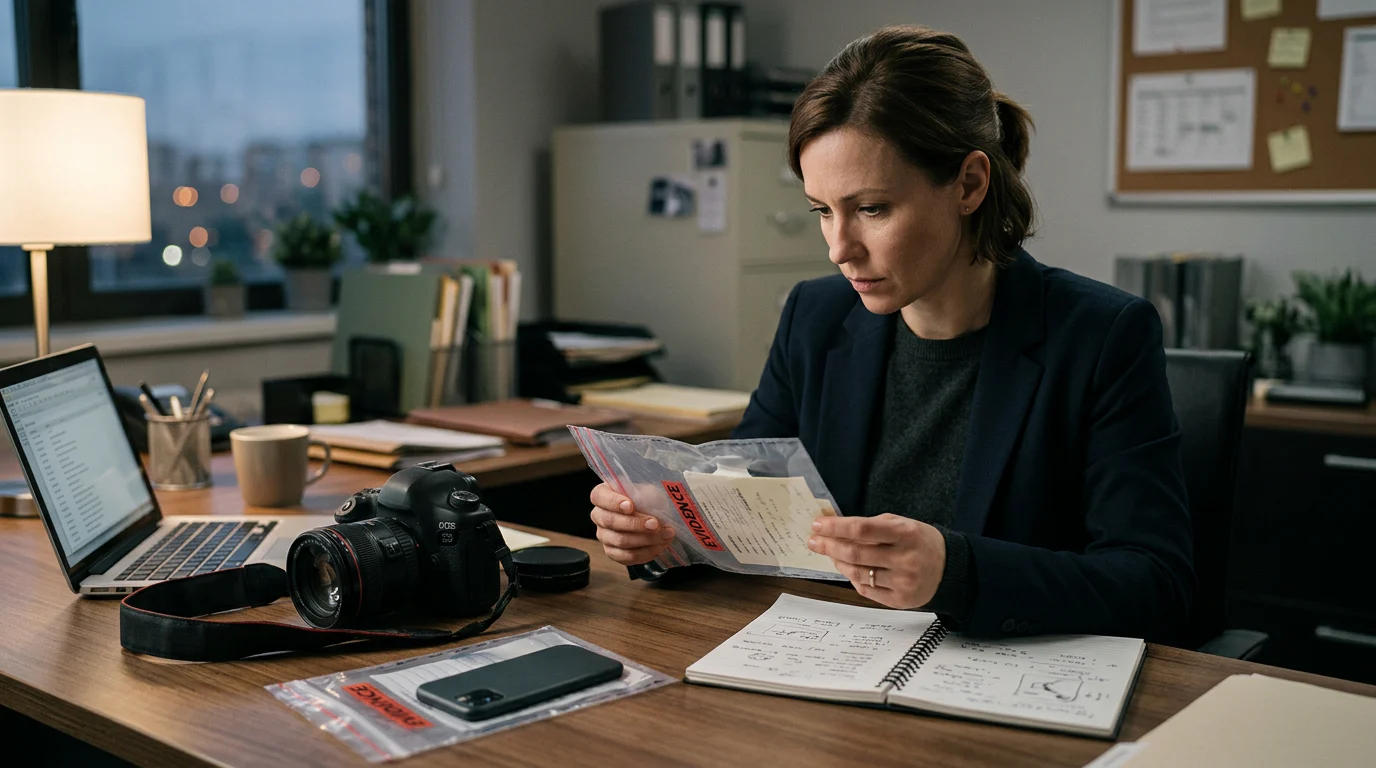
Physical or Digital Evidence Training for Private Investigators?
Evidence handling is not one skill. The 180-page guide on crime-scene investigation shows how much work sits between first observation and defensible evidence submission.
Evidence training for private investigators should start with physical instruction when assignments involve scene documentation, photography, packaging, labeling, or custody transfers. Digital training fits devices, files, social media, metadata, and preservation requests. Investigators who encounter both need chain-of-custody and report-writing foundations before pursuing forensic tools or examiner-level credentials.
We compare the two tracks, the shared skills that come first, the practice a course should provide, and the role boundaries that tell you when to refer evidence to a specialist.
Which Evidence Do You Lawfully Handle?
Start with the evidence you are actually authorized to encounter, not the most impressive course title. A property-loss assignment may require condition photographs, measurements, records, and a careful report. An online harassment or workplace inquiry may instead involve public posts, supplied files, messages, or a client-controlled device.
The first decision is whether your work centers on physical items, digital sources, or both. That choice determines the preservation risk you need training to manage.
| Common Assignment | Evidence Form | Start With | Main Preservation Risk | Core Documentation | Escalate When |
|---|---|---|---|---|---|
| Property loss or scene condition | Objects, documents, photographs, measurements | Physical track | Contamination, poor labels, lost context | Photo log, notes, measurements, item ID | Testing, hazardous material, biological or trace evidence |
| Insurance or workplace matter | Records, images, damaged property, video | Physical track with digital-source awareness | Incomplete source trail or altered files | Source log, condition notes, custody record | Specialized examination or disputed authenticity |
| Online harassment or reputation matter | Posts, profiles, messages, files | Digital preservation track | Deleted, edited, or incomplete online content | URL, account context, capture time, source record | Private access, platform requests, forensic authentication |
| Client-supplied phone or computer | Device, storage media, cloud account information | Digital preservation track | Data alteration, remote changes, encryption | Device state, identifiers, connections, handoff log | Acquisition, extraction, encryption, or cloud data request |
| Mixed civil investigation | Physical records and digital sources | Shared foundation, then dominant track | Broken custody chain or unclear authority | Case chronology, evidence register, report | Any task beyond preservation and documentation |
A course is useful only if it prepares you for the evidence you expect to handle lawfully. Our evidence training alternatives explain why broad investigation instruction and specialist forensic capability should not be treated as the same credential.
What Must Evidence Training for Private Investigators Teach First?
Before choosing a physical or digital specialty, we recommend building the workflow that makes either track usable: legal boundaries, contemporaneous notes, unique identifiers, secure storage, custody transfers, and reports that accurately describe what happened.
A custody record is more than a signature sheet. The NIJ custody guidance identifies the essentials: a unique identifier, item description, collector, collection date and time, and location. It also emphasizes recording transfers and limiting unnecessary handling.
Your foundation course should make you practice these decisions, not merely recognize the vocabulary:
- Lawful authority: Identify the consent, assignment scope, public-source status, or legal process that supports the work before accessing material.
- Source integrity: Record where evidence came from, its condition, and the actions taken to preserve it.
- Contemporaneous notes: Create notes while observing, collecting, receiving, or transferring material, not from memory later.
- Unique identification: Give each item or source a stable identifier that connects photos, notes, storage, and the final report.
- Secure custody: Document each handoff, storage location, date, time, and responsible person.
- Court-ready reporting: Separate observed facts, client statements, preservation actions, and conclusions so the reader can trace the record.
We use this foundation when reviewing our own course scope because practical confidence comes from a completed log and report, not from a vague claim that a learner “understands evidence.” Our practical skills guide helps investigators distinguish documented learning outcomes from skills that a course title merely implies.
What Do Physical and Digital Evidence Courses Teach?
Physical and digital tracks overlap in documentation and custody, but their hands-on skills are different. Physical training focuses on what you can observe, photograph, measure, package, label, store, and transfer. Digital training focuses on identifying sources, preserving state and context, avoiding unnecessary changes, and recognizing when examination requires a qualified specialist.
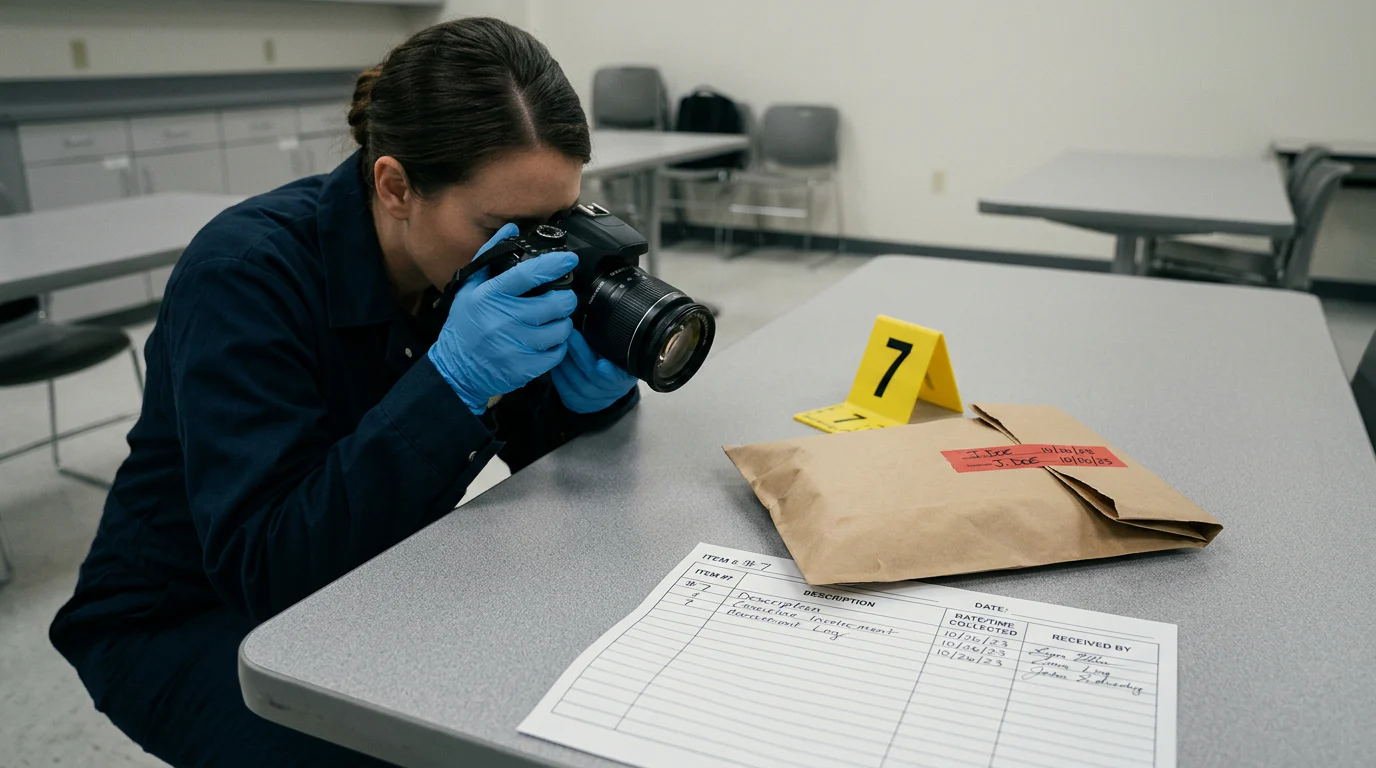
Physical Evidence Competencies
A practical physical-evidence course should require scene or item documentation, not just a slide presentation about it. We look for photography exercises, measurements, image logs, packaging choices, labels, seals, condition notes, storage decisions, transfer entries, and a final written report.
A learner should be able to explain why an item was handled in a particular way, what the original condition was, and who received it next. For broader casework context, our working-investigator plan helps identify whether evidence handling is the immediate skill gap or whether reporting, interviewing, or source validation should come first.
Digital Preservation Competencies
Digital instruction should begin with preservation, not promises of forensic examination. A PI needs to recognize devices, files, public posts, metadata, and cloud-source issues, then document source details and avoid changing the original evidence unnecessarily.
Current mobile evidence guidance warns that powering off or isolating a device can each create preservation risks. That is why a useful course teaches device state, visible connections, identifiers, lawful-access limits, secure handoff, and early referral triggers.
Forensic Examination Boundaries
Forensic copying, extraction, tool validation, data recovery, and examiner interpretation are separate competencies. They can require specialist equipment, documented methods, and supervision beyond a general investigation course.
Choose digital preservation training if you need to recognize and protect potential evidence. Choose specialist instruction only when your role, authority, access, and practical training support the next step. We do not treat a completion certificate as proof that someone can safely conduct examiner-level work.
Which Delivery Format Provides Enough Practice?
The right format depends on the consequence of getting the task wrong. Self-paced training can build a useful foundation for terminology, legal boundaries, custody documentation, and reporting. It does not automatically prove that a learner can package an item, preserve a live device, or defend a handling choice after cross-examination.
| Delivery Format | Best For | Practice To Require | Main Limitation |
|---|---|---|---|
| Self-Paced Theory | Foundations, refreshers, CE planning | Custody-log and report assessments | May not demonstrate physical handling skill |
| Live Virtual Instruction | Decisions, discussion, instructor questions | Scenario review and individual feedback | Limited scene and device practice |
| In-Person Workshop | Photography, packaging, labeling, scene notes | Simulated collection with feedback | Travel and fixed scheduling |
| Laboratory Training | Advanced digital or forensic examination | Supervised acquisition and assessed lab work | Often unsuitable for a general PI starting point |
| Agency-Restricted Program | Eligible public-safety personnel | Structured practical exercises | Usually unavailable to independent PIs |
| Certification Path | Established specialists | Experience, assessment, and scope evidence | Does not replace licensing or state CE |
Price matters, but only after you confirm scope and practice. Our course-cost guide separates focused skills training from state-specific requirements, career programs, and regulator fees that do not belong in the same comparison.
Provider and Program Matrix
We recommend sorting programs by eligibility before comparing credentials or reputation. The table below makes access restrictions visible, because a no-cost public-safety program is not an alternative for an independent investigator if its admission rules exclude that role.
| Provider Or Program | Eligibility And Audience | Curriculum | Hands-On Component | Format | Verified Duration | Current Published Price | Credential Or Record | Access Restriction |
|---|---|---|---|---|---|---|---|---|
| Our PI Skills Catalog | Private-investigation learners | Evidence handling, reporting, legal boundaries | Verify by exact course | Self-paced | Varies by course | Varies by course | Completion certificate | Public enrollment |
| Our Minnesota Preassignment Course | Newly hired Minnesota PI employees | Required employment foundation | Eleven assessments | Self-paced | 12 hours | $185 | Completion record | State-route specific |
| Our Texas PI CE Course | Eligible renewing Texas investigators | Investigation, ethics, Texas law and rules | Required assessments | Self-paced | 18 hours | $175 | CE completion record | Renewal-route specific |
| Federal Digital-Evidence Institute | Active public-safety personnel, prosecutors, judges | Cyber and electronic-crime forensics | Equipment and practical work in some courses | In person | Varies by course | $0 for eligible attendees | Course completion, varies | Independent PIs are not eligible |
| Restricted Digital-Collection Course | Task-force members and affiliate agencies | Digital-evidence collection and preservation | Live instruction | Online | Public listing varies | Not publicly listed | Course completion | Restricted agency access |
A federal digital-evidence institute confirms that eligible attendees receive course fees, travel, lodging, and some equipment at no cost, but its published eligibility is limited to active government law enforcement, prosecutors, and judges. That distinction belongs in every honest comparison.
Our career-path comparison also separates PI employment preparation, renewal education, and specialist credentials, so readers can match a course to the work they actually plan to perform.
Which Program Fits Your Role?
A private investigator who needs cleaner case files should not buy the same training route as an examiner who needs to acquire and analyze media. Likewise, a career changer should not mistake a short skills module for a license pathway, and a public-safety professional should not assume agency-restricted training is open to private practice.
Working Private Investigators
Choose shared custody and report-writing foundations first. Add physical instruction for scene documentation and transfer work, or digital preservation instruction for devices, files, posts, metadata, and source records.
Career Changers and Renewal Learners
Use state-required or state-relevant training for the role it actually serves. Georgia, for example, requires a 70-hour initial curriculum that includes scene protection, photography, evidence collection, and chain of custody under its current PI rule. That does not make every course a forensic-specialist credential.
For renewal planning, keep approval, instructor, attendance, assessment, and certificate records together. Our Georgia CE guide helps investigators separate course completion from regulator acceptance.
Specialist Forensic Examiners
Choose supervised laboratory work, validated tools, defined examination methods, and credentials that match the discipline. The correct next step is not a generic “forensics” course, but training that proves the specific work you will be expected to perform.
Before paying, ask these questions:
- Practical exercise: What must the learner collect, preserve, label, document, submit, and explain?
- Instructor qualifications: What current field experience and teaching qualifications support the instruction?
- Legal content: When was jurisdiction-specific authority and privacy content last updated?
- Assessment: Is there a scored scenario, reviewed report, or individual feedback?
- Certificate verification: What does the certificate show, and how can an employer or regulator verify it?
- CE acceptance: Does the exact course, provider, instructor, and hour allocation count for your renewal route?
Learningshopusa Training for Private Investigators
At Learning Shop USA, we build training around the work you can document and explain, not broad claims of forensic mastery. Our self-paced investigation courses help working investigators strengthen evidence handling, reporting, legal-boundary awareness, and the practical habits that support dependable case files. We are direct about scope: a flexible online module can establish concepts, guide a decision, and provide a completion record, but it should not be treated as a substitute for supervised scene processing or specialist digital examination.
Before you enroll, match the course to the evidence you expect, your state’s approval rules, and the practice you still need. Keep your completion record with your casework and renewal documents, then add workshop or laboratory instruction when your assignments require hands-on performance. We want you to choose the level your role actually supports. Start with our current private-investigation training options at Learning Shop USA.
FAQs on Evidence Training for Private Investigators
Which Training Is Best for Physical Evidence?
Choose instructor-guided practice in photography, measurement, packaging, labeling, custody documentation, and reporting. A certificate alone cannot prove that someone handles evidence safely and consistently in assignments.
Should a PI Learn Digital Preservation Before Forensics?
Start with preservation training covering device state, lawful access, metadata, secure handoff, and referral triggers. Learn acquisition, extraction, and analysis only when your role supports it.
Can Online Training Teach Chain of Custody?
Online courses can teach custody concepts and assess documentation, but simulated handling, individualized feedback, and reviewed transfer records better demonstrate that learners can apply those concepts reliably.
Does CE Equal a Forensic Credential?
Not necessarily. Continuing education can satisfy renewal requirements, while specialist credentials may require separate experience, examination, supervised practice, equipment, or eligibility unavailable to many investigators.