Evidence Collection Training Alternatives for Private Investigators
Compare private investigator evidence collection training by hands-on practice, chain of custody, CE fit, and digital-evidence limits.
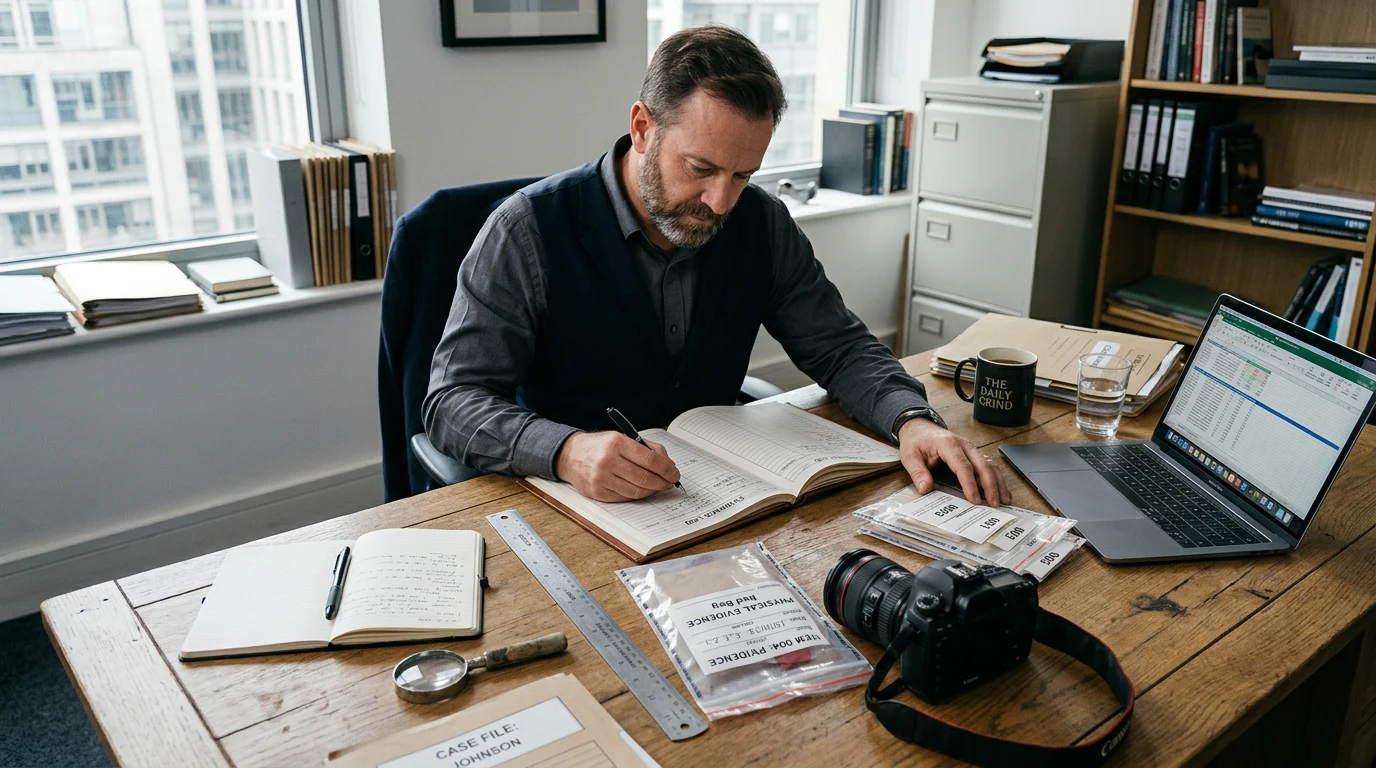
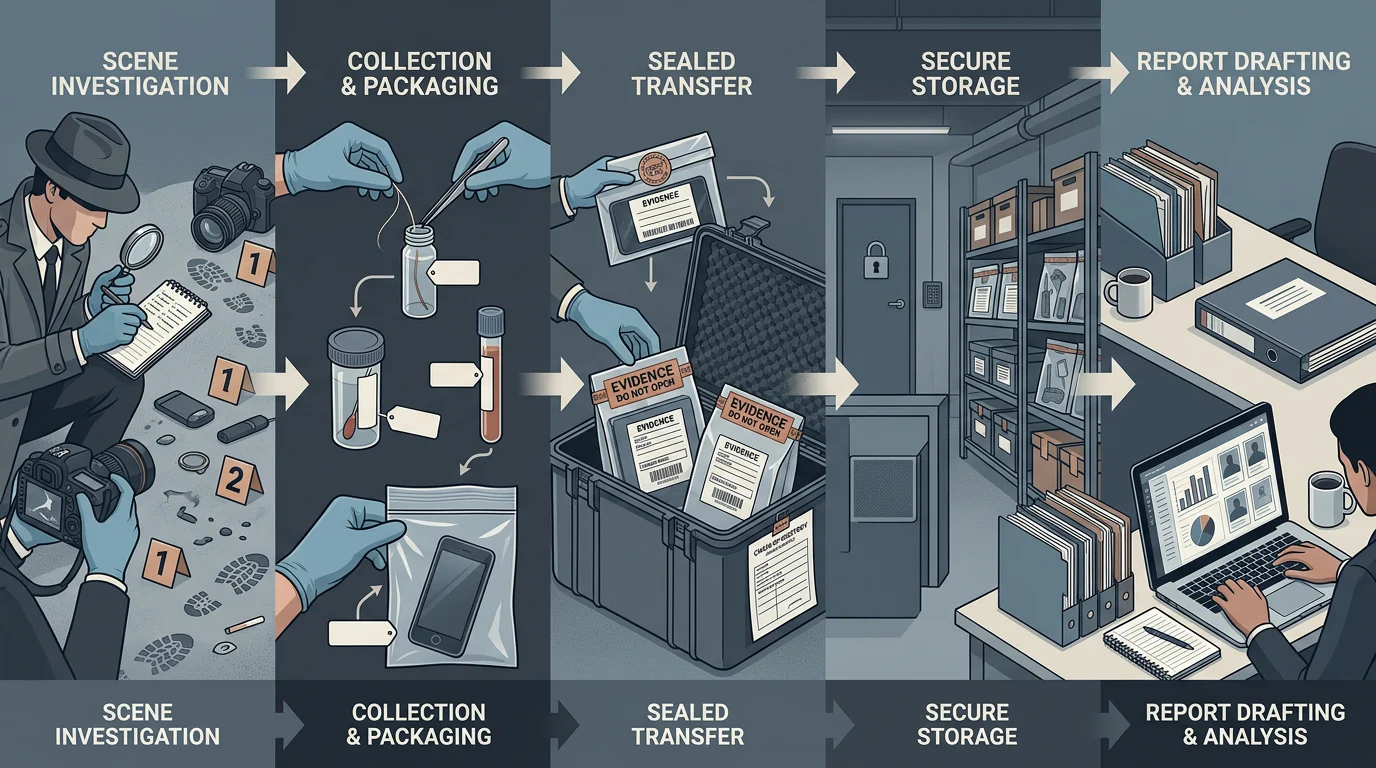
Evidence collection is not one skill learned in one sitting. The NIJ guide on crime-scene investigation runs 180 pages, reflecting the distinct demands of scene assessment, documentation, collection, packaging, transfer, and reporting.
Private investigator evidence collection training is strongest when it matches the evidence you actually handle and proves performance through supervised collection, packaging, documentation, chain-of-custody, and reporting exercises. We would use online learning for flexible foundations or verified CE, then add instructor-reviewed scenario work before claiming field-level physical or digital-evidence competence.
We compare the training routes, the evidence skills that matter, and the questions we believe investigators should ask before enrolling.
Which Training Route Best Fits Private Investigator Evidence Work?
We do not treat a prominent institution, a short completion certificate, or a polished course page as proof of field readiness. The NIJ workflow links scene photographs and measurements with evidence identification, collection, and custody, so our comparison starts with whether a course can show the learner doing connected work.
| Training Route | Audience | Evidence Coverage | Hands-On Work | Chain-Of-Custody Practice | Format And Prerequisites | Duration And Listed Price | CE Or Credential Outcome | Best Fit | Poor Fit |
|---|---|---|---|---|---|---|---|---|---|
| Restricted public-safety classroom benchmark | Eligible public-safety personnel | Physical, photographic, documentary, and basic electronic-evidence collection | Simulated scene work | Verify whether learners complete an individual custody log | In person, employment eligibility applies | 40 hours, listed at $705 when checked | Listed professional and public-safety credit | Eligible investigator needing a classroom scenario | Independent PI needing open enrollment |
| Residential forensic academy | Employed law-enforcement investigators and technicians | Strong physical and photographic coverage, specialist modules vary | Intensive field and facility exercises | Included within evidence-management training | In residence, employment and selection requirements apply | 10 weeks, listed from $8,500 to $12,000 | Diploma and training that may support later credential applications | Full-time crime-scene specialist | PI seeking flexible CE |
| State POST staged-scene workshop | Eligible local investigators | Physical, photographic, documentary, trace, and impression evidence | Staged exercises | Explicit custody emphasis | In person, agency eligibility may apply | 24 hours, current schedule and price require confirmation | Local training record | Investigator needing shorter practical exposure | Remote learner |
| Online PI CE route | Licensed or prospective PIs, depending on course | Usually legal, documentation, reporting, and investigation foundations | Only when exercises are specifically published | Do not assume without a sample exercise | Self-paced or instructor-led online | Course-specific | Approval depends on regulator, provider, and course | Renewal or foundational learning | Learner needing proven scene processing |
| Digital-evidence specialist route | Personnel handling devices or forensic acquisition | Digital preservation and examination | Tool and workflow dependent | Digital custody and integrity controls | Specialist prerequisites may apply | Course-specific | Specialist professional development | Digital-evidence practitioner | General PI learner seeking physical-evidence practice |
For career planning, we separate a licence path from a skill path. Our certification guide helps investigators identify the education, experience, and specialty steps that belong in sequence rather than treating one course as a universal credential.
What Should Private Investigator Evidence Collection Training Actually Teach?
We look for a full evidence workflow, not a list of topic names. A course can accurately say it covers evidence collection while never requiring the learner to package an item, write a transfer entry, or explain a preservation decision in a report.
Scene Assessment and Contamination Control
Training should show when to pause, assess lawful access and hazards, protect a location, and avoid unnecessary handling. Learners should understand why clean implements, appropriate protective equipment, and item separation matter when contamination or loss would affect later analysis.
Packaging, Labels, and Secure Transfer
A practical module should require an item description, a unique identifier, recovery location, date and time, collector identity, condition notes, packaging choice, seal, storage plan, and transfer record. The chain record guidance identifies these core custody details and stresses secure receipts at transfer.
Photography and Field Documentation
We expect learners to connect photographs to notes, measurements, sketches, evidence identifiers, and the final report. A camera exercise without an image log, location information, and review of the written account is documentation exposure, not complete field-documentation practice.
Our practical skills guide explains why we label a capability “not publicly documented” when a course description does not support a more specific claim. We think that is more useful than inviting an investigator to infer specialist training from a broad course title.
How Should Investigators Choose by Evidence Type and CE Need?
The first question is not “Which course has the strongest reputation?” It is “What evidence will I need to recognize, preserve, document, and explain in the work I am authorized to perform?” That distinction keeps a flexible online course from being judged by the wrong standard, and it keeps a highly restricted classroom program from being presented as open PI career training.
For physical evidence, choose scenario-based instruction that requires handling decisions, labels, seals, logs, and feedback. For photographs, reports, records, and video, choose training that makes you build an image log and connect documentation to a written report. For digital devices, choose preservation basics and specialist escalation, not unsupported promises of forensic examination.
Regulatory approval is a separate filter. In Georgia, the Georgia rule specifically names scene protection, photography, documentation, evidence collection, and chain of custody within private-detective training subjects, while CE has its own hour and record requirements. Our Georgia CE guide helps investigators check that renewal question before paying for a course.
How Can You Score Practical Training Before Enrolling?
We use a six-criterion scorecard because course length, institutional status, and completion certificates do not reveal how much a learner actually performs. Give each criterion zero points when it is not publicly documented, one point when it is included but ungraded, and two points when the learner completes it and receives individual feedback.
| Practical Training Criterion | 0 Points | 1 Point | 2 Points |
|---|---|---|---|
| Instructor demonstration | Not published | Demonstration mentioned | Demonstration tied to a learner task |
| Scenario work | No scenario stated | Case discussion only | Simulated scene or realistic case exercise |
| Graded exercise | Recall quiz only | Activity without evaluation detail | Graded collection, log, or report task |
| Instructor feedback | No feedback path | General support stated | Individual work reviewed with feedback |
| Equipment access | Not stated | Demonstration materials only | Learner uses realistic tools or materials |
| Court-ready reporting | Not stated | Report-writing topic | Learner submits and revises a report or log |
A score of ten or higher does not create legal authority or forensic specialization, but it gives us more confidence that the course asks for performance instead of recognition. We also want investigators to ask whether the instructor reviews corrections to an evidence log, because a defensible correction preserves accountability rather than concealing the original entry.
For Texas renewal planning, our Texas PI CE planner can help organize the hour categories first. We would only compare convenience, price, and study schedule after confirming the course can satisfy the actual requirement.
Where Should Investigators Stop and Escalate Digital Evidence?
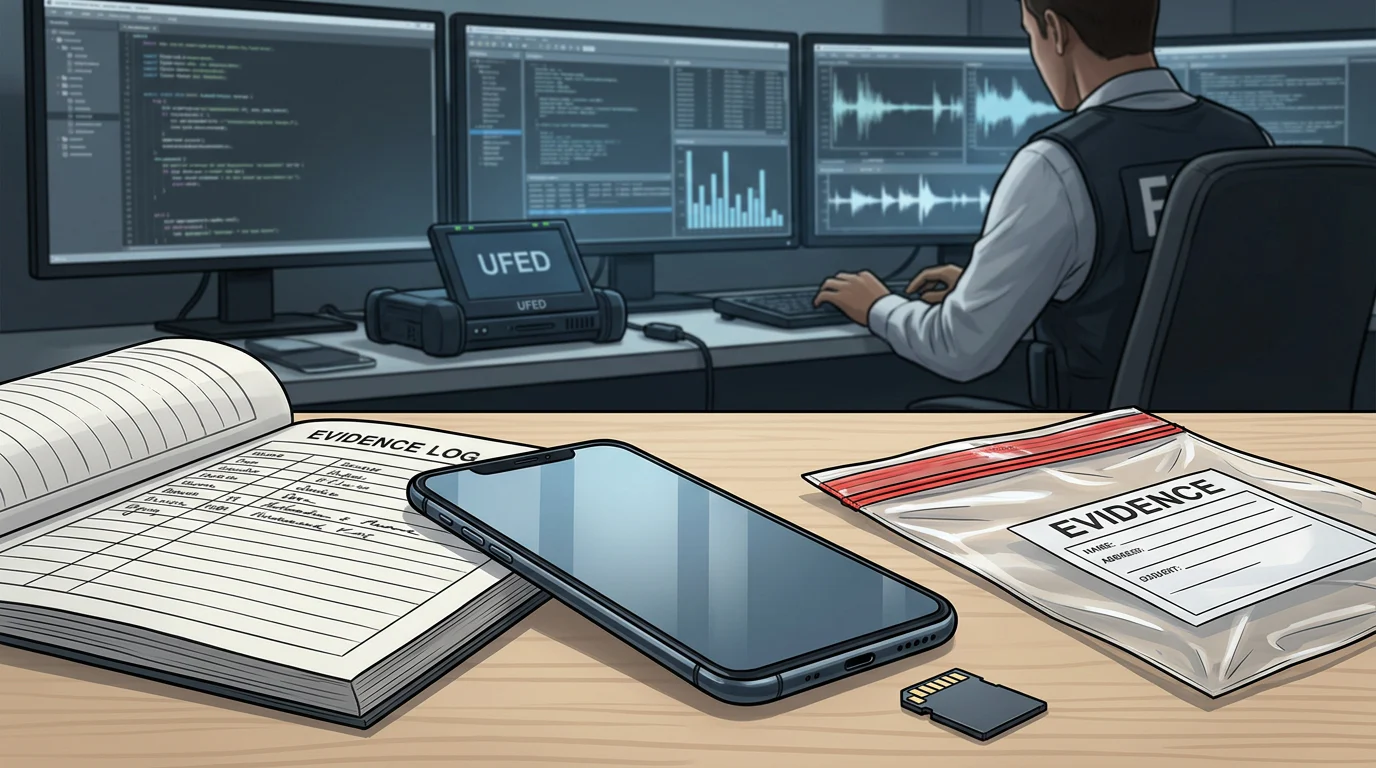
Digital evidence requires a bright line between preserving an item and examining its contents. We recommend that investigators document the device, its apparent state, physical connections, identifying features, and collection circumstances, then follow the applicable legal authority and organizational procedure.
A general investigator course can teach device recognition, preservation risks, documentation, custody, and when to call a specialist. It should not imply that a learner can bypass security, acquire data, examine a device, retrieve cloud content, or interpret forensic results without the proper authority, tools, and competence. The digital guidance emphasizes legal authority, contemporaneous documentation, device-state records, and preservation of integrity.
For a new Minnesota investigator, required pre-assignment education and ongoing CE are also distinct categories. Our Minnesota PI training guide explains how the state separates those training purposes, while the Minnesota board identifies 12-hour pre-assignment training and six annual CE hours for employees.
What Should You Verify Before Paying for a Course?
Before we recommend any evidence-related training route, we ask for proof of what happens after enrolment. Price, schedule, approval status, access period, credential terms, and instructor availability can change, so an old review or a course-card screenshot is not enough.
- Exercise evidence: Ask for the assignment type, grading method, and whether individual feedback is included.
- Chain-of-custody proof: Ask whether the learner completes identifiers, custody events, storage details, receipts, and visible corrections.
- Jurisdiction fit: Confirm the exact regulator category and retain the approval record with your certificate.
- Digital boundary: Confirm whether the course teaches preservation only or claims examination skills.
- Full cost: Confirm tuition, retakes, extensions, equipment, travel, and certificate fees before purchase.
We encourage investigators to compare published access and support terms alongside tuition. Our course price guide is a useful starting point for budgeting, but the right purchase is the one that matches the evidence task, legal scope, and training record you need.
Train with Learningshopusa
At Learningshopusa, we help private investigators separate required education from the separate question of field readiness. Our online training is designed around professional-investigation foundations, course completion records, and practical decision making that fit the scope stated for each course. We do not tell a learner that a renewal certificate alone proves scene-processing expertise, grants authority to inspect a device, or substitutes for a specialist. Before you enrol, we encourage you to compare the stated hours, regulator status, assessments, support, access terms, and course outcomes against the exact work you perform. If your next need is licence preparation, renewal planning, documentation habits, or a clearer investigation foundation, we can help you choose the right starting point. For intensive physical-evidence practice, select a course that publicly documents supervised scenarios and instructor feedback. Explore our current investigator training and course options at Learning Shop USA.
FAQs on Private Investigator Evidence Collection Training
Which Training Is Best for Collecting Physical Evidence?
We recommend an eligible, instructor-led course that requires a simulated scene, individual packaging and logging work, and feedback on photographs, notes, preservation decisions, and reports.
Can Online Courses Teach Chain of Custody?
We find online courses useful for concepts and documentation foundations, but learners should confirm whether they complete a custody log, document transfers, and receive individual feedback.
Does CE Equal Forensic Certification?
We do not treat CE as forensic certification. CE may satisfy a renewal requirement, while forensic roles can require separate experience, examination, equipment, and supervision.
What Makes an Evidence Exercise Practical?
We consider an exercise practical when learners perform a realistic task, make decisions, create documentation, submit their work, and receive feedback they can apply.
When Should a PI Escalate Digital Evidence?
We recommend escalation when preservation may alter data, legal authority is unclear, forensic acquisition is needed, or device examination requires specialist tools, training, and procedures.