TL;DR
Our 24-hour Georgia security course teaches foundational practical investigation skills, including observation, documentation, CCTV, and incident response, not publicly documented specialist work such as skip tracing or evasive service. We explain the evidence, legal limits, and when our PI or process-server paths better match a learner’s goal.
Georgia requires at least 24 classroom hours for its basic private-security training. Before enrolling, students need to know which of those hours build on-the-job observation skills and which specialist methods require a different course.
Our practical investigation skills instruction in the 24-hour Georgia security course is foundational, not specialist-level. We cover required observation, information gathering, note-taking, report-writing, CCTV, and incident-response subjects, while skip tracing, covert surveillance, digital profiling, asset discovery, and evasive-service techniques are not listed in our public course description or Georgia’s basic-security curriculum.
Below, we map the published evidence, explain the legal boundaries, and show when a PI or process-server path better fits the work you want to do.
What Does Our 24-Hour Georgia Security Course Teach?
Our public course page identifies this as a 24-hour, entry-level course that includes the Board-mandated topics. We do not publish a lesson-by-lesson module sequence, exercise count, or assessment method on that page, so we do not treat a general subject label as proof of advanced instruction.
The clearest baseline is Georgia’s required security curriculum. It is designed for security officers who must observe, respond, communicate, document, and work within their authority. Review Georgia requirements before treating a basic course as a substitute for a specialty credential.
State Required Baseline
-
Role Of Private Security: Crime awareness, prevention, ethics, professionalism, and the security officer’s relationship to the criminal justice system.
-
Legal Aspects: Criminal offenses, Board rules, arrest and use-of-force limits, liability, and courtroom testimony.
-
Patrol And Observation: Patrol techniques, information gathering, crimes in progress, officer safety, note-taking, and report writing.
Observation and Documentation
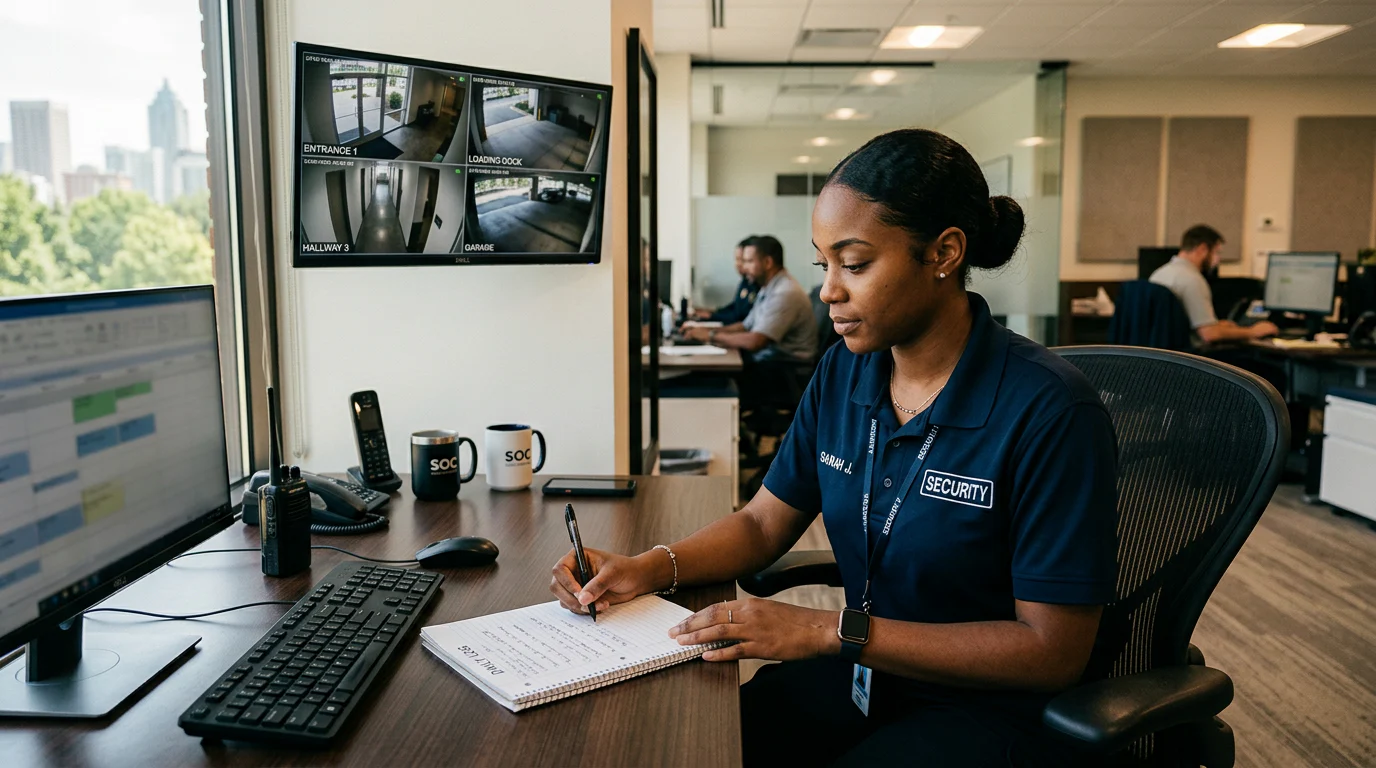
Our foundational course focus is practical for a security post: see what is happening, preserve accurate details, and communicate them clearly. That matters when an incident later requires a supervisor, client, insurer, or law-enforcement partner to understand what occurred.
Incident Response and Site Resources
The state baseline also covers emergencies, crowd control, hazards, active-assailant response, alarms, access control, and CCTV operation. Those are real field skills, but they are different from covert field surveillance or locating an evasive subject.
Which Practical Investigation Skills Are Included?
Practical investigation skills can mean very different things. For a new security officer, they usually mean observation, contemporaneous notes, clear reports, and preserving video context. For a specialist investigator, the phrase can also involve research methods, surveillance planning, sources of information, and case development.
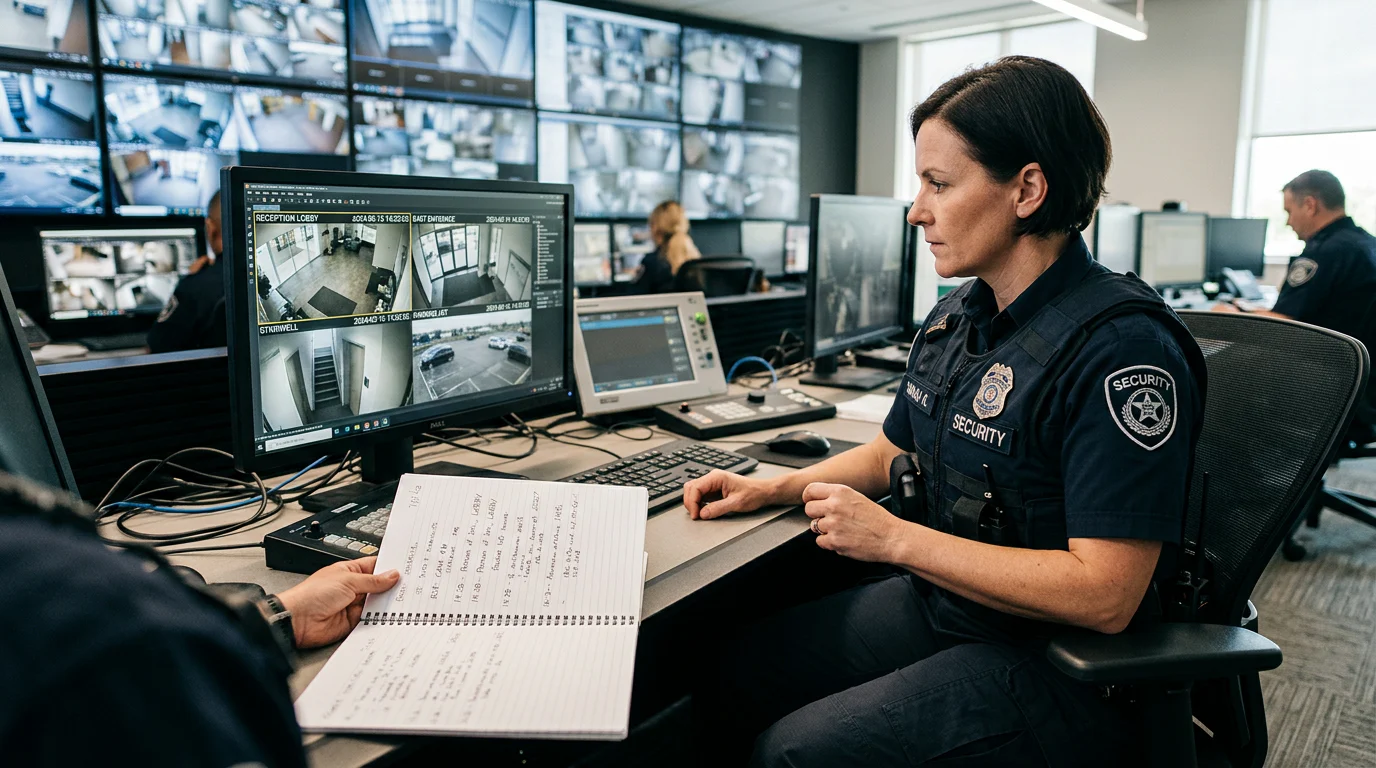
The following matrix separates what Georgia’s security curriculum names from what our public course information does not specifically document.
| Skill Or Method | 24-Hour Security Course Status | Evidence-Based Reading |
|---|---|---|
| Patrol observation and information gathering | Included | Named in Georgia’s patrol-and-observation requirement. |
| Note-taking and report writing | Included | Named in the required security curriculum. |
| CCTV operation and video documentation | Included | Named as a security resource. |
| Interpersonal communication | Introduced | Required, but not the same as a documented investigative-interviewing module. |
| Investigative interviewing | Verify | Our public course page does not show a dedicated module or assessment. |
| Evidence collection and chain of custody | Not Listed | Not named in the basic security curriculum. |
| Covert surveillance | Not Listed | CCTV and patrol observation are not covert field surveillance. |
| Skip tracing and digital profiling | Not Listed | Neither appears in the public description or required basic curriculum. |
| Evasive-service techniques | Not Listed | This is not a listed security-course objective. |
Georgia’s security curriculum names the required foundation, while our separate course paths may go deeper on specific subjects. If you need more than duty-based documentation, explore our specialized training only after confirming its stated outcomes match your work.
Does Our Course Include Skip Tracing or Evasive-Service Techniques?
No published evidence supports calling the 24-hour security course skip-tracing or evasive-service training. We do not want students to infer that a broad industry subject belongs in every course, especially where the course’s stated purpose is entry-level security qualification.
Georgia places deeper research and field-investigation topics in its 70-hour private-detective curriculum. That curriculum includes lawful database research, OSINT, court-record research, locating individuals, and at least four hours of covert-surveillance methodology, including counter-surveillance, in the Georgia rule.
What “Not Listed” Means
“Not listed” does not mean a topic is impossible to discuss in a class. It means we cannot responsibly promise it from the selected course’s public description. Ask us for the current module titles, learning outcomes, exercises, and assessment details before enrollment.
When a PI Course Fits Better
Choose a PI-focused path when your actual goal is lawful research, person-location work, case development, or covert-surveillance methodology. Our PI training is the more relevant starting point for that direction, rather than treating basic guard training as a catch-all investigation program.
Which Skills Belong in PI or Process-Server Training?
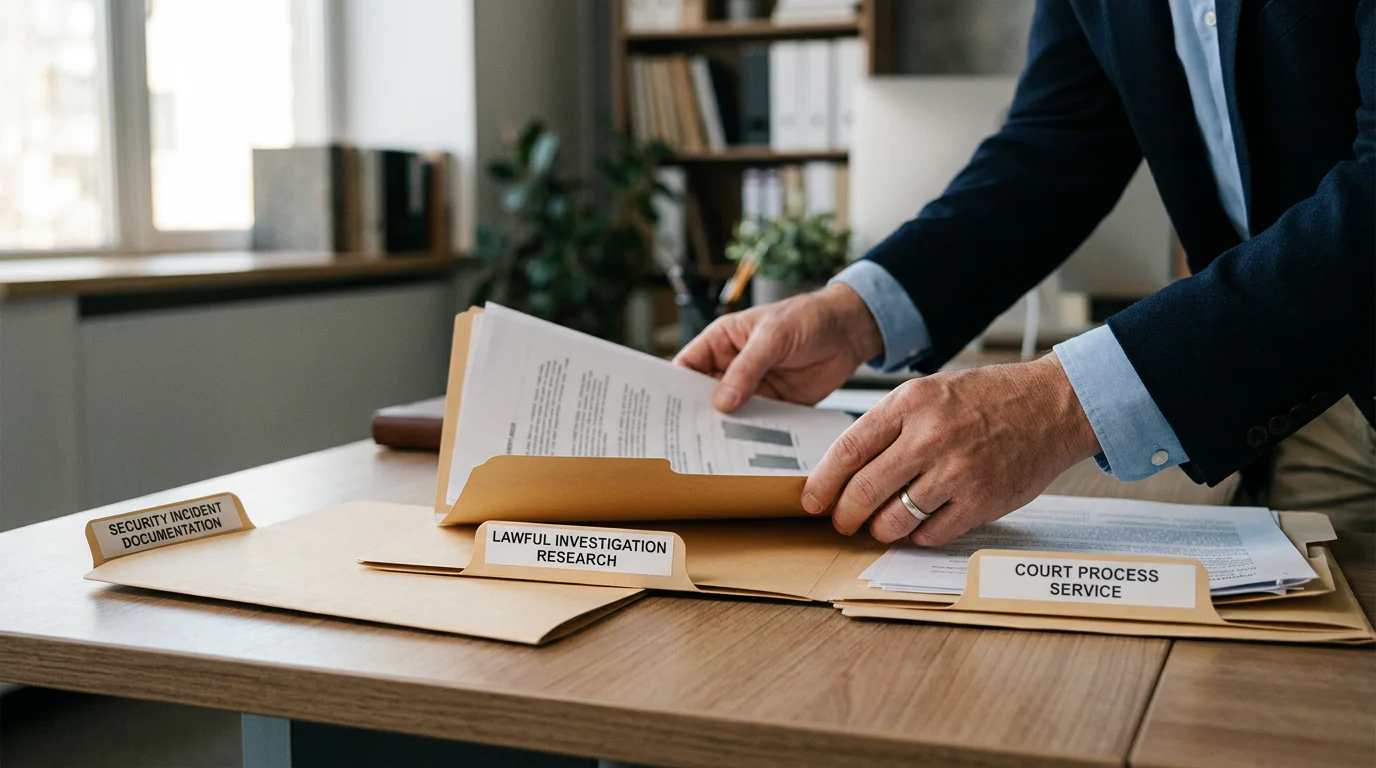
Security, private investigation, and process serving can overlap in professionalism, documentation, and legal awareness. Their core objectives differ, however. Security work protects a site and records incidents, PI work develops lawful investigative information, and process serving follows court-defined service and proof requirements.
Georgia’s process-server framework requires 12 hours of pre-certification training and includes regulation, ethics, liabilities, relevant law, personal safety, and practical service exercises in its AOC rules. That is why service work should not be framed as a side effect of basic security training.
| Learning Path | Documented Objective | Required Hours | Practical Focus |
|---|---|---|---|
| Basic Georgia Security | Entry-level security readiness | 24 | Patrol, observation, reports, CCTV, incident response |
| Georgia Private Detective | Investigative practice and lawful research | 70 | Sources of information, locating people, surveillance methodology, case work |
| Georgia Process Server | Compliant legal service | 12 | Service rules, liabilities, returns, safety, practical service exercises |
Why Evasive Service Requires Caution
Process-server training addresses lawful, professional service. It does not create permission to trespass, invade privacy, misrepresent authority, or disregard court rules. Students seeking that career path should use our process-server training and confirm the current certification requirements before acting.
What Legal Limits Apply to Investigation Skills in Georgia?
Training can improve judgment, but it does not expand anyone’s legal authority. A security officer, investigator, or process server must stay within the laws that govern privacy, property access, data use, service methods, and the specific authority of the role.
Privacy and Recording Limits
Georgia law restricts clandestine recording of private conversations and device-based observation or recording in private places under circumstances described in the privacy statute. CCTV at a security post is not a blanket authorization for covert recording elsewhere.
Property and Trespass Limits
Do not treat a security credential or an assignment as permission to enter or remain on private property after valid notice to stay out or leave. Georgia’s trespass statute makes those boundaries especially important when observation, service, or follow-up work involves private premises.
Data Access Is Not Open Access
Consumer reports and employment-background information have permitted-purpose, disclosure, authorization, and adverse-action requirements under FCRA guidance. We encourage students to learn the limits before using databases, public records, or third-party reports.
For role-specific guard obligations, revisit Georgia requirements as your assignment changes.
Which Course Suits a Beginner, an Applied Learner, or a Specialist?
The fairest way to judge depth is not by course title alone. We look for what is actually documented: named topics, learning outcomes, exercises, scenarios, feedback, and assessments. A course can be valuable at a basic level without being advanced.
Curriculum Depth Rubric
| Depth | Evidence To Look For | Current Reading |
|---|---|---|
| Basic | Named subject and required training hours | Our 24-hour course has a documented security foundation. |
| Applied | Practical exercise, scenario, task, or skills assessment | Georgia process-server rules document practical service exercises and an exam. |
| Advanced | Repeated applied work, feedback, outcomes, and subject-specific assessment | Confirm these details directly before assigning this label to any course. |
Choose by Your Next Duty
Pick the security course when your next duty is patrol, access control, incident response, observation, or reporting. Pick PI education when your work requires lawful investigative research or surveillance methodology. Pick process-server education when certification and compliant service are the objective.
If PI work becomes your later career direction, understand the continuing obligations through our PI renewal rules. For current security students, the immediate priority remains matching the course to the work you are authorized and expected to perform.
Train with Learningshopusa
At Learningshopusa, we built our Georgia learning path for people who need a clear match between the work they want and the instruction they select. If your immediate job is entry-level security, our 24-hour foundation centers on observation, documentation, and responsible response. If your role requires locating people, conducting covert surveillance, or serving legal documents, we want you to choose the specialized route before you enroll.
Our platform makes it easier to begin, but a careful learner still asks for the module list, learning outcomes, exercise details, and assessment method. We encourage that question because clear scope protects your time and keeps expectations grounded in the work ahead. Compare the evidence, choose the course that matches your next duty, and keep records of every completed training. When you are ready, start with our course options on the course homepage.
FAQs on Practical Investigation Skills
Does Our 24-Hour Course Teach Practical Skills?
Our 24-hour course documents observation, information gathering, notes, reports, CCTV, and response. It does not publicly list specialist techniques like skip tracing or covert surveillance.
Does Our Georgia Security Course Include Skip Tracing?
Skip tracing is not named in the published description for our Georgia basic security course or in the state’s basic security curriculum. Ask us for current module evidence.
Does Georgia Security Training Cover Surveillance?
Our required security baseline includes patrol observation and CCTV video documentation. Georgia assigns covert-surveillance methodology, including counter-surveillance, to the substantially broader private-detective training curriculum instead.
Does the Course Teach Interviewing and Evidence Collection?
Interpersonal communication is required, but investigative interviewing and evidence collection are not separately listed for our basic course. We recommend confirming objectives, practice, and assessment before enrollment.
Is Basic Security Training Enough for Process Serving?
Georgia process-server preparation covers lawful service, liabilities, confidentiality, and practical exercises. It is separate from our entry-level security course and should not be replaced by it.