How Do You Become a Georgia Security Officer? Georgia Security Guard Requirements
Georgia security guard requirements explained: 24-hour training, armed firearms rules, employer registration, costs, and a realistic two-week plan.

Georgia separates entry-level security work by whether you will carry a weapon, and its Board rules require at least 24 hours of basic training for private security employees. That distinction changes what you need to do next.
To meet Georgia security guard requirements, choose unarmed or armed work first, complete the Board-required 24-hour basic training with a certified instructor, and work with a licensed employer. The course certificate documents training, but it is not an armed registration or weapon permit, which requires extra firearms training, qualification, fingerprints, and employer submission.
Below, we explain the seven-step path, the required curriculum, how to compare online training options, and what can realistically happen in a two-week window.
Choose Unarmed or Armed Work First
The first decision is not where to enroll. It is whether the job you want is unarmed or armed. Georgia treats the two paths differently, and confusing them can leave you with a useful training certificate but not the documents needed for an armed assignment.
| Role | State Status | Minimum Training | Additional Requirement | Employer Relationship |
|---|---|---|---|---|
| Unarmed Security Employee | Not individually registered | 24-hour basic curriculum | None for an armed permit | Must be trained before providing security services |
| Armed Security Employee | Registered to a specific employer | 24-hour basic course plus 15-hour handgun training | Weapon permit, background review, and firearms qualification | Employer submits the registration |
| Security Agency Licensee | Company-level license | Different company and designee requirements | Qualifying experience, education, and examination may apply | Employs and manages security personnel |
Georgia’s Board FAQ confirms that unarmed guards do not need individual State registration, although they must receive Board-standard training. Armed guards must be at least 21, while a company license is a separate credential for operating a security business, not for starting an entry-level guard role.
If you are pursuing unarmed work, start with the required fundamentals and a focused security training path. If an employer expects you to carry a handgun, plan for the basic course, firearms training, range qualification, and an employer-led application process.
Complete Georgia Security Guard Requirements for Basic Training
The 24-hour course is the common foundation for both paths. It must be delivered by an instructor certified by the Georgia Board of Private Detective and Security Agencies, and it must be completed before providing private security services.
Learn the Seven Required Subject Areas
Georgia’s basic curriculum names seven required subject areas. A reliable course should show where each one appears, rather than promising a vague overview of security work.
| Required Subject Area | Topics Students Should See |
|---|---|
| Role of Private Security | Crime awareness, criminal justice system, ethics, professionalism |
| Legal Aspects | Offenses, Board rules, arrest, use of force, liability, testimony |
| Patrol And Observation | Patrol techniques, information gathering, officer safety, notes, reports |
| Incident Response | Emergencies, evacuation, fire, hazardous materials, terrorism, active assailant response |
| Security Resources | CCTV, alarms, access control, electronic article surveillance, law-enforcement coordination |
| Customer Service Issues | Public relations and interpersonal communication |
| First Aid Overview | Basic first-aid awareness |
Our course overview helps students identify the basic training track without mixing it with unrelated professional programs.
Understand What the Certificate Means
A completion certificate is evidence that you completed the required training. It should identify you, the training entity, course dates and topics, actual hours completed, and the instructor’s full Board license number.
The Board’s basic training rule does not establish one statewide final-exam percentage for the 24-hour course. A provider may have its own course-test standard, but that policy is different from the State’s armed-firearms qualification standard. Keep your certificate and provide a copy to your hiring company.
Confirm Whether Online Delivery Fits Your Employer’s Process
Online study can be practical for adults balancing full-time work, but ask precise questions before enrolling. Confirm the instructor’s credential, how training time is recorded, how the assessment works, and whether the certificate contains every field an employer needs.
We built our basic course around the 24-hour entry-level requirement, while keeping the course decision separate from any promise of employment, armed registration, or permit approval.

Verify Your Instructor, Course Format, and Cost
A low advertised tuition is only useful if the course is tied to an active Board-certified instructor and the certificate will meet an employer’s needs. Use the State license lookup to check an instructor by name or certification number before paying.
For basic unarmed training, compare the actual study experience as well as price. For armed work, compare the full path, because range instruction, fingerprinting, and registration may add costs beyond online tuition.
| Provider Option | Course Tuition | All-In Cost Consideration | Delivery And Flexibility | Support And Mobile Access | Exam Attempts And Certificate Timing |
|---|---|---|---|---|---|
| Our 24-Hour Basic Course | $65 | Basic-course tuition only, external armed costs are separate | Online and self-paced | Phone and email support, online access | Our published policy uses a 70% final score, with retakes available; certificate emailed after completion |
| Employer-Supplied Program | Employer quote | Ask what the employer covers | Format and schedule depend on employer | Ask about device access and support | Ask about testing and certificate delivery |
| Other Certified Online Course | Published price varies | Compare tuition with any separate administrative costs | Confirm delivery and time tracking directly | Confirm mobile access and support directly | Confirm retake policy and certificate timing directly |
Before you purchase, ask the employer whether it accepts outside training certificates. Then compare the provider’s stated instructor credential and course details with the public lookup, not just a marketing claim. Our training catalog is designed for students who want to review course options before making that decision.
Add Firearms Training for Armed Work
Armed security is not simply unarmed work with a firearm added later. Georgia requires armed employees to complete the basic curriculum and a separate firearms curriculum, then qualify under a Board-certified firearms instructor.
Complete the Additional 15 Hours
The handgun curriculum requires at least 15 hours. It includes one hour on deadly force, two hours on liability, one hour on ballistics, three hours on handgun topics, and eight hours of range qualification.
Meet Both 80% Standards
The current handgun rule requires at least 80% on the written firearms examination and at least 80% on the range qualification. The range test is proctored by a Board-licensed firearms instructor, and you qualify with the same weapon type you will carry on duty.
Two strings of 48 rounds are fired, with the higher score used for qualification. That in-person element is why an online basic course alone cannot create armed-officer authorization.
Separate Training from Registration
Armed applicants also need an employer-backed registration and weapon-permit process. The Board’s posted employee materials list a $70 initial armed security employee registration fee, plus a $5 online processing fee or $10 paper processing fee. Fingerprint charges are paid to the processing authority and can change.
If armed work is your goal, use our course access for the basic foundation, then coordinate firearms instruction and paperwork with the licensed company that intends to employ you.
Let Your Employer Handle the Registration Path
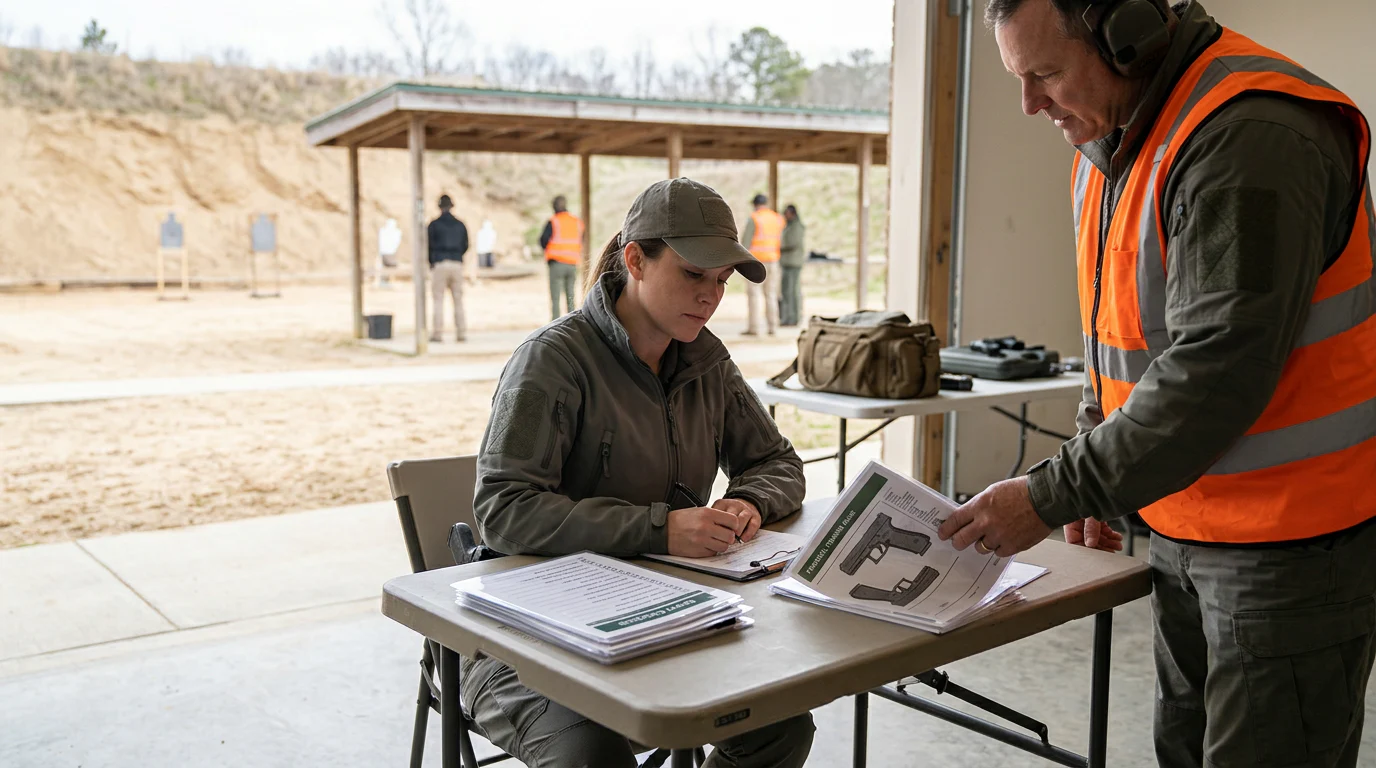
For armed work, the hiring company is not a bystander. It is responsible for submitting a complete employee-registration application, and the registration is valid only for the employer named on it. It does not transfer automatically when you change security companies.
The Board’s employee instructions say to allow a minimum of 15 business days for application processing, fingerprints, and required documentation. Fingerprint results may reach the Board quickly after capture, but hiring, paperwork review, deficiencies, and Board processing still affect the timeline.
A complete armed packet can include a signed and notarized application, proof of training, range scores, affidavit of employment, identity and citizenship documents, background materials, and any required court explanations. The employer must apply within 30 days of hiring an armed guard, so share your certificate promptly and ask what the company needs from you.
For a realistic two-week plan, use the first days to select the role and complete basic training, then reserve time for employer paperwork and fingerprints. We recommend starting our training early, but we never guarantee a hiring decision, permit, or State approval by a particular date.
Train with Learningshopusa
At Learningshopusa, we built our Georgia Basic Security Officer Course for adults who need a practical way to fit required study around work, family, and hiring conversations. Our course is online, self-paced, and priced at $65 for the 24-hour basic course, so you can progress through the required subject areas without reserving a block of classroom time. We also explain the line that matters: completing basic training creates a certificate of completion, not an armed registration, a weapon permit, or a job offer. Before you enroll, confirm whether the role you want is armed, ask your prospective employer what documents it needs, and verify instructor credentials in the State lookup. If unarmed entry-level work is your goal, we provide a focused route to the core curriculum and support by phone and email. We keep the process plain, focused, and ready for real hiring decisions. Start with Learningshopusa.
FAQs on Georgia Security Guard Requirements
These answers address the points that most often determine whether training, registration, or an armed assignment is the right next step. They are not a substitute for your employer’s instructions or the Board’s current rules.
Do Unarmed Security Guards Need State Registration?
Georgia does not require unarmed guards to register individually, but they must complete Board-standard training before providing security services. Armed employees require employer-submitted registration.
Does a Basic Course Make Me an Armed Officer?
Complete the 24-hour basic curriculum, then the 15-hour handgun curriculum with a Board-certified firearms instructor. You must earn at least 80% on written and range qualifications.
How Do I Verify a Training Instructor?
Check the instructor’s active Georgia credential in the public license lookup, ask how attendance and exams are documented, then retain a certificate showing training hours and license number.
What Costs Should Armed Applicants Expect?
Budget for basic tuition first. Armed applicants may also face range costs, a $70 employee-registration fee, processing fees, and fingerprint charges paid directly to the processor.