TL;DR
We explain why a Georgia gun store deactivated a private ALPR camera on August 25, 2026, after customer privacy concerns. The decision highlights the security and privacy tradeoff around vehicle data, Georgia’s limits on investigator authority, and the controls professionals should monitor before using similar tools.
Security decisions at firearms retailers have real stakes. The ATF recorded 531 larceny incidents involving federal firearms licensees in 2025, a 15% increase from the prior year, but a security tool can still create a customer-trust problem.
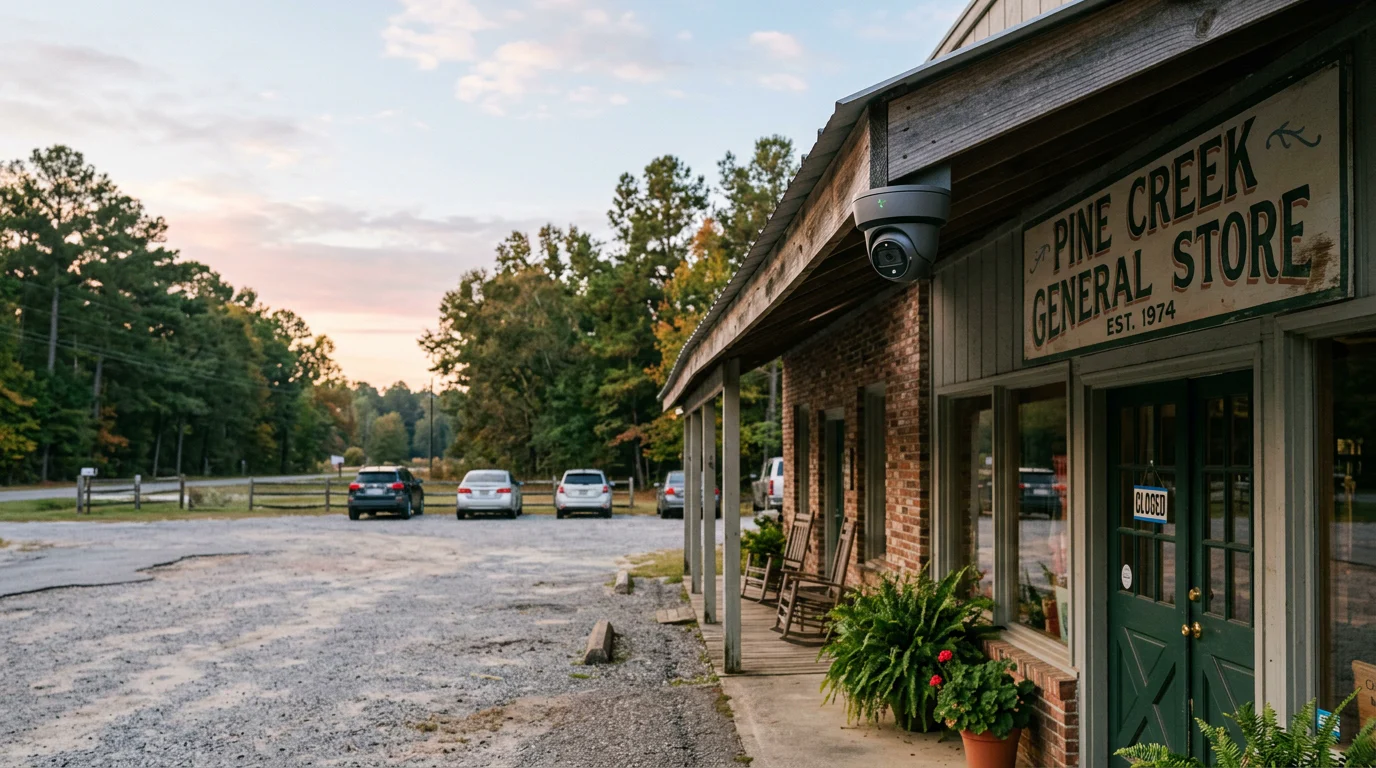
On August 25, 2026, the owner of Gun Commanders in Cleveland, Georgia, confirmed that its privately owned automated license-plate-reader camera had been disabled and was being permanently removed after customer privacy concerns. The decision shows why security professionals must define access, retention, auditing, and client communication before using vehicle-surveillance tools.
We examine what changed, why Georgia ALPR camera privacy deserves attention from investigators, and what a Georgia private investigator license does and does not authorize.
What Changed in Cleveland
The camera’s removal was a private business decision, not a reported order from a public agency. In a contemporaneous confirmation, the store owner said the device had been rendered inoperable and was being permanently removed after listening to customer concerns.
That distinction matters. The issue is not simply that a camera was mounted near a business. An ALPR system can create searchable records tied to a vehicle’s presence at a location. Near a firearms retailer, customers may reasonably view those records as sensitive even when the stated purpose is theft prevention or employee safety.
For investigators and security professionals, the useful lesson is practical: a lawful security objective does not automatically settle the privacy question. The decision to collect vehicle data should be matched with a clear purpose, limited access, retention rules, and a way to explain those choices to the people affected.
Why This Is a Georgia ALPR Camera Privacy Issue
Georgia ALPR camera privacy is not a question of whether businesses may take security seriously. It is a question of what information is collected, who can search it, how long it remains available, and whether the organization can defend those choices to customers and clients.
Security Need Is Real
Firearms retailers face theft and loss risks that require thoughtful security planning. A camera can be one layer in a larger plan, alongside physical hardening, inventory controls, alarms, and response procedures. We encourage investigators building those plans to strengthen the fundamentals through investigator training, rather than treat a single technology as a complete answer.
Vehicle Data Raises Different Stakes
ALPR technology does more than capture conventional video. It records license plates and may identify other vehicle characteristics. Recent national reporting also documented new safeguards, including a standard retention change from 30 days to seven and case-code requirements for law-enforcement searches.
Those changes are meaningful, but they do not remove the need for local controls. A shorter default period is not the same as a complete privacy policy, especially where access, sharing, emergency overrides, or preservation of case evidence may be involved.
Customer Trust Is an Operational Control
The Cleveland removal illustrates an operational reality: customers can judge surveillance practices as part of their overall confidence in a business. For security teams, that makes written deployment criteria, narrowly defined camera views, and clear escalation procedures just as important as the hardware itself.
What a Georgia Private Investigator License Does and Does Not Permit
For anyone asking what a Georgia private investigator license permits, the starting point is professional authorization, not system access. Georgia regulates private-detective work through a company and employee licensing structure.
Licensing Establishes a Professional Role
Georgia says private-detective applicants must complete at least 70 hours of classroom training, and employee licenses are tied to a specific licensed employer. The state FAQ also makes clear that an employee cannot use an existing authorization to work for another company.
That framework supports accountability, training, and supervision. It does not provide a shortcut into law-enforcement databases, private camera networks, or restricted vehicle-information systems. Professionals planning renewals can also review a Georgia PI renewal course to keep their compliance knowledge current.
Licensure Is Not System Permission
A private investigator should not assume that a license alone authorizes an ALPR search or access to captured plate data. Permission depends on the lawful source of the information, the client engagement, the system owner’s rules, and applicable federal and state restrictions.
In practice, the defensible approach is to document authority before collecting or requesting sensitive information. That includes the investigative purpose, the source of the data, the people authorized to handle it, and the steps used to protect it.
Georgia Limits Law-Enforcement ALPR Data
Georgia law defines captured plate data broadly, including location, time, photographs, plate numbers, and derived information. The Georgia statute says law-enforcement-collected data is for law-enforcement purposes, generally must be destroyed within 30 months unless an exception applies, and is not subject to public disclosure.
Those rules address data collected by law-enforcement agencies. They should not be read as universal permission for private businesses or private investigators to obtain, share, or retain vehicle data.
What to Monitor Next
The broader Georgia enforcement context is still developing. On August 21, the GBI announced charges against four former Savannah Police Department employees after an internal audit found alleged non-law-enforcement use of a license-plate-reader system, as described in the GBI release.
We see four questions worth asking whenever an organization considers similar technology:
- Documented purpose: Is the system limited to a defined security need rather than broad monitoring?
- Authorized access: Who can search data, approve access, and review unusual activity?
- Retention and sharing: When is data deleted, preserved, or shared outside the organization?
- Customer communication: Can the organization explain its policy plainly and respond to reasonable privacy concerns?
The removal in Cleveland does not resolve the wider debate. It does show that privacy, lawful use, and customer confidence must be evaluated together.
Learningshopusa Training for Lawful Surveillance Decisions
At Learning Shop USA, we teach investigators to turn evolving tools and legal limits into disciplined field decisions. This story is a reminder that a license, a camera, and a data source are not the same thing. Good practice starts with documented purpose, lawful authority, client expectations, and a defensible record of what was done. Our training is built for professionals who need to assess information carefully, respect boundaries, and explain their methods with confidence. If you are preparing for Georgia work or renewing your skills, explore the courses that support sound investigative judgment and practical compliance at Learning Shop USA
FAQs on Georgia ALPR Camera Privacy
These questions address the practical limits behind Georgia ALPR camera privacy. They distinguish professional licensing from database permission and keep the focus on actions a security-minded reader can take today.
Does a Georgia Private Investigator License Provide ALPR Access?
No. A Georgia PI license supports authorized private-detective work for its licensed employer, but it does not independently grant access to police ALPR databases or private camera networks.
How Much Training Does Georgia Require for Private Detectives?
Georgia requires applicants for private-detective work to complete at least 70 classroom hours in a basic program and meet applicable employer, licensing, and background requirements.
What Should a Business Ask Before Deploying an ALPR Camera?
Before deployment, identify the data owner, authorized searchers, retention period, sharing rules, qualifying incidents, audit process, and customer notice that explains those controls in clear language.