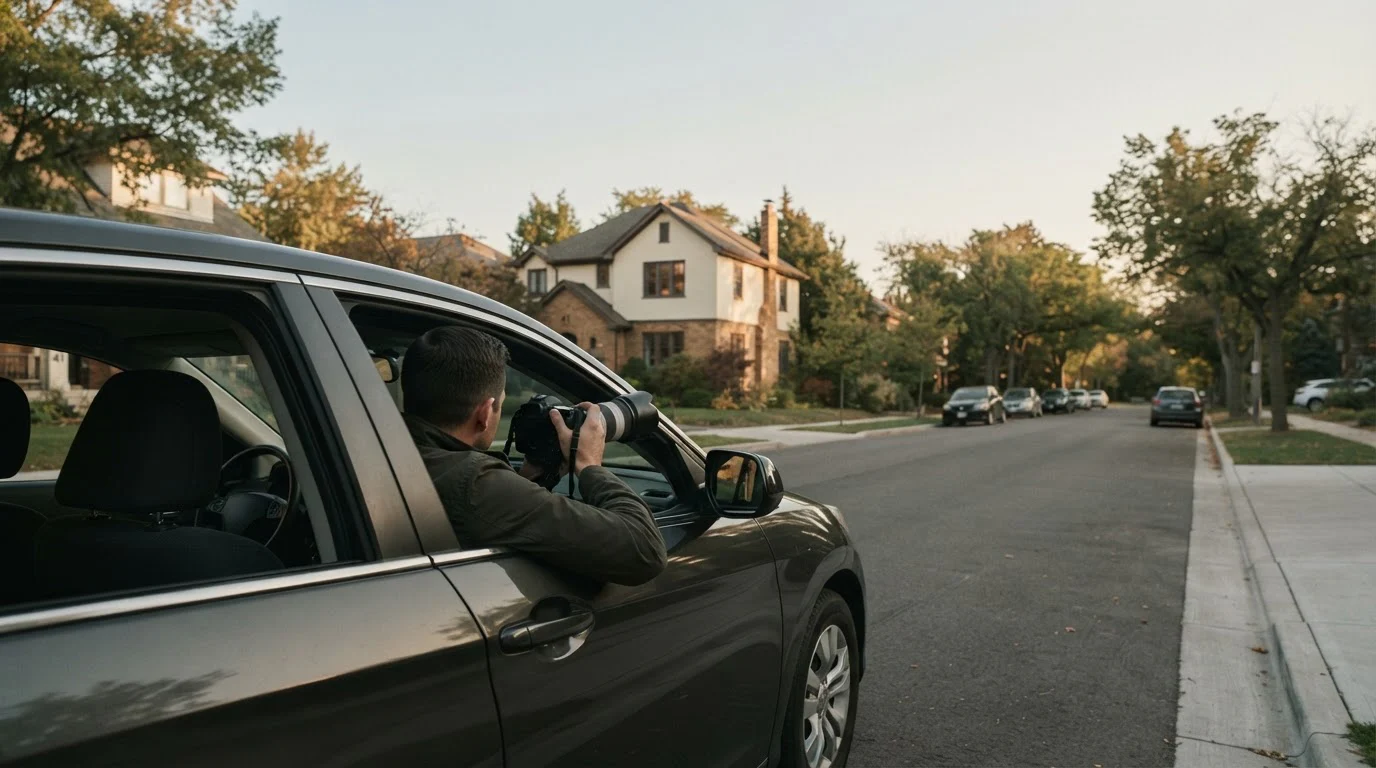
Can a Private Investigator Carry a Gun? State Rules Compared
A private investigator can carry a gun where state law allows it, usually with a separate firearm credential added to the PI license. Texas instead applies general handgun law with PI-specific limits.
By Sharon DeCet, Founder · Updated 30 Oct 2026

Key takeaways
- Six of the seven states sampled require a separate firearm credential or certified training on top of the PI license, and Texas relies on general handgun law with PI-specific limits.
- A personal concealed carry permit is required in Virginia and Washington but is not enough on its own there. California's exposed firearms permit does not require one, and carrying concealed there takes a separate CCW permit.
- Age, training hours and how the gun may be worn (concealed or exposed) differ by state. Florida and Washington set 21 as the minimum age to carry.
- Carrying is an add-on, not part of the base license. In Florida and Washington, you hold the PI license first and add the armed credential afterward.
In this article
- 1Can a private investigator carry a gun with only a PI license?
- 2What does each state add to the PI license before a PI may carry?
- 3Does a concealed carry permit let a PI carry on the job?
- 4How can you check whether you may carry on a specific job?
- 5What limits still apply once a PI is credentialed?
- 6What should you study before choosing an armed route?
- 7Frequently asked questions
A private investigator (PI) license decides whether you may investigate. A separate state authorization decides whether you may carry a gun while you do it. This page calls that second authorization the armed credential: the license, permit, endorsement or certification a regulator requires on top of the PI license. Each state sets its own credential, its own training and its own conditions on how the gun is worn.
That split explains most of the confusion. A concealed carry permit does not settle the question in California, where the state also requires its own firearm permit. A Florida answer does not carry over to Texas, where the rule is built differently.
Below is a state comparison taken from regulators' own pages and a six-question check you can run for any state. It ends with what to study if you are still deciding whether to enter the field. Rules change, so confirm each point with your state regulator before you act on it.
Can a private investigator carry a gun with only a PI license?
Usually not. Six of the seven states sampled require a separate firearm credential, endorsement or certified training on top of the PI license. Texas has no separate PI firearm credential. Its Department of Public Safety (DPS) says PIs may carry while performing licensed services, subject to the general handgun rules in Penal Code Chapter 46, and permit-less carry (HB 1927) does not override the PI-specific limits.
Sampled here: Florida, California, Texas, Virginia, Washington, Minnesota and Vermont, as of October 2026. This is seven states, not all fifty. For your own state, see Private investigator license requirements by state, then go to the state agency that issues PI licenses and search its site for "armed", "firearm" or "weapons". The credential's name differs by state, such as Class G in Florida or a firearm endorsement in Virginia. The scope of what a PI license covers in general is on Private Investigator Laws: What a License Does and Doesn't Cover.
What does each state add to the PI license before a PI may carry?
Each state adds a different mix of credential, training and conditions. The table summarizes what each regulator publishes as of October 2026.
| State | What you add to the PI license | Conditions on carrying |
|---|---|---|
| Class G Statewide Firearm License, added to a Class C (private investigator) or Class CC (private investigator intern) license. Carrying requires age 21 or older. The initial course is 28 hours: 12 legal, 8 to 11 operational safety and mechanical, 8 qualification with 144 rounds fired. Requalify each year with 4 hours and 48 rounds. | Class C and CC licensees may carry concealed. Maximum of two firearms. | |
| Exposed firearms permit from the Bureau of Security and Investigative Services (BSIS), after Bureau-approved firearms training. The permit lasts two years, with four range qualifications. | The permit covers exposed carry only. Carrying concealed also needs a concealed carry weapon (CCW) permit from local law enforcement. | |
| No separate PI firearm credential on the DPS page. Carrying follows Penal Code Chapter 46. | No open carry while executing a capias (a court order to bring a person in) or arrest warrant, since January 10, 2022. | |
| Firearm endorsement (6 VAC 20-171-365) | Carrying a concealed handgun also needs a concealed handgun permit and the employer's written permission. | |
| Armed PI license: age 21 or older, an unarmed PI license first, a firearms certificate from the Washington State Criminal Justice Training Commission (CJTC), and a concealed pistol license (CPL). | A current CPL is required. | |
| Board-certified training before carrying. Pre-assignment training is 12 hours within the first 21 days. Armed individuals complete 6 more hours a year. | No carrying or using a weapon during on-the-job training. | |
| Firearms certification in good standing. Employees need an active firearms specialty designation. | Brandishing or misusing a firearm is unprofessional conduct. |
For Vermont's two licensing routes and fees, see Vermont Private Investigator License: Two Routes, Real Fees.
Does a concealed carry permit let a PI carry on the job?
Not by itself. A personal permit is required in Virginia and Washington but is not enough on its own there. California's BSIS exposed firearms permit does not require one; carrying concealed there takes a separate CCW permit. California's BSIS states that a CCW permit alone is not enough: the PI must also pass the Bureau-approved firearms course and hold the exposed firearms permit before carrying on duty.
Virginia sets three conditions that must all be met for a concealed handgun: the firearm endorsement, a concealed handgun permit, and written permission from the employer. Washington requires a CPL and the CJTC firearms certificate, on top of an unarmed PI license.
The pattern across these states is that the permit you hold as a private citizen never replaces the armed credential. In Virginia and Washington it is one required piece of carrying; in California it only adds concealed carry on top of the exposed firearms permit. If you already hold a personal permit, you still need the credential to carry while investigating.
How can you check whether you may carry on a specific job?
Run these six checks against your state regulator's own pages before you carry on any job. Each has a pass and a fail.
- Armed credential. Find the named credential on your regulator's site. Pass: you hold a current copy, and you meet the age minimum (21 or older in Florida and Washington). Fail: you are relying on the PI license alone.
- Training. Compare your certificate with the hours your state lists (Florida 28 hours initially, Minnesota 6 extra hours a year). Pass: the course and hours match what the regulator states. Fail: you cannot show the course is the one your regulator recognizes. Our recommendation is to confirm this with the regulator before you pay for a course.
- Personal permit. Pass: your regulator's page says how your permit counts, and you hold the credential too. Fail: you are assuming the permit covers work.
- Carry style. Pass: your credential matches how you plan to carry. Fail: you plan to carry in a manner your credential does not cover.
- Employer approval. Pass: where your state requires it (Virginia), written employer permission is on file. Fail: it is verbal or missing.
- Situational limits. Pass: you can name the situations your state restricts, such as Texas's ban on open carry when executing a capias or arrest warrant. Fail: you are unsure, in which case do not carry in that situation until you have asked the regulator.
What limits still apply once a PI is credentialed?
A credential allows you to carry, not to display or use a firearm freely. Vermont's statute bars a licensee from possessing a firearm while performing professional services unless certified and in good standing (26 V.S.A. §3175c). It also lists brandishing, exhibiting, displaying or otherwise misusing a firearm in a careless, angry or threatening manner unnecessary for the course of the licensee's duties as unprofessional conduct for armed and guard-dog certified licensees (§3181(b)(18)). The statute makes an exception for genuine emergencies protecting life, health or property.
Minnesota bars carrying or using a weapon, or an immobilizing or restraint technique, without completed certified training. Texas adds the open-carry limit on warrant service. Florida caps a licensee at two firearms and requires the employing agency to report a discharge to the department within 5 business days.
Our view: many assignments never call for a firearm, and an armed credential is a decision to weigh against the job, the client and the risk of escalation. When a client asks for something you should decline, Private Investigator Ethics: Codes, Law and Requests to Refuse covers how.
What should you study before choosing an armed route?
Study the criminal law and rules of evidence first, because the range portion must come from an instructor your regulator approves. The armed credential is a state-run process with an in-person range component: Florida's Class G includes 8 hours of qualification with 144 rounds fired, and Vermont licenses firearms instructors under §3175a. Our courses cover the legal side that sits underneath any decision to carry.
Legal Aspects of Private Investigation is $120 and covers criminal law, evidence categories, defenses to criminal prosecution, and rules of evidence and court procedures. As of October 2026, its course page lists approval in Missouri, Georgia, South Carolina, Kentucky, New Mexico, Kansas, Iowa, Minnesota, Tennessee, North Carolina, Oregon and Texas, with North Carolina limited to 6 continuing education unit credits. Private Investigation and the Law is an 8-hour, self-paced course covering crime classifications, legal defenses, intent, motive and premeditation, principals and accessories, types of evidence, and exclusionary rules.
Our courses do not include firearms or range training. Before you buy any course, confirm that your state counts it, using Will This PI Course Count in My State?. To ask which of our courses fits your state, call (832) 922-1215 or (706) 268-2221.

Study the law that underlies any decision to carry
Frequently asked questions
Sources
- 1.Florida Department of Agriculture and Consumer Services, Class "G" Statewide Firearm License Requirements
- 2.Florida Statutes §493.6115
- 3.California BSIS, Private Investigator FAQ
- 4.California BSIS, Firearms Permit Fact Sheet
- 5.Texas DPS, Private Security Licensees and Carrying a Handgun
- 6.Virginia DCJS, Does being a private investigator allow me to carry a concealed weapon?
- 7.Washington Department of Licensing, Armed Private Investigators
- 8.Minnesota Statutes §326.3361
- 9.Vermont Statutes, Title 26, Chapter 59
- 10.Learningshopusa, Legal Aspects of Private Investigation
- 11.Learningshopusa, Private Investigation and the Law