Training That Improves Evidence Collection for Private Investigators
The training that improves evidence collection for private investigators is a set of matched skills: scene collection, surveillance documentation, note-taking, reports and testimony. Choose each course by the evidence you handle.
By Sharon DeCet, Founder · Updated 28 Oct 2026
Key takeaways
- Evidence collection training is a set of skills. The right course depends on whether you handle physical items, surveillance footage, statements or courtroom presentation.
- The ASIS Professional Certified Investigator (PCI) standard treats collecting and preserving evidence as one task covering physical, digital and biological sources, plus chain of custody for each. Check any syllabus against it.
- Most of the online evidence and surveillance courses we compared fall between $5.56 and $20.83 per credit hour, as the cost section shows.
- Online courses teach method and law. You still need supervised practice, and digital evidence needs a specialist provider.
In this article
- 1Which training improves evidence collection for private investigators, skill by skill?
- 2Why does no single course cover everything the evidence-collection job asks of an investigator?
- 3What does a court need before it accepts your photos and video?
- 4How much does online evidence training cost per credit hour?
- 5What does online training not replace?
- 6How do you test any evidence course before you enroll?
- 7Which evidence collection course should a private investigator take first?
- 8Frequently asked questions
ASIS International, the security professionals' association, sets a certification exam for investigators in which collecting and preserving evidence is its own task. That task spans physical, digital and biological sources. A course that teaches you to package a knife says little about the video you shot from a parked car.
No single course covers physical items, footage, statements and testimony. A sharper question is which skill your next case tests: an item to pick up, footage to defend, a statement to record, or testimony to give.
This page maps each skill to a course, prices the options per credit hour from each provider's own price page, and gives you five checks to run on any syllabus before you pay.
Learningshopusa publishes this page and sells four of the ten courses in the price table below, so every figure is shown with its working for you to redo.
Which training improves evidence collection for private investigators, skill by skill?
Match the course to the evidence you handle: scene collection training for physical items, surveillance and note-taking training for photos and video, and report writing and testifying training for court. No single course covers all of it. Our Collection and Preservation of Evidence course is 4 hours at $80 as of October 2026, and it is the first step for physical evidence.
| Evidence you handle | Skill to train | Our course | Add this |
|---|---|---|---|
| Physical items and scenes | Search, photograph, sketch, mark, package, keep custody | Collection and Preservation of Evidence, 4 hours, $80 | Supervised practice on real items |
| Surveillance photos and video | Plan, record and document surveillance | Surveillance, 4 hours, $80, with Note Taking, 4 hours, $80 | Your own file-handling routine |
| Statements and field notes | Notes that support the report and testimony | Note Taking, 4 hours, $80 | Our Interviewing-Private Investigators course, $80 |
| Written findings | Turn notes into a report | Report Writing, 4 hours, $80 | A reviewer who edits your first reports |
| Court presentation | Testify and know what a court excludes | Testifying, 4 hours, $80; Legal Aspects of Private Investigation, $120 | A mock cross-examination |
| Lab results you must read | Understand what lab analysis can and cannot show | Scientific Analysis of Physical Evidence, 6 hours, $100 | A forensic specialist for the testing itself |
| Digital evidence | Preserve phones, accounts and media | Not part of our course list | A specialist digital forensics provider |
The Collection and Preservation of Evidence course has 30 lessons and 5 assessments with 78 questions. It covers physical evidence, search methods, incident scene photography, sketching and measuring, marking and packaging, documentation and forensic testing. Chain of custody, the documented record of who held an item and when, is taught in the chapter on marking and packaging. You receive a certificate of completion after passing. Turn off any virtual private network (VPN) before you watch the course videos.
Why does no single course cover everything the evidence-collection job asks of an investigator?
The professional standard splits the job. The PCI body of knowledge lists "collect and preserve evidence" as one task covering sources of evidence (biological, digital, physical), collection methods, preservation methods, and chain of custody requirements for physical, digital and biological items. Surveillance documentation, reports and testimony sit in other tasks of the same standard.
That investigative-techniques domain carries 52% of the exam, against 28% for professional responsibility and 20% for case presentation. PCI candidates need five years of investigations experience, or four with a bachelor's degree and three with a master's, including two years in case management. Treat the standard as a map of skills to build, not a first credential.
State licensing training spreads evidence across many topics. Georgia's basic training rule for private detectives took effect July 1, 2022 (amended July 26, 2022). It requires 70 hours across 22 topics, including the Georgia Rules of Evidence, search and seizure, at least four hours of covert surveillance methodology, and note-taking and report elements.
The National Institute of Justice (NIJ) publishes a free, 180-page guide, Crime Scene Investigation: A Guide for Law Enforcement, dated September 2013. Read it for method. It was written for police, and your authority at a scene is not theirs.
What does a court need before it accepts your photos and video?
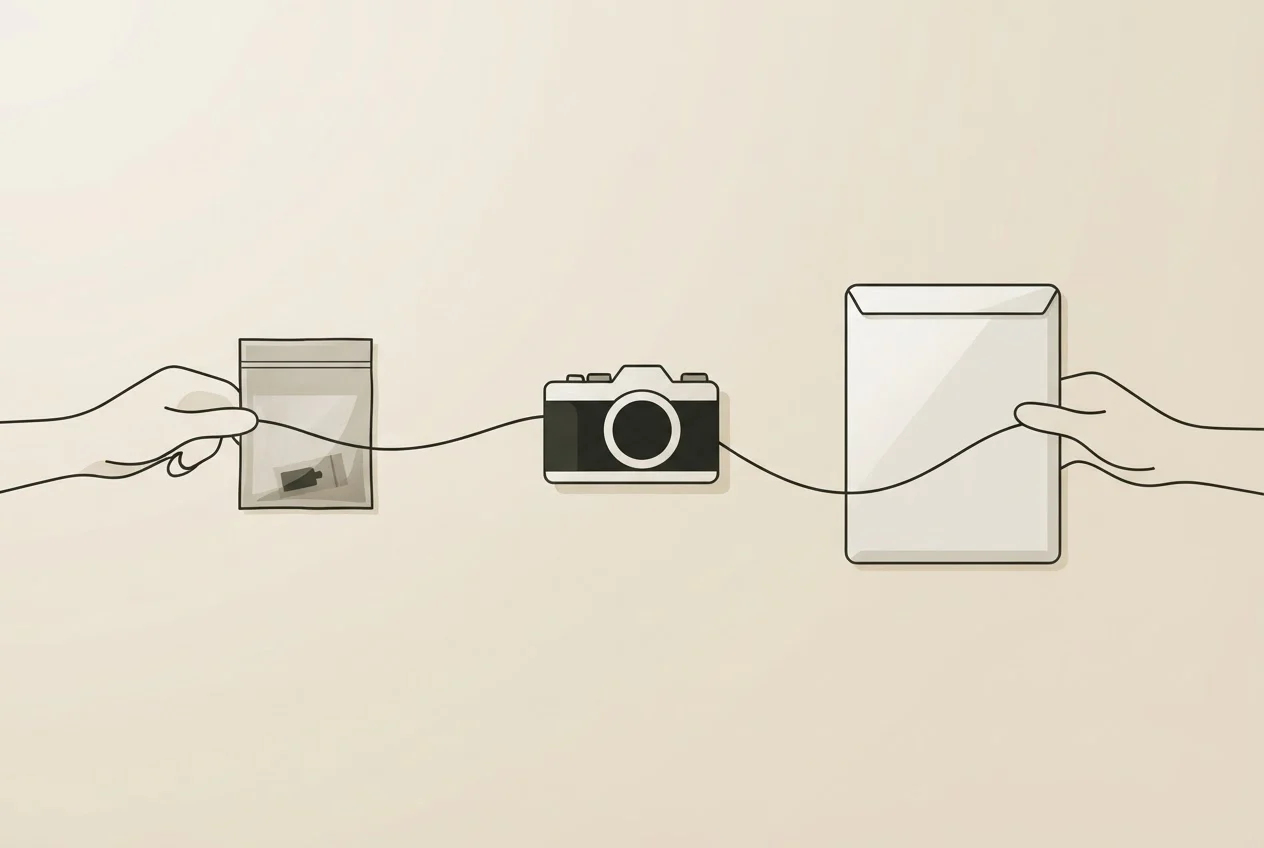
A court needs enough evidence to find that your photo or video is what you say it is. Federal Rule of Evidence 901(a) requires that the proponent produce "evidence sufficient to support a finding that the item is what the proponent claims it is." Testimony from a witness with knowledge is one accepted way to show that.
In practice, you are that witness for your own footage. Our recommendation: keep the original file untouched, work only from copies, and log every handoff, as covered in our guide to chain of custody for investigators. Federal Rule 901 governs federal court. Ask the attorney you work for what the local court expects.
Recording audio adds a legal layer. Federal law permits a person who is a party to a conversation, or who has a party's prior consent, to record it unless the purpose is a criminal or tortious act. Violating the interception ban carries a fine or up to five years in prison. Confirm your state's rule before you record, because the federal rule is only one layer.
How much does online evidence training cost per credit hour?
As of October 2026, 8 of the 10 online courses we compared cost between $5.56 and $20.83 per credit hour. We worked out each figure by dividing the price on the provider's own price page by the credit hours that page lists. A credit hour is the course-credit or continuing education (CE) hour a provider assigns.
| Course | Provider | Price | Hours | Per hour |
|---|---|---|---|---|
| Collection and Preservation of Evidence | Learningshopusa | $80 | 4 | $20.00 |
| Surveillance | Learningshopusa | $80 | 4 | $20.00 |
| Learningshopusa | $100 | 6 | $16.67 | |
Private Investigation Practices, Part 1 (includes a 17-lesson Evidence Preparation chapter) | Learningshopusa | $120 | 8 | $15.00 |
| Tactical Awareness: Surveillance, on-demand | $125 | 6 | $20.83 | |
| Tactical Awareness: Surveillance, live virtual | PI Leadership Academy | $300 | 6 | $50.00 |
| Introduction to Surveillance | PI Leadership Academy | $112.50 | 2 | $56.25 |
| Minnesota private investigator (PI) CE, Advanced Investigative Practices (lists evidence handling) | PI Leadership Academy | $150 | 12 | $12.50 |
| Texas PI CE Surveillance | $100 | 18 | $5.56 | |
| Non-Texas PI CE Surveillance | Houston PI | $100 | 16 | $6.25 |
Houston PI's hours include ethics and board-rules modules, so its per-hour figure understates the surveillance content. Cheaper per hour does not mean better value. Pick by the skill you need, then compare price.
Here is our model for a full evidence stack bought separately. The five 4-hour courses (Collection and Preservation of Evidence, Surveillance, Note Taking, Report Writing, Testifying) cost 5 × $80 = $400 for 20 hours. Adding Scientific Analysis of Physical Evidence makes $500 for 26 hours. Adding Legal Aspects of Private Investigation at $120 makes $620; we give no hour total for that step. The model excludes the Interviewing-Private Investigators course at $80.
What does online training not replace?
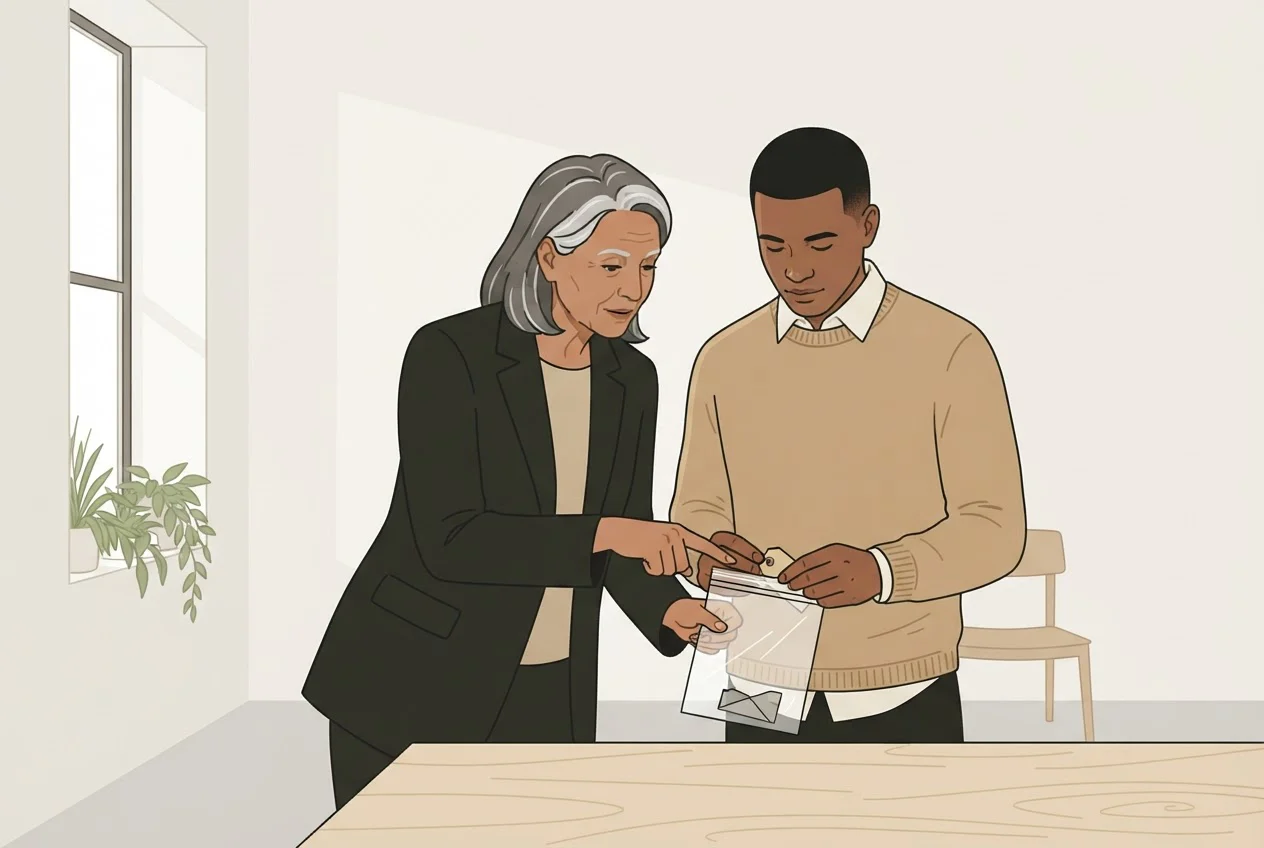
Online training does not replace supervised practice, and it does not cover digital evidence preservation. Courses teach the method, the law and the documentation. Packaging an item or shooting a surveillance photo set well comes from doing it while someone experienced reviews your work.
Arrange that review with a licensed investigator or an instructor. For physical scenes, consider an in-person class. MacNeil Investigations' training page lists a course on October 19-23, 2026 in Danville, Pennsylvania that has already run and was aimed at police and crime scene investigators; check the page for the next date and who may enroll. Our comparison of public-safety agency training and private investigator training covers when classroom courses run for police are open to you.
For phones, accounts and storage media, hire or train with a digital forensics specialist. For surveillance specifically, our page on which investigator certification teaches surveillance best compares options.
How do you test any evidence course before you enroll?
Run five checks, and write down a pass or fail for each. A fail is a reason to plan around the gap, not always to skip the course.
- Collection methods are named.Pass: the syllabus or lesson list names search and collection methods. Fail: it offers only an overview of what evidence is.
- Packaging and chain of custody are named.Pass: both appear as lessons or chapter topics. Fail: either is missing.
- Someone reviews your practice.Pass: a mentor, licensed investigator or in-person instructor reviews real packaging or a photo set you produce. Fail: you only take quizzes. A fail means you arrange practice separately.
- Price and hours are visible.Pass: you can divide price by hours yourself. Fail: you cannot work out a per-hour cost.
- State credit is confirmed in writing, if you need it for renewal.
Pass: your licensing board's list or its written reply shows the course counts. Fail: you rely on the provider's word alone. Our guide, will this PI course count in my state, shows how to check.
Each of our course pages lists the states whose continuing education credit it carries. Treat that list as a starting point and confirm with your board.
Which evidence collection course should a private investigator take first?
Start with Collection and Preservation of Evidence at $80, then add Surveillance and Note Taking if you shoot photos or video. Add Report Writing and Testifying when cases head toward court. This order is our recommendation, and every course is self-paced.
Call Learningshopusa at 706-268-2221 or 832-922-1215, Monday to Friday, 9:00 AM to 6:00 PM Eastern, to ask about the right order for your state and caseload.
Ask which evidence course to take first
Frequently asked questions
Sources
- 1.ASIS International, Professional Certified Investigator (PCI) body of knowledge
- 2.Georgia Rule 509-3-.06, Basic Training Requirements for Private Detectives (Cornell Legal Information Institute)
- 3.Federal Rule of Evidence 901, Authenticating or Identifying Evidence (Cornell Legal Information Institute)
- 4.18 U.S. Code § 2511, Interception and disclosure of wire, oral, or electronic communications (Cornell Legal Information Institute)
- 5.National Institute of Justice, Crime Scene Investigation: A Guide for Law Enforcement, September 2013
- 6.PI Leadership Academy course and price list, as read October 2026
- 7.Houston PI online surveillance training prices, as read October 2026
- 8.MacNeil Investigations training courses