Private Investigator GPS Tracker: What State Law Allows
A private investigator GPS tracker on someone else's vehicle is lawful only under the state's own conditions, usually the owner's consent, which should be in writing. A license alone never settles it.
By Sharon DeCet, Founder · Updated 5 Nov 2026

Key takeaways
- A private investigator (PI) license does not make a vehicle tracker lawful. Of the six statutes compared, three give investigators a conditional exemption or defense, two give none, and Florida limits investigators to what their client could lawfully do alone.
- Written consent from the registered owner or lessee is the safest basis in every state compared, and in Minnesota and Illinois the owner's consent is the only exception open to a private investigator.
- Your client can take your protection away. In Michigan and Ohio the exemption does not apply if the client is under a protective order (a court order limiting one person's contact with another) or is using you to aid a crime.
- Run the eight checks below before any installation, and refuse the job when one fails.
In this article
- 1Can a private investigator legally put a GPS tracker on a car?
- 2How do six state laws treat an investigator's vehicle tracker?
- 3Why does a private investigator license not settle the tracker question?
- 4What should a private investigator check before placing a vehicle tracker?
- 5Is the investigator licensed for this work in this state?
- 6Who is on the title or lease?
- 7Is there written consent from the owner or lessee?
- 8Does the exemption apply, and does the purpose fit?
- 9Is the client under a protective order or seeking to aid a crime?
- 10Does installation require entering private property?
- 11Has a divorce or protection-order paper been filed or served?
- 12Is the paper trail complete?
- 13When should an investigator refuse a tracker assignment?
- 14What training helps an investigator work within these limits?
- 15Frequently asked questions
Michigan lets a licensed investigator place a tracker on a vehicle without the owner's knowledge, for four listed purposes. Minnesota and Illinois give investigators no exemption at all. Florida withholds its business exemption from investigators unless their client could use it alone. The same device on the same car gets three different answers.
That spread makes a vehicle tracker a legal decision before it is an equipment decision. Whether you may place a device depends on who owns the vehicle, who consented in writing, and who your client is.
This page compares six state statutes, gives an eight-point check to run before any installation, and explains where training fits. The eight checks cover licensing, title records, written consent, listed purposes, client screening, entry onto property, divorce timing and record keeping. It covers vehicle trackers placed by licensed investigators and is general information, not legal advice. Confirm the current statute text with your state licensing board or an attorney.
Can a private investigator legally put a GPS tracker on a car?
A private investigator can place a tracker on a car only under the conditions of the state's own statute, and the license is rarely what decides it. Owner consent is the common thread in Minnesota, Illinois, Ohio and Texas. Michigan adds a conditional investigator exemption. Florida gives investigators nothing their client could not lawfully do alone.
The practical reading: ask who owns the car before you ask what your license allows. The comparison below shows how the six statutes divide.
How do six state laws treat an investigator's vehicle tracker?
Three of the six statutes give a licensed investigator a conditional exemption or defense (Michigan, Ohio, Texas). Two give none (Minnesota, Illinois). Florida ties the investigator to the client's own rights. Classification as of November 2026, from each statute's text (linked in the table).
| State and statute | What it says about investigators | Penalty |
|---|---|---|
| Installing a tracker on a vehicle without the owner's or lessee's knowledge and consent is a crime. A licensed professional investigator lawfully performing duties is exempt for securing evidence for a court, board or committee; crimes or wrongs done, threatened or suspected; locating a known fugitive; or locating lost or stolen property or court-awarded assets. The exemption does not apply if the client is a restrained party (the person a protective order bars from contacting or tracking another), or if the investigator knows or has reason to know the client wants to aid a crime. | Misdemeanor, up to 1 year, a fine up to $1,000, or both. Civil liability for all the owner's damages. | |
Exception for an investigator licensed under section 4749.03, acting in the normal course of business for another person, with the consent of the owner of the property, for one of four listed purposes: criminal offenses, locating a fugitive, locating lost or stolen property or court-awarded assets, or investigating workers' compensation claims. It fails for a client under a protection order or one seeking to aid a crime. | Misdemeanor of the first degree. Fourth-degree felony in aggravated cases, such as a protection order in force. | |
| Installing a tracker on a vehicle owned or leased by another is an offense. A licensed investigator has an affirmative defense with written consent from the owner or lessee, plus written consent to enter private residential property where entry was needed. A court order also qualifies. | Class A misdemeanor. | |
| No person may install or use a mobile tracking device without a court order. The exception open to a private person is the owner's consent; other exceptions cover service providers and law enforcement. Investigators are not named. | Fine up to $3,000, up to 364 days, or both. | |
| Using an electronic tracking device on a vehicle to determine a person's location is prohibited. The exception open to a private person is consent of the registered owner, lessor or lessee; other exceptions cover law enforcement, business-owned fleet vehicles, state-agency vehicles and manufacturer or subscribed telematics. Investigators are not named. | Class A misdemeanor. | |
| Installing a tracker or tracking application on another person's property without consent is prohibited. The business exemption "does not apply to a person engaged in private investigation, as defined in s. 493.6101, on behalf of another person unless such activities would otherwise be exempt under this subsection if performed by the person engaging the private investigator." | Third-degree felony. Second-degree if it facilitates a dangerous crime. |
An affirmative defense in Texas is not permission. You are charged first, then you must show the defense applies. That is a worse place to be than having the consent in a file before you start.
Six states are a sample, not the country. They show that the rules diverge sharply, not that your state follows any of them.
Why does a private investigator license not settle the tracker question?
The exemptions attach to conditions, not to the license: owner consent, a listed purpose, and a client who is not barred. When any condition fails, the investigator stands where any private person stands.
Michigan's statute shows how this works. The exemption covers four purposes. It disappears if the client is a restrained party under a protective order, or if the investigator knows or has reason to know the client is using the work to aid a crime. A violation also carries civil liability for all the owner's damages, so a client's complaint can become a lawsuit against you. Ohio draws the same two client-based limits and also requires the property owner's consent.
Florida's wording makes the point plainest. A client who could not lawfully place the device cannot hire someone to do it.
The federal case law does not fill the gap. In United States v. Jones, decided January 23, 2012, the Supreme Court held that attaching a GPS device to a vehicle and monitoring its movements is a Fourth Amendment search (a government intrusion that normally needs a warrant). That ruling concerned government agents. For private investigators, the state statutes above are the working rules.
The exposure is real. In Reno, Nevada, Mayor Hillary Schieve sued private investigator David McNeely in December 2022 over a GPS tracker on her vehicle, as The Nevada Independent reported.
Our recommendation: rely on the owner's written consent as your basis for every vehicle tracker, including in a state with an investigator exemption. An exemption is the fallback you argue after something has gone wrong. Consent is what prevents the problem. For the wider picture of what a license covers, see our guide to private investigator laws.
What should a private investigator check before placing a vehicle tracker?
Run eight checks, in order, before any installation. Each one has a pass and a fail. Any fail means stop and take the question to your supervising attorney or agency owner. This checklist is our recommendation, built from the six statutes above.
Is the investigator licensed for this work in this state?
Pass: your license is current in the state where the vehicle is, and the assignment falls inside it. Fail: a lapsed license, work outside your state, or an assignment your agency's license does not cover. Ohio's exception, for example, names investigators licensed under section 4749.03.
Who is on the title or lease?
Pass: you hold a copy of the registration, title or lease that names the owner or lessee. Fail: you are assuming the client owns the car because they pay for it or live with the driver.
Is there written consent from the owner or lessee?
Pass: a signed, dated document names the vehicle, the device and the person consenting. Fail: verbal consent, consent from a client who is not the owner, or consent from one of two named owners. On a jointly titled car, our advice is to get consent from every owner named on the title.
Does the exemption apply, and does the purpose fit?
Pass: you rely on consent, or your state gives investigators an exemption and your written purpose matches its list. Michigan's list is securing evidence for a court, board or committee; crimes or wrongs done, threatened or suspected; locating a known fugitive; and locating lost or stolen property or court-awarded assets. Ohio's list is criminal offenses, locating a fugitive, locating lost or stolen property or court-awarded assets, and investigating workers' compensation claims. Fail: no consent and a purpose outside the list, or a state with no investigator exemption, such as Minnesota or Illinois.
Is the client under a protective order or seeking to aid a crime?
Pass: you asked the question, recorded the answer, and have no reason to doubt it. Fail: the client is a restrained party or protected-order subject, or you know or have reason to know the aim is a crime. Michigan and Ohio both remove the exemption in these cases.
Does installation require entering private property?
Pass: any entry onto a driveway, garage or residential property is covered by separate written consent. Texas requires written consent to enter private residential property where entry is necessary. Fail: you would have to trespass to reach the vehicle.
Has a divorce or protection-order paper been filed or served?
Pass: you confirmed the status on the installation day and again on any later day you rely on the consent. Fail: a divorce filing or protective injunction. Florida's statute revokes consent on divorce filing or a protective injunction. In Ohio, once those papers are served, the person holding consent must uninstall the device within 72 hours or notify the court if they cannot do so without violating the order.
Is the paper trail complete?
Pass: the case file holds the license check, title record, signed consent, client statement, device identifier, installation date and place, and removal date. Fail: any missing item. Our guide to chain of custody explains what to log for evidence that has to survive a challenge.
When should an investigator refuse a tracker assignment?
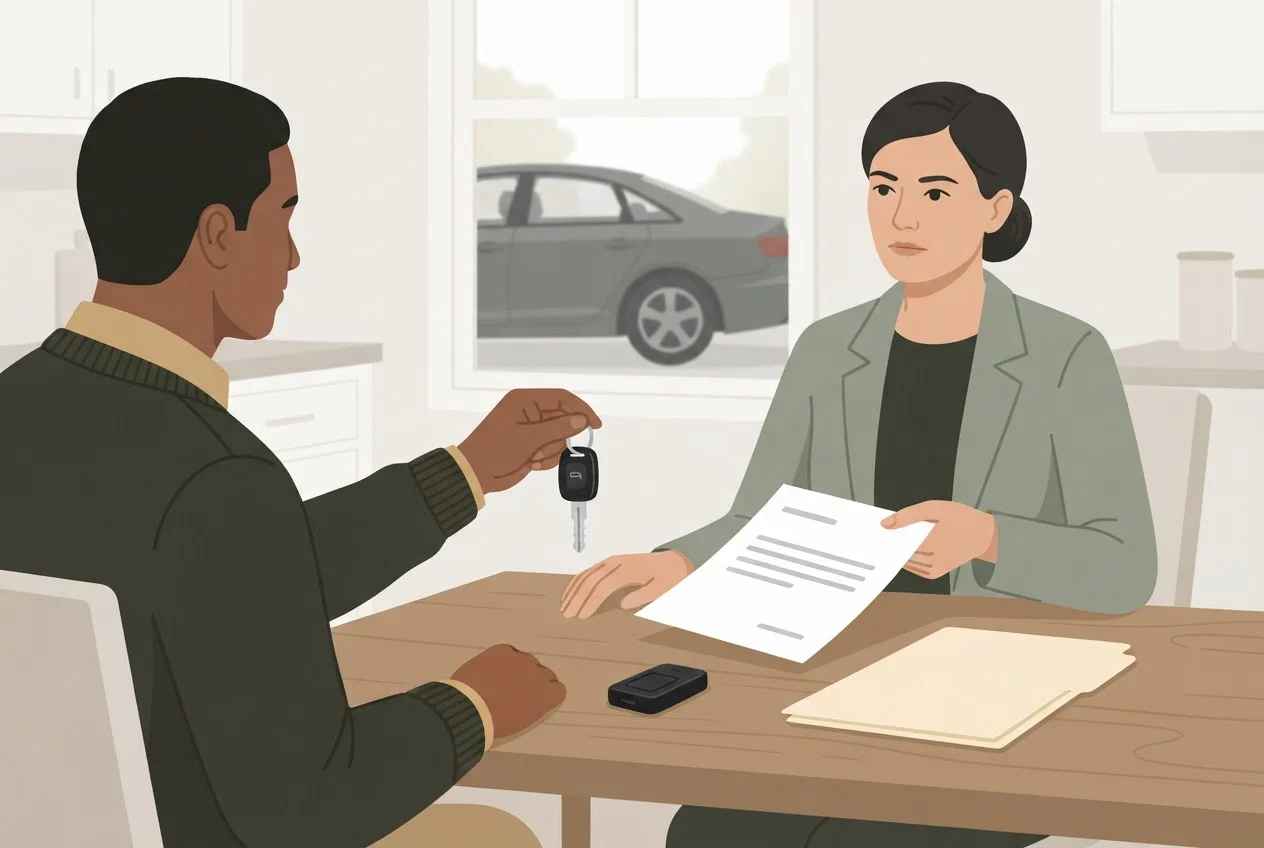
Refuse when the person asking is not the owner and cannot produce the owner's written consent, when the client is under a protective order, or when the stated aim is to follow a person's movements rather than to recover property, locate a fugitive or gather evidence for a listed purpose. Each refusal maps to checks 2, 3, 4 or 5 above.
A client who says "I only need to know where she goes" is describing following a person. In Florida and Minnesota that is a crime for the client too. Declining in writing, with the reason, protects you if the client goes elsewhere. Our guide to private investigator ethics covers other requests to turn down.

What training helps an investigator work within these limits?
Training in surveillance method and investigative law gives you the base, while tracker statutes come from your own state's code. We teach both at the course level, self-paced and online.
Our 123 Surveillance course costs $80 as of November 2026. It runs 4 hours across 32 lessons. It covers the uses and types of surveillance, photographic and electronic surveillance, targets, and moving, fixed, foot and aerial surveillance. It also covers presenting surveillance evidence in court. For the legal side, our 115 Legal Aspects of Private Investigation course costs $120, with criminal law, evidence rules and constitutional protections including the exclusionary rule. Both end with a certificate of completion.
A certificate of completion is not a license, and whether a course counts toward continuing education is your state board's decision. As of November 2026 the 123 Surveillance page lists continuing-education approval in Texas, Minnesota, Georgia and other states; confirm with your board. For a comparison of surveillance methods and the law behind each, read types of surveillance. Questions about which course fits can go to us at (832) 922-1215 or (706) 268-2221.
Build your surveillance and legal knowledge with Learningshopusa
Frequently asked questions
Sources
- 1.Michigan Compiled Laws 750.539l, Michigan Legislature
- 2.Ohio Revised Code 2903.216, Ohio Legislature
- 3.Texas Penal Code 16.06, Texas Legislature
- 4.Minnesota Statutes 626A.35, Minnesota Office of the Revisor of Statutes
- 5.720 ILCS 5/21-2.5, Illinois General Assembly
- 6.Florida Statutes 934.425 (2026), Florida Senate
- 7.United States v. Jones, 565 U.S. 400 (2012), Supreme Court of the United States
- 8.Lawsuit: Private investigator placed GPS tracking device on Reno mayor's vehicle, The Nevada Independent
- 9.Name of Person Who Hired Private Investigator to Track Reno Mayor Must Be Released, 2 News
- 10.123 Surveillance, Learningshopusa
- 11.115 Legal Aspects of Private Investigation, Learningshopusa