New York Process Server Certification Laws Affect Divorce Service

TL;DR
We explain why New York process server certification laws are not a single statewide credential rule, especially in uncontested divorce cases. Couples must meet court requirements for filing and service, while professionals serving repeatedly in New York City face separate licensing, exam, and compliance duties that can affect whether service is valid and properly documented.
On August 26, 2026, public guidance on Manhattan uncontested-divorce procedure renewed attention to service of process, a step that still controls whether a cooperative filing reaches judicial review. New York court instructions generally require summons papers to be served within 120 days after filing.
New York process server certification laws are not one statewide credential rule. In an uncontested divorce, the server must meet court requirements for method, timing, eligibility, and proof, while New York City adds licensing, examination, and compliance duties for people who serve process repeatedly. Couples and professionals should verify which rule set applies before service begins.
We break down the divorce requirements, the service rules, and the New York City licensing distinction that matters to working process servers.
What the New Guidance Means for Divorce Service
An uncontested divorce can be efficient because spouses agree on the key terms, but agreement does not make the court process optional. We see the practical risk in treating an agreed divorce as a paperwork handoff, because the court still needs the right forms, a lawful service record, and a complete submission before a judge can sign the judgment.
The court recognizes an uncontested case when a defendant agrees, defaults, or signs an agreement resolving the relevant financial and child-related matters. Its current divorce forms also make clear that a signed agreement is only part of the filing path.
For couples, the consequence is straightforward: decide who will serve, how proof will be completed, and whether the defendant will sign the required affidavit before filing creates a deadline. For servers, this is a reminder that even a low-conflict assignment has legal consequences if service, documentation, or eligibility is handled casually.
The Divorce Requirements Behind a Service Assignment
Before accepting a service assignment, we recommend understanding the procedural context. A server is not deciding divorce terms, but knowing what the court requires helps prevent avoidable errors in the documents, delivery method, and affidavit.
Residency and No-Fault Grounds
New York has five residency pathways, including specified one-year connections to the state, both spouses residing in New York when the cause arose there, or two continuous years of residency for either spouse. The current residency law should guide the filer’s assessment before papers are prepared.
For the common no-fault ground, one spouse must state under oath that the relationship has been irretrievably broken for at least six months. Property distribution, maintenance, child support, fees, custody, and visitation issues must be resolved or decided before judgment under the divorce statute.
Complete Agreements Still Need Court Forms
A settlement should consistently address the issues relevant to that couple, including property, debt, maintenance, and child-related arrangements. When children are involved, the court requires additional materials, including current child-support documentation.
We encourage learners to build the habit of checking the exact packet rather than relying on a prior assignment. That attention to detail is central to the practical investigation skills we discuss across our training resources.
Fees Are Only the Starting Point
The current New York County fee schedule lists a $210 index number and a $125 uncontested matrimonial note-of-issue fee. Those court charges total $335 before service, certified copies, legal advice, or motion costs, as shown on the filing fee page.
The Service Steps That Protect an Uncontested Case
Service is where a filing moves from private agreement to court procedure. We treat the service record as essential evidence, not an administrative afterthought, because the court needs proof that the defendant received the required papers correctly.
Know When Direct Delivery Is Allowed
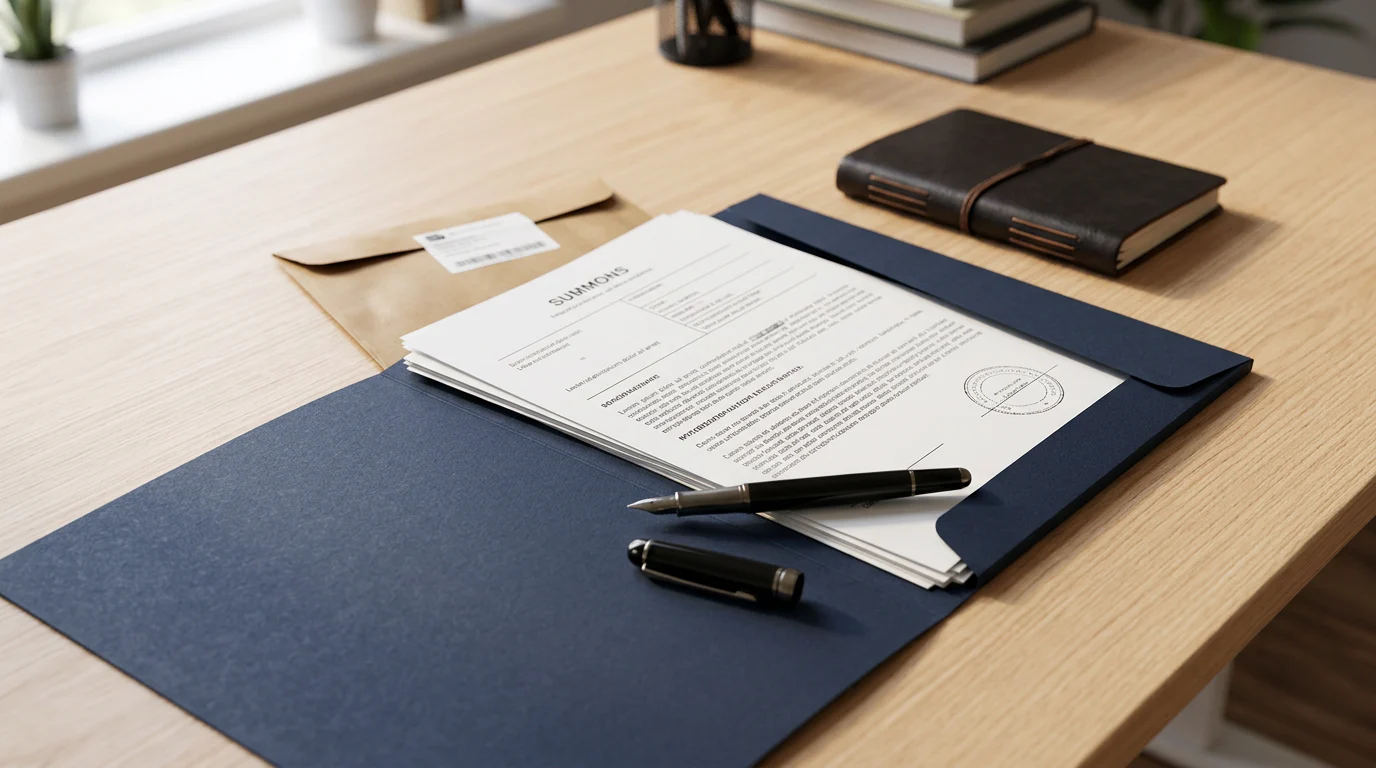
If the defendant will not contest the divorce and will return a signed, notarized Affidavit of Defendant, the plaintiff may give the papers directly. If that cooperation is uncertain, the plaintiff cannot personally make service, according to the court’s service instructions.
Use an Eligible Server
For service inside New York, the server must be at least 18 and a New York resident. Service outside the state has different eligibility rules, so we recommend confirming the location before the assignment begins.
Match the Method to the Case
New York’s general personal-service statute permits direct delivery and, in qualifying circumstances, delivery to a suitable person plus a required mailing. That does not mean every method fits every divorce filing, so the applicable CPLR rules and court instructions should be read together.
Complete Proof Without Delay
The person who serves must complete and return a signed, notarized affidavit of service. If the spouse cannot be located, the filer needs court permission for alternative service. Neither a process server nor a filer should invent a shortcut.
Why New York Process Server Certification Laws Need a Local Reading
The phrase “New York process server certification laws” can obscure a crucial distinction. Statewide divorce-service guidance focuses on who may serve and how service must be proven. New York City, however, regulates recurring professional service work through a separate licensing regime.
The Five-Service Threshold
In New York City, an individual must have a Process Server Individual License to serve five or more processes in a one-year period, subject to stated exceptions for New York attorneys and government employees acting within their duties. The city’s license overview lists a $340 fee for a full two-year term.
The Exam Is a Licensing Requirement
The city’s current application checklist includes a $75 exam fee. Its exam guidance says the test contains 35 multiple-choice questions and requires at least 25 correct answers, with the requirement applying to both new and renewing applicants. We cover the professional foundations that support this work in our Security and Investigation Course.
Compliance Extends Beyond the License
Licensed individuals may need a $10,000 surety bond, trust-fund enrollment, or an allowed exemption. The city also requires ongoing compliance activities, including specified portal reporting, under its current industry requirements.
What to Monitor Before the Next Filing or Assignment
For couples, the next step is to confirm residency, grounds, agreement terms, and the service path before filing. If direct delivery is not available, identify an eligible server early enough to meet the deadline and preserve the affidavit of service.
For professionals, first determine whether the assignment is within New York City and whether repeated work triggers the city license. Then verify the exact forms, documents, and service instructions for that case. The court’s published mistake guide identifies mismatched information, incorrect uploads, and affidavits signed before summons filing as errors that can delay an uncontested case.
Train with Learning Shop USA
Learning Shop USA prepares learners to recognize the difference between a court’s service instructions and a local licensing obligation. Our training is built for people who want to read service rules carefully, document work accurately, and know when a case calls for legal guidance rather than guesswork. This divorce-service development is a timely reminder that a routine assignment can carry strict deadlines, proof requirements, and local compliance duties. We help students strengthen the habits behind reliable work: verifying the jurisdiction, checking current requirements, and maintaining precise records. Explore our professional learning options at Learning Shop USA.
FAQs on New York Process Server Certification Laws
Do New York Process Server Certification Laws Apply Statewide?
No. Statewide divorce rules focus on server age, residency, service method, deadlines, and proof. New York City separately applies licensing requirements to professionals who repeatedly serve process.
Can I Personally Serve My Spouse in an Uncontested Divorce?
No. If cooperation is uncertain, the plaintiff cannot personally serve the papers. Another eligible person must deliver them, complete the affidavit, and return it signed and notarized.
When Does New York City Require a Process Server License?
New York City requires an individual license after five or more services in one year, except for specified attorneys and government employees acting within their official duties.
How Long Does a Filer Have to Serve Divorce Papers?
After filing, divorce papers generally must be served within 120 days. If the defendant signs the required affidavit, remaining papers can be filed immediately with the county clerk.