Can a Private Investigator Record Conversations? The Rules
A private investigator can record a conversation they take part in where state law allows one-party consent, but not one they merely overhear. All-party states such as Florida require everyone's consent.
By Sharon DeCet, Founder · Updated 7 Nov 2026

Key takeaways
- A private investigator may record a private conversation they take part in, or one where a participant has consented, under the federal rule and in one-party consent states. In all-party states, every participant must consent.
- Recording a private conversation between other people, with no participant's consent, is unlawful. Federally it carries up to five years in prison.
- Being a licensed investigator gives no extra recording authority under the federal statute. The test is participation and consent, not the license.
- Before recording, run five checks in order: who is speaking, where each speaker is, whether every required person has consented, whether the purpose is lawful, and whether audio is captured.
In this article
- 1Can a private investigator record conversations without telling the other person?
- 2Does it matter whether the investigator is part of the conversation?
- 3Which states require everyone's consent?
- 4What can a private investigator record in each situation?
- 5What should an investigator check before pressing record?
- 6Does a private investigator license change the answer?
- 7Which Learningshopusa course covers evidence rules after a recording is made?
- 8Frequently asked questions
The same recording can be lawful in Minnesota and a felony in Florida, and the investigator's license does not decide which. Two questions do. First, was the investigator in the conversation, or did someone in it consent? Second, which state's law applies to every person on the recording?
The common failures are practical. A recorder is left running in a room or a vehicle while the investigator is somewhere else. A client hands over a recording of a call the investigator never heard. A pretext call, where the investigator uses a cover story to get information, is made across a state line without anyone checking the other state's rule.
Each of these has a clear answer once the facts are sorted. This page gives the rule, a decision table and a five-question check to run before the recorder starts.
Can a private investigator record conversations without telling the other person?
Yes, but only when two conditions are met: the investigator (or someone who has consented) is a participant, and every state involved allows one-party consent. If either fails, the recording is unlawful.
The federal rule is in 18 U.S.C. § 2511(2)(d). It says it is not unlawful "for a person not acting under color of law to intercept a wire, oral, or electronic communication where such person is a party to the communication or where one of the parties to the communication has given prior consent to such interception unless such communication is intercepted for the purpose of committing any criminal or tortious act in violation of the Constitution or laws of the United States or of any State."
Four terms in that sentence need defining:
- Intercept: to capture a communication as it happens, which includes recording a call or a spoken conversation.
- Oral communication: a spoken conversation in which the speakers reasonably expect not to be recorded (18 U.S.C. § 2510(2)). A conversation with no such expectation may fall outside the statute, but state definitions differ, so treat any private setting as covered.
- Under color of law: acting with government authority. A private investigator does not, so the private-person rule applies.
- One-party consent: one participant's agreement is enough to make a recording lawful.
The last clause matters too. A recording made to further a crime or tort that breaks federal or state law loses this protection even with a participant's consent.
As of November 2026, 18 U.S.C. § 2511(4)(a) provides that a violation of the prohibition is punishable by a fine, imprisonment of not more than five years, or both (18 U.S.C. § 2511(4)(a)).
Does it matter whether the investigator is part of the conversation?
Yes. Under 18 U.S.C. § 2511(2)(d), a private investigator who is a party to a conversation, or who has one party's prior consent, may record it. An investigator who records two other people with consent from neither is outside the exception.
The exception covers two situations, both found in the statute's wording above:
- The investigator is a party. This includes an interview, an in-person conversation, or a pretext call.
- One of the parties has given prior consent. This could be a client who is a speaker in the conversation, or a witness who agrees to be recorded.
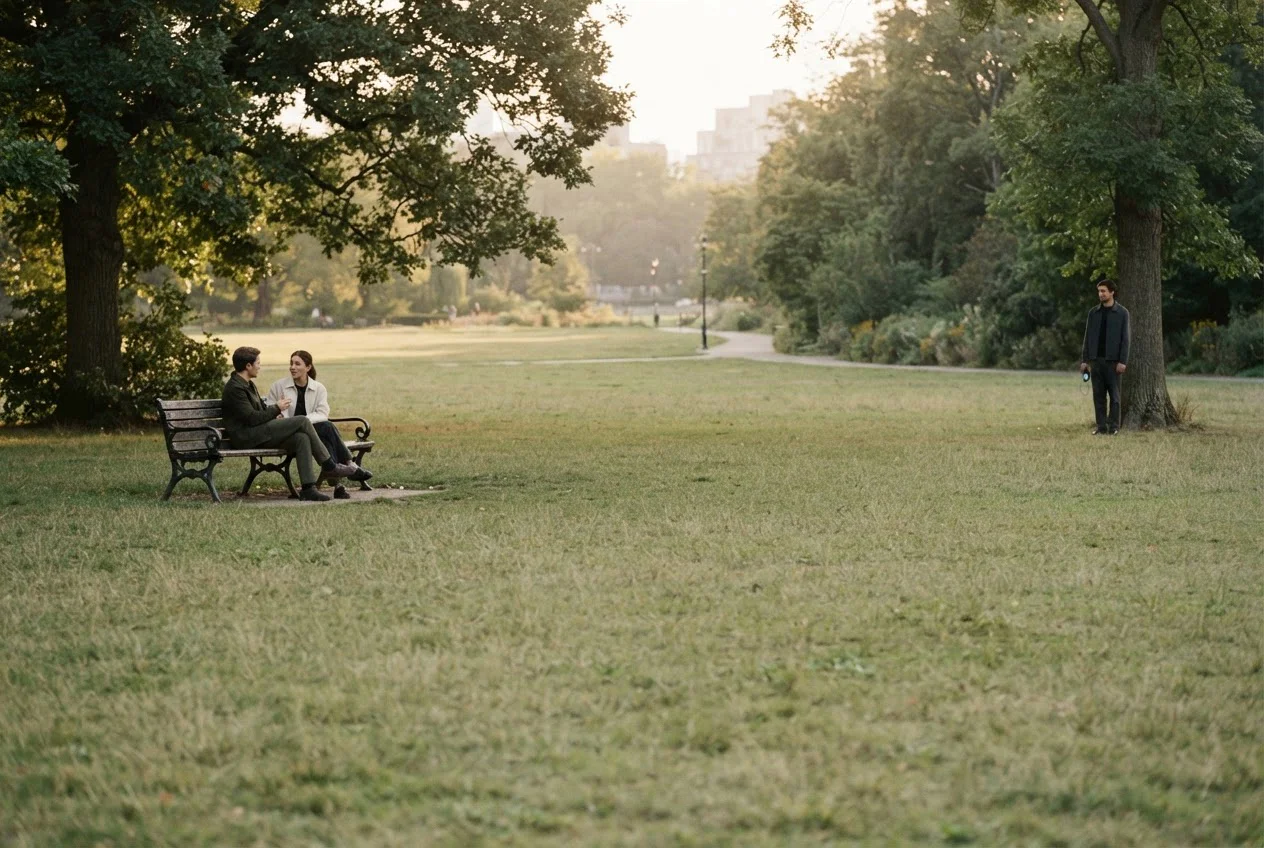
Three situations fall outside it. The investigator plants a recorder in a room, a car or a phone line and no speaker has consented. The investigator receives a client's recording of a conversation the client was not in. Or the recording is made for a criminal or tortious purpose.
In an all-party state, neither exception is enough on its own: the investigator's participation, or one speaker's consent such as a client's, does not cover the other speakers, who must also consent.
Which states require everyone's consent?
Treat any state you have not verified as all-party.
The table below sets out the statutes we have quoted from the legislatures' own sites.
| Jurisdiction | Rule | What the statute says | Penalty as the source states it |
|---|---|---|---|
| Federal | One-party | Lawful where "one of the parties to the communication has given prior consent" (18 U.S.C. § 2511(2)(d)) | Fine or up to five years, or both |
| Florida | All-party | Lawful "when all of the parties to the communication have given prior consent" (Fla. Stat. 934.03) | Generally a third-degree felony |
| Washington | All-party | Unlawful to record a private communication "without first obtaining the consent of all the participants" (Revised Code of Washington (RCW) 9.73.030) | Gross misdemeanor (RCW 9.73.080) |
| Massachusetts | All-party | Interception means to "secretly hear, secretly record" other than by a person "given prior authority by all parties" (Massachusetts General Laws (M.G.L.) c. 272, § 99) | Up to $10,000, up to five years in state prison, or up to 2.5 years in jail, or a combination |
| Minnesota | One-party | Same party-consent wording as the federal statute (Minn. Stat. 626A.02) | Up to $20,000 and/or five years, plus civil liability under § 626A.13 |
| New York | One-party | Recording is eavesdropping when made without the consent of at least one party by a person not present (Penal Law 250.00); eavesdropping is a class E felony (Penal Law 250.05) | Class E felony |
Washington's statute adds a detail that matters for a pretext call. Consent is treated as obtained when one party announces, "in any reasonably effective manner," that the conversation is about to be recorded, and when it is recorded, "said announcement shall also be recorded" (RCW 9.73.030(3)). The recording must therefore capture the announcement itself.
Massachusetts uses the word "secretly" in its definition. By its wording, an interception requires secrecy, so open recording with all parties aware is a different matter.
What can a private investigator record in each situation?
The table below turns the statutes into a decision by role. Column two applies the federal rule and one-party states; column three applies all-party states, using the text of Florida, Washington and Massachusetts.
| Situation | Federal rule and one-party states | All-party states |
|---|---|---|
| The investigator is in the conversation (interview, meeting, pretext call) | Lawful, unless made for a criminal or tortious purpose | Unlawful unless every other participant also consents. In Washington, a recorded announcement can supply consent |
| The investigator is not in the conversation and no speaker has consented (hidden recorder in a room, vehicle or phone line) | Unlawful where the speakers reasonably expect privacy. Federally, up to five years | Unlawful where the conversation is private. Florida treats it generally as a third-degree felony |
| A speaker (such as the client) consents and the investigator records | Lawful, because one party consented | Unlawful unless all participants consent |
| The client hands the investigator a recording the client made | Only if the client was a speaker or a speaker consented. Knowingly using or disclosing an unlawfully intercepted recording is itself a federal offense (18 U.S.C. § 2511(1)(c)-(d)), and such a recording is generally barred as evidence (18 U.S.C. § 2515) | Only if all participants consented. The same federal consequences apply |
| Video with no audio | In our reading, the wiretap statutes cited here cover audio. Some states separately regulate hidden cameras and video surveillance, so check the state's own statute before filming where people expect privacy | Same reading and same check |
| A call between people in different states | Follow the stricter state | Follow the stricter state |
The video row and the cross-state row are our own judgment, not statute text. We recommend following the stricter state when a call crosses a state line, because the cost of being wrong is a felony charge. For what a surveillance activity involves beyond audio, see our guide to types of surveillance and the law behind each.
What should an investigator check before pressing record?
Run five checks, in order, and stop at the first failure. This is our recommended workflow, built on the statutes above.
- Who is speaking? Pass: the investigator, or a person who has agreed to be recorded, takes part in the conversation. Fail: neither does. Do not record.
- Where is each speaker? Pass: you have read the statute for every state involved and each is one-party. Fail: any state is all-party, or you have not checked it. Treat the whole conversation as all-party.
- Has every required person consented? Pass: in an all-party situation, each participant has agreed, and the agreement is on the recording (in Washington, the announcement must be recorded). Fail: any participant has not.
- Is the purpose lawful? Pass: the recording is not meant to further a crime or a civil wrong. Fail: it is. The federal consent exception does not apply.
- Is audio being captured? Pass: if no audio, the interception statutes are not the issue, but trespass and privacy law still need checking. If audio is captured, checks one to four all apply.
Keep a record of how you answered each check for every recording. That record belongs with the file notes discussed in our guide to chain of custody, and it supports the standards in our guide to private investigator ethics.
Does a private investigator license change the answer?
Not under the federal statute, which draws its line at "color of law," meaning government authority, and treats a private investigator as a private person. The line the statute draws is participation and consent, not whether the person holds a license.
State licensing rules add their own conduct standards on top, and our overview of private investigator laws covers what a license does and does not cover. We do not read any license as permission to record outside the consent rules above.
Which Learningshopusa course covers evidence rules after a recording is made?
Our self-paced 115. Legal Aspects of Private Investigation course costs $120 as of November 2026. It has 49 lessons across 7 chapters, including a final exam. The chapters cover crime defined, defenses to criminal prosecution, criminal conduct and accountability, evidence categories, evidence types and presentation, rules of evidence, and court procedures.
That course is about how evidence is judged, not a guide to wiretap statutes. For the consent rules, the statutes cited on this page are the authority for your state.
Learn how evidence is judged after a recording is made
Frequently asked questions
Only if the client was a speaker, or a speaker consented, and every state involved allowed it. Knowingly using or disclosing a recording that was unlawfully intercepted is itself a federal offense under 18 U.S.C. § 2511(1)(c)-(d), and the recording is generally barred as evidence under 18 U.S.C. § 2515.
Sources
- 1.18 U.S.C. § 2511, U.S. Code, U.S. Government Publishing Office
- 2.18 U.S.C. § 2510, U.S. Code, U.S. Government Publishing Office
- 3.18 U.S.C. § 2515, U.S. Code, U.S. Government Publishing Office
- 4.Fla. Stat. 934.03, Florida Legislature
- 5.RCW 9.73.030, Washington State Legislature
- 6.RCW 9.73.080, Washington State Legislature
- 7.M.G.L. c. 272, § 99, Massachusetts Legislature
- 8.Minn. Stat. 626A.02, Office of the Revisor of Statutes, Minnesota
- 9.Penal Law 250.00, New York State Senate
- 10.Penal Law 250.05, New York State Senate
- 11.115. Legal Aspects of Private Investigation, Learningshopusa