Georgia Security License Requirements Online: What Comes First?
Georgia security license requirements: learn the 24-hour course, employer steps, and armed training sequence before accepting security work.
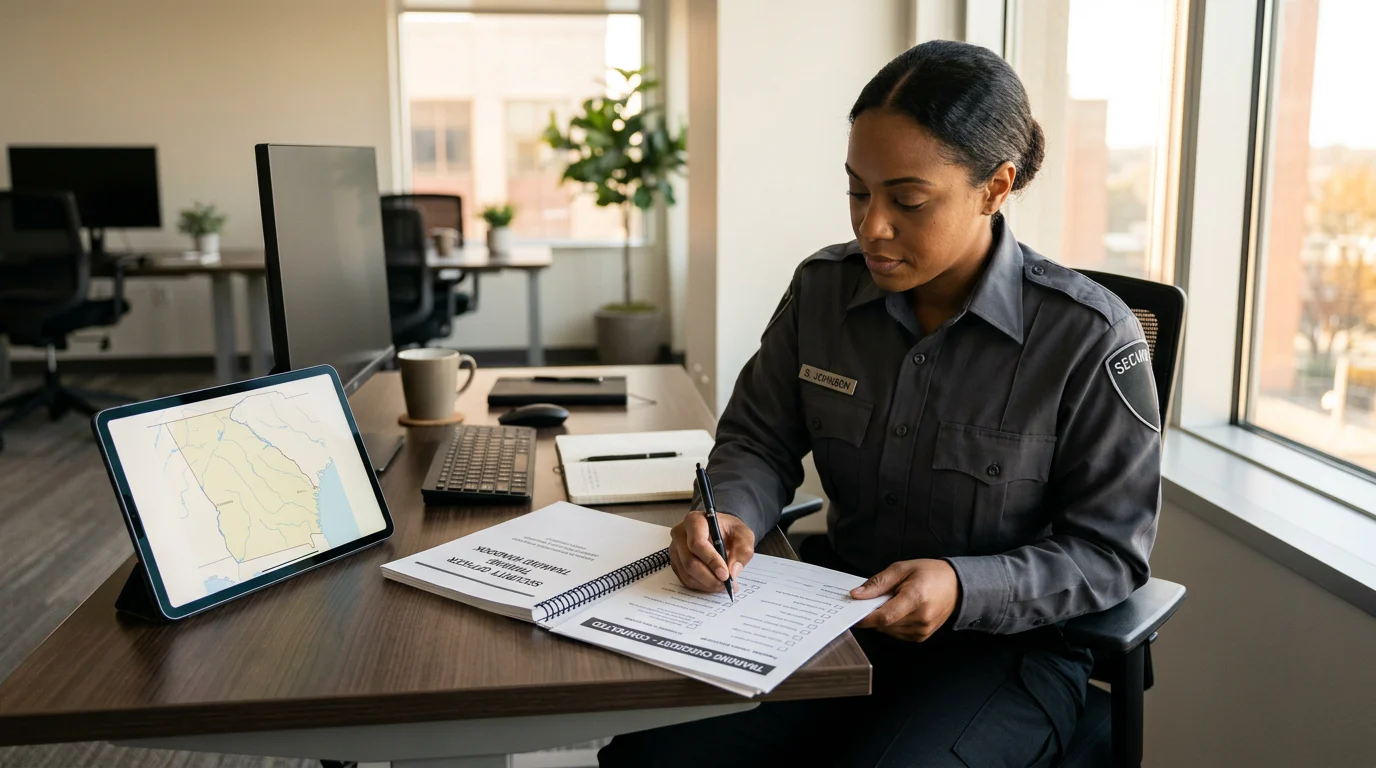
Georgia handles entry-level security work through training and employer responsibility, not a one-size-fits-all card. The state’s 24-hour requirement applies before private security services begin.
For Georgia security license requirements, start with 24 hours of Board-required instruction from a Board-certified instructor before performing security services. Then follow the employer-linked hiring, records, and screening path. A generic certificate is not automatically qualifying. Armed duties also require firearms training, passing scores, registration, and a weapon permit.
We will walk through the correct sequence, what a course certificate proves, where an employer enters the process, and why the armed path is a separate decision.
Do You Get a Georgia Guard Card?
Georgia does not use the common individual guard-card model for unarmed officers working for private security businesses. Instead, the licensed employer maintains the worker’s training record, while the Board’s individual registration and weapon-permit steps apply to armed work.
The Board FAQ explains that unarmed guards are not required to register with the Board, but they must receive Board-standard training. That distinction is the reason a course certificate can be important without being a universal permission slip to work anywhere.
For most entry-level applicants, the practical question is not “Where do I get my card?” It is “Have I completed qualifying training, and has a licensed employer completed the steps required for the specific job?” Our Georgia guard requirements guide can help you separate those two questions before you apply.
The Board’s guidance lists age 18 as the employment baseline and requires applicants for armed licenses to be 21. A prior conviction should not be reduced to a simple online yes-or-no test: the Board considers the facts surrounding certain criminal histories, while firearm eligibility creates stricter limits for armed roles.
What Must Happen Before You Work?
The cleanest way to approach Georgia security license requirements is to treat training, hiring, and armed authorization as separate checkpoints. You may attend qualifying training before being hired, but training must be complete before you provide private security services.
The training rule requires instruction by a Board-certified instructor and requires employers to retain records of Board-mandated training completed after January 1, 2022 for five years. That makes provider verification worth doing before you invest your time.
Choose the Work Path First
Decide whether you are pursuing an unarmed post or an armed post. An unarmed job requires the 24-hour basic curriculum and employer records, while an armed job adds the Board registration and firearm requirements described later in this article.
Verify and Complete the Basic Course
Confirm the instructor’s active Board status, the 24-hour curriculum, and the certificate details before enrolling. Our online training guide explains why a course format alone does not establish that a program meets every Georgia requirement.
- Verify the instructor and curriculum.
- Complete the 24 hours before providing security services.
- Keep the completion certificate.
- Apply to a licensed security employer.
- Complete the employer’s required screening and records process.
- If armed, complete the separate registration and weapon-permit path before duty.
Plan Around Your Actual Calendar
Someone working full-time should calculate course access, the 24 hours of instruction, employer interviews, fingerprint scheduling where applicable, and document review separately. A two-week goal may be realistic for some unarmed hiring situations, but no responsible page should promise a start date before the employer confirms its process and the required steps are complete.
Does Any Online Security Course Qualify?
No general online security certificate automatically satisfies Georgia’s required basic training. The relevant question is whether the course delivers the Board-prescribed curriculum through a Board-certified instructor and produces a certificate that documents the required training.
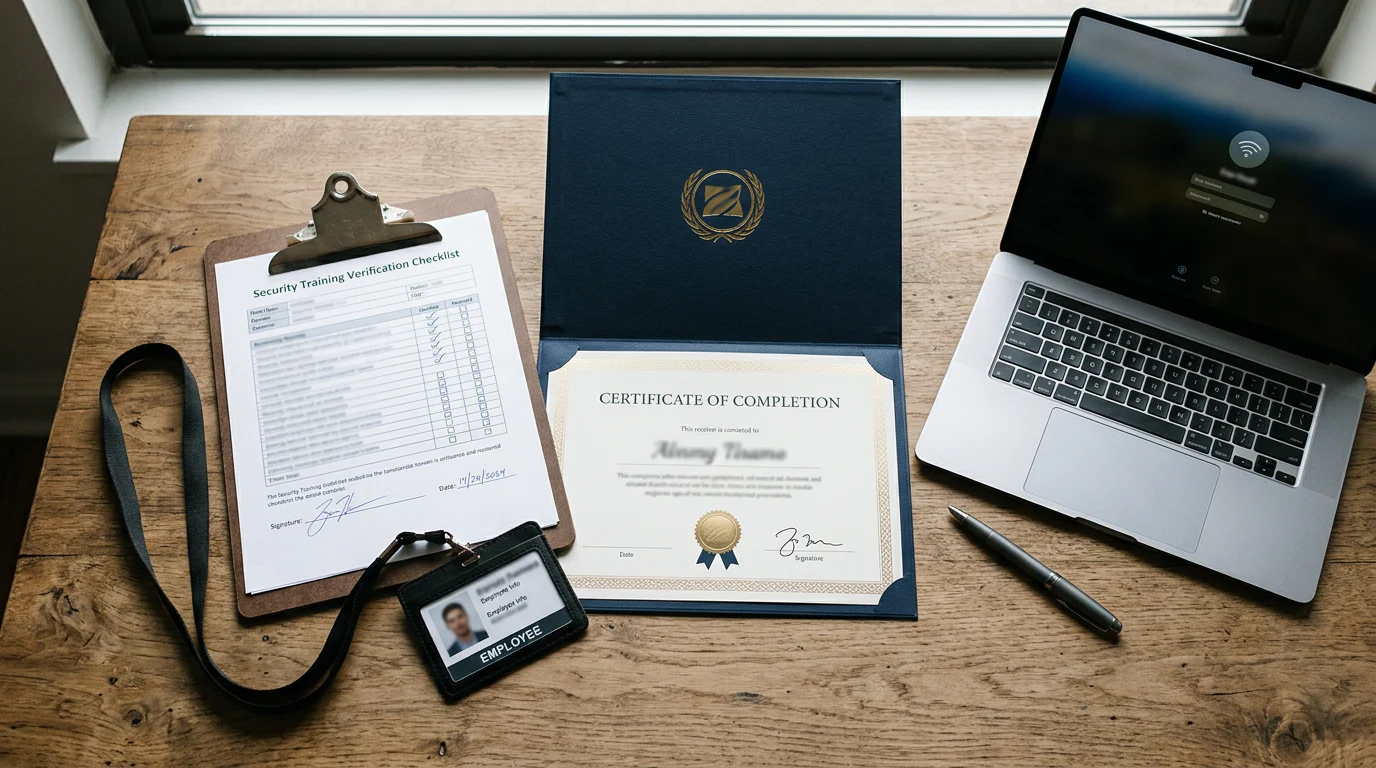
The Board guidance directs applicants to licensed instructors and states that companies commonly use those instructors for employee training. We recommend confirming the instructor, curriculum, and course documentation before treating any online offering as part of your Georgia path.
| Stage | Georgia 24-Hour Board Curriculum | General Security Certificate |
|---|---|---|
| Training | Can document required training when taught by a Board-certified instructor | May show education, but does not automatically prove Georgia’s required curriculum |
| Hiring | Gives a licensed employer training evidence to review | May support an application, but an employer decides its value |
| Unarmed Work | Supports the employer-held training record | Does not replace required Georgia training documentation |
| Armed Work | Is only the first requirement | Does not replace firearm training, range scores, registration, or a weapon permit |
A provider can teach and document a course. It cannot hire you, decide your background eligibility, issue an armed registration, or authorize you to carry a weapon. For a closer look at this distinction, see our course comparison.
What Does the 24-Hour Course Cover?
The 24-hour requirement is not a vague orientation course. Georgia groups the required basic curriculum into seven subject areas, from legal responsibilities and patrol skills to incident response and first aid.
The required curriculum gives readers a practical way to review a course outline before enrollment. If a program cannot show how it covers these categories, its certificate should not be assumed to meet the state requirement.
| Official Subject Area | Required Coverage |
|---|---|
| Role of Private Security | Crime awareness, crime prevention, criminal justice, ethics, professionalism |
| Legal Aspects | Criminal offenses, Board rules, arrest, use of force, liability, testimony |
| Patrol and Observation | Patrol techniques, information gathering, officer safety, report writing |
| Incident Response | Emergencies, evacuation, fire, hazardous materials, threats, active assailant response |
| Security Resources | CCTV, alarms, access control, electronic surveillance, law-enforcement coordination |
| Customer Service Issues | Public relations and interpersonal communication |
| First Aid Overview | Basic first-aid awareness |
This table is also useful during an interview with a licensed agency. It lets you show that you understand the difference between completing a course and being ready for the employer-specific duties of a post. Our unarmed and armed guide covers where the basic curriculum stops and firearm authority begins.
Who Handles Georgia Security License Requirements?
Georgia’s employer-linked system works best when each party handles its own part. The learner supplies accurate information and completes training, the instructor teaches and documents the curriculum, the employer controls hiring and records, and the Board regulates instructor status and armed authorization.
The official employee form says an employer must submit the application for an armed security employee. It also lists an initial armed security-guard employee registration fee of $70, plus the listed processing fee, so applicants should verify current fees before filing.
| Party | Before Training | After Training |
|---|---|---|
| Learner | Choose an unarmed or armed goal, verify the course, disclose required history accurately | Keep certificates, apply to licensed employers, complete requested paperwork |
| Instructor | Maintain Board certification and teach the required curriculum | Issue a compliant certificate and retain training records |
| Licensed Employer | Define the job and confirm hiring standards | Hire the worker, maintain records, and submit armed materials where required |
| Board | Sets rules and certifies instructors | Reviews armed registrations, permits, and compliance matters |
This is why an entry-level course should never be marketed as an approval guarantee. We encourage applicants to use the employer discussion to confirm what documents, screening steps, and job-specific expectations remain after training. Our Georgia guard requirements resource provides a practical starting point for that conversation.
What Changes for Armed Work?
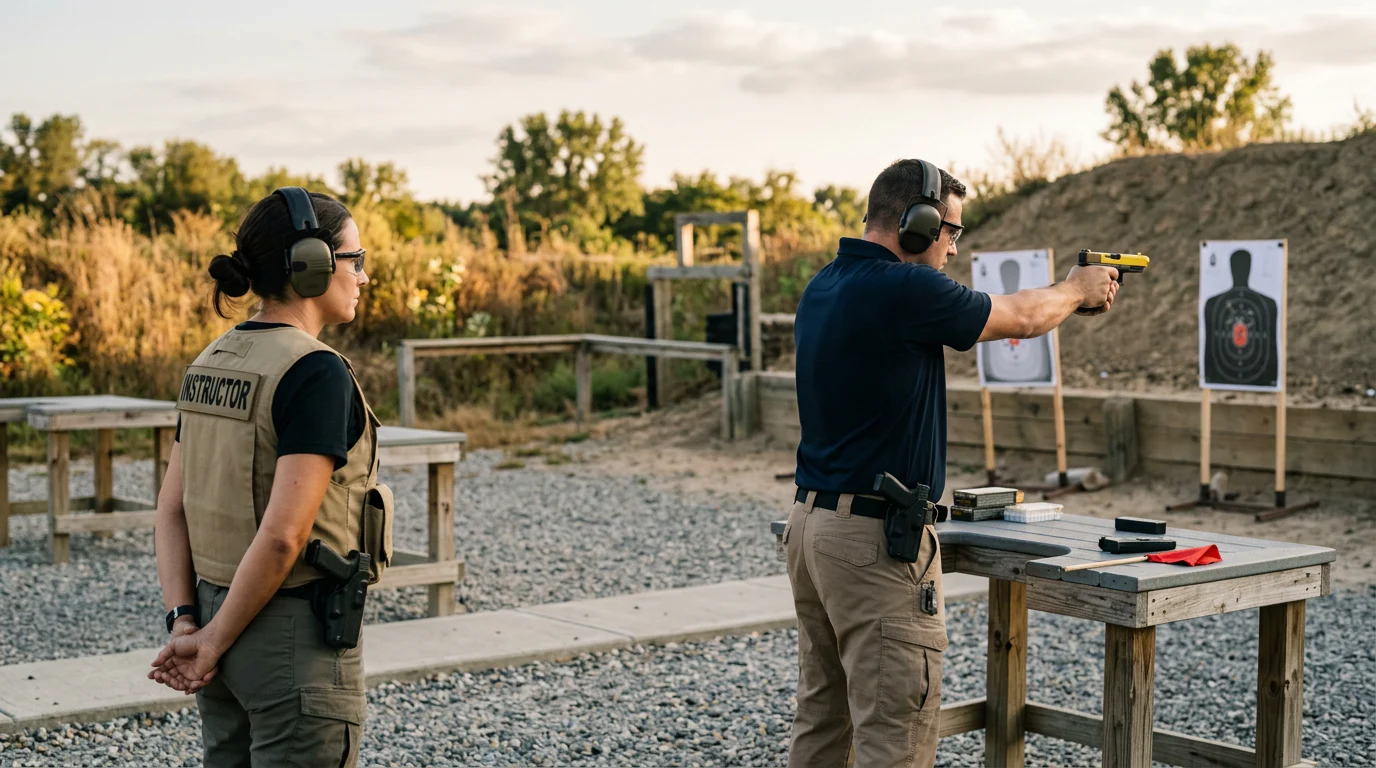
Armed work is not an upgraded version of the same certificate. It is a separate authorization path that starts with the basic 24-hour course and then adds firearms instruction, live range qualification, employer-linked registration, and the appropriate weapon permit.
Follow the Armed Branch
24-Hour Basic Training
↳ Unarmed Work: Employer-held training records and job-specific onboarding
↳ Armed Work: Firearms course, written and range scores, employer-linked registration, and weapon permit
Complete the Firearms Training
The firearms rule requires at least 15 hours of handgun instruction from a Board-licensed firearms instructor. It also requires at least 80% on the written exam and firing range, with two 48-round strings and the higher score used for qualification.
Obtain Authorization Before Carrying
A basic course certificate does not authorize a firearm. Armed personnel must complete the registration and permit process connected to their employer, and the Board rules limit carrying to actual security duties or direct travel to and from work.
Keep up with Renewal Duties
Weapon-permit holders must qualify annually with the weapon carried or assigned. Registered security employees also have continuing education obligations before renewal, although the rules exempt the first renewal period from the continuing-education requirement.
Our armed training guide can help you assess whether an armed position fits your timeline before you schedule a range course.
Your Licensing Tracker
A written tracker helps prevent the most common error in this process, mistaking completion of one requirement for completion of every requirement. Print or save this checklist, then review it with a prospective employer before accepting an assignment.
| Checkpoint | Complete | Evidence To Keep |
|---|---|---|
| I chose an unarmed or armed work path | ☐ | Job description or employer discussion |
| I verified instructor status and course curriculum | ☐ | Instructor lookup and course outline |
| I completed the 24-hour basic course | ☐ | Certificate of completion |
| I applied to a licensed employer | ☐ | Employer name and verification |
| Required employer screening and records are complete | ☐ | Employer confirmation |
| Armed training and range scores are complete, if applicable | ☐ | Firearms certificate and range scores |
| Armed registration and permit are active before duty, if applicable | ☐ | Board-issued authorization |
The application guide warns that incomplete applications can create delays and that active authorization is required before services begin. Keep copies of every certificate, score, and employer communication, especially if you are balancing evening training with a near-term job opportunity.
For a final course-selection check, revisit our online training guide before you enroll. It will help you ask the questions that matter before you commit your schedule.
Train with Learningshopusa
At Learningshopusa, we built our Georgia security training pages for people who need a straight answer before spending time on a course. We explain the difference between foundational study, Georgia’s required curriculum, and the employer steps that a certificate cannot replace. Our goal is to help you ask better questions before enrollment: who is the instructor, what curriculum is taught, how is completion documented, and what does the hiring company still need? We also keep the unarmed and armed paths separate, so a reader does not mistake basic coursework for firearm authority. Use this tracker with a prospective employer, save every certificate and score, and confirm current Board requirements before accepting a post. That preparation helps protect your schedule when you are balancing a job, family obligations, and a near-term hiring goal. When you are ready to explore our professional training resources, start with Learning Shop USA.
FAQs on Georgia Security License Requirements
Do I Need an Employer Before the 24-Hour Course?
No. Board guidance says you may attend qualifying training before hire, but you still need a licensed employer’s records and direction before beginning duties in Georgia.
Can a General Certificate Be Used in Georgia?
Not necessarily. A general certificate may demonstrate learning, but it does not automatically show Georgia’s 24-hour curriculum or a Board-certified instructor, both essential checks for employers.
Do Unarmed Guards Need Board Registration?
For an unarmed role, not necessarily. The employer maintains required training records, while armed work requires an active, employer-linked registration and weapon permit before duty.
How Long Does the Process Take?
The course itself requires 24 hours. Your overall timing also depends on instructor access, employer hiring, fingerprint scheduling, complete documents, and, for armed work, Board review.
Can I Carry After Only the Basic Course?
No. Armed work requires the separate handgun course, passing written and range scores, employer-linked registration, and the appropriate weapon permit before carrying on duty for your employer.